The city of Valencia is an ideal tourist destination to enjoy urban tourism, you can discover its fantastic historic center or learn about its Oceanogràfic and the City of Arts and Sciences.
Moreover, it offers visitors the possibility of bathing and relaxing on one of the best urban beaches in Europe, the famous Malvarrosa beach. Or the possibility of reaching another beach in a matter of minutes by taking a train or a bus.
To all this, let’s add a spectacular gastronomy, with paella as the star dish and a leisure offer and plans at the height of the best cities in Spain.
Valencia is a city that has changed a lot in recent years, knowing how to reinvent itself, filling itself with green areas and modernizing to the point of becoming one of the cities with the clearest European character in our country. But the important thing: the friendliness of its people, its traditions and its history remain intact, just as well preserved as the architectural jewels that await you along its historic center, one of the most beautiful in the entire Iberian Peninsula.
If you still don’t know Valencia, you don’t have any excuses anymore. Any time is a good time to visit this wonderful city. And here we show you just some of the reasons why you should choose it as your next destination.
Table of Contents
Malvarrosa Beach
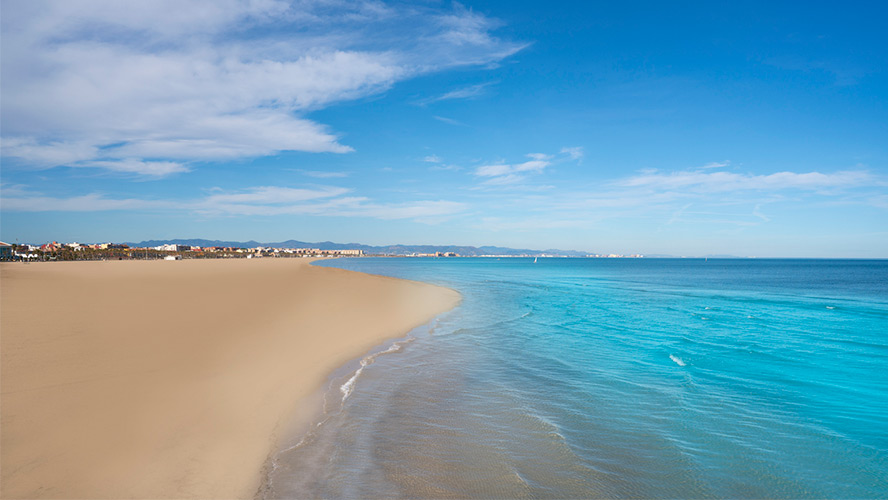
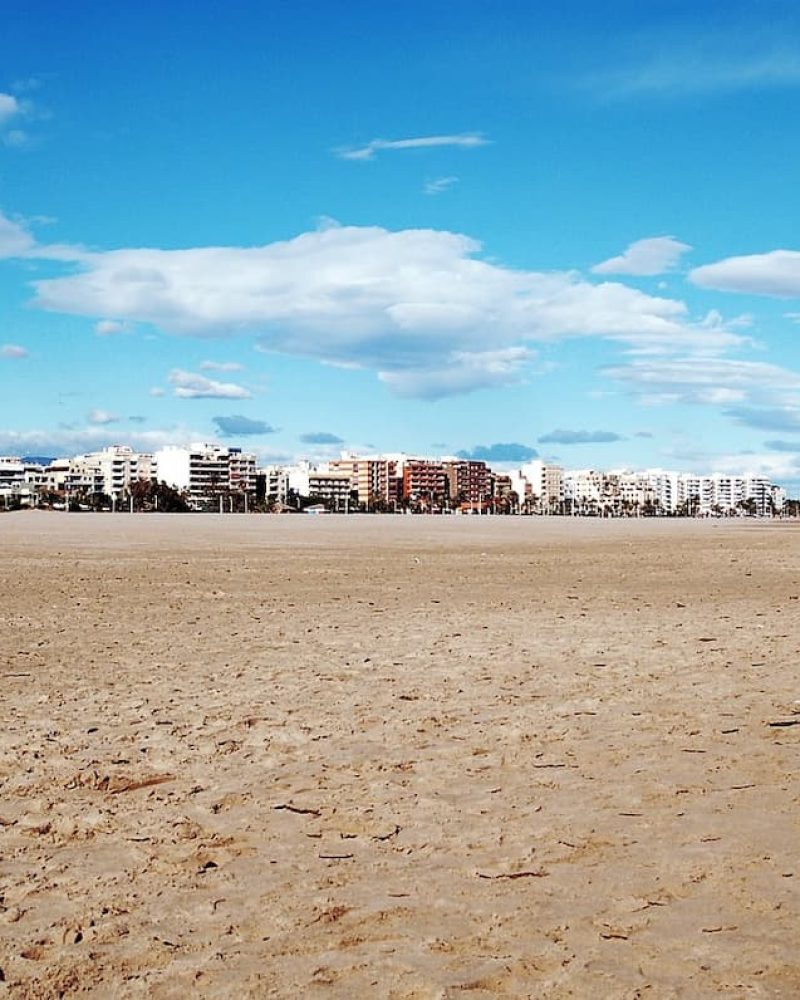
We start with one of the great icons of Valencia, a source of pride for Valencians and enjoyment for all tourists who are lucky enough to spend a few days in the city. There are few urban beaches in the world with these dimensions, which also offer so many services and amenities to the visitor. Malvarrosa Beach is undoubtedly one of the best places to see in Valencia.
Such is its width, that from the Promenade, its curvature will not allow you to see the shore. We are talking about more than 130 meters wide and about a kilometer long. And what do these dimensions mean? Well, basically, in that even during the summer months, when the beach receives a greater number of bathers, you will not feel that overwhelming feeling on its sand that other crowded beaches of the Spanish East transmit.
Portrayed in several paintings by the famous painter Joaquín Sorolla, Malvarrosa will allow you to enjoy an unforgettable day savoring the charms of the Mediterranean in its widest expression. And, along its promenade, you will find some of the best restaurants in Valencia, specializing in rice dishes and fresh fish. An ideal plan for a family holiday.
City of Arts and Sciences
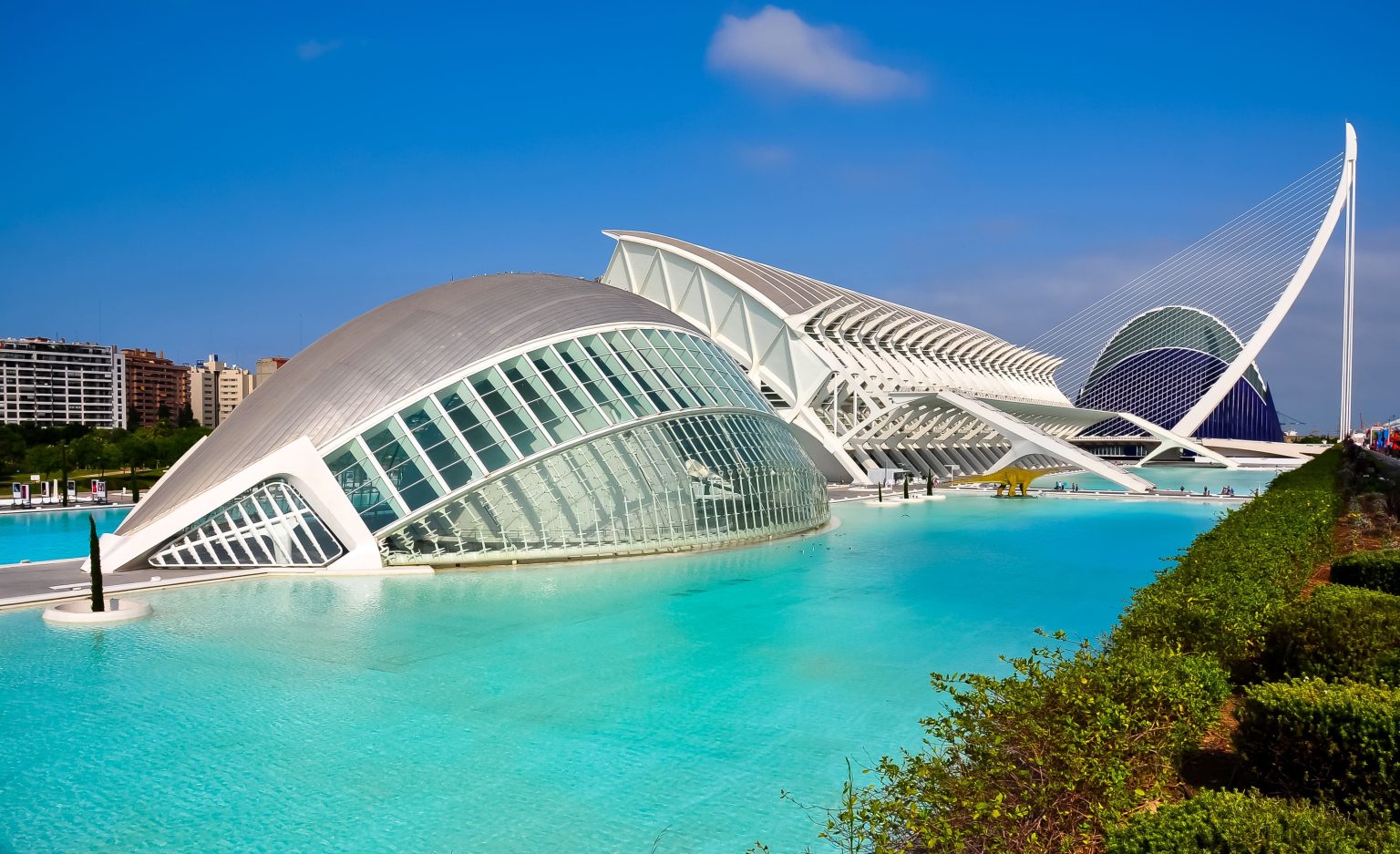
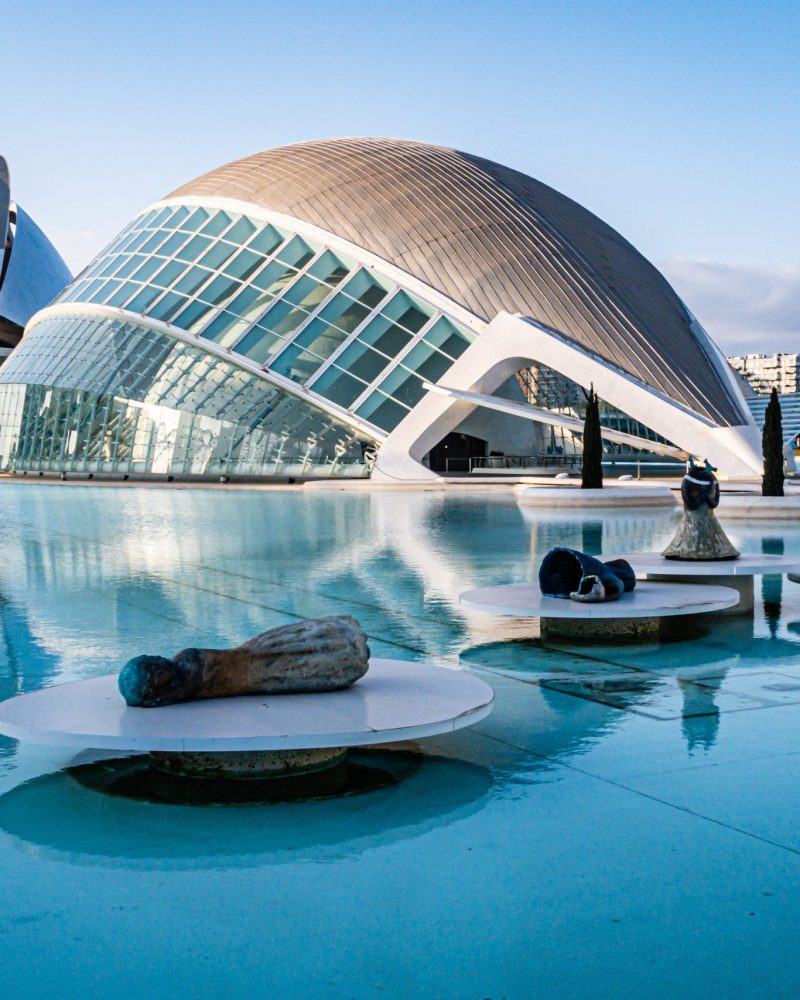
The City of Arts and Sciences is one of those tourist attractions that is worth visiting both inside and out. The work of the famous architect Santiago Calatrava, it is a complex composed of several avant-garde buildings, which despite its modernity, has become a symbol of the city of Valencia.
It is made up of four different spaces: the first of them is the Palau de les Arts, intended for artistic, theatrical and musical performances. Secondly, L’Hemisferic, functions as a planetarium and 3D cinema. Also, the Príncipe Felipe Science Museum, presents in a playful and fun way the multiple advances of science and technology throughout history. And finally, L’Umbracle, which is the landscaped area above the car park, fantastic for enjoying a pleasant walk.
The City of Arts and Sciences is an ideal plan if you are traveling with children. For the little ones it offers a unique opportunity to learn and have fun in a futuristic and fantastic environment.
But to tell the truth, we assure you that you will like it as much as they do, or even more.
Valencia Oceanogràfic
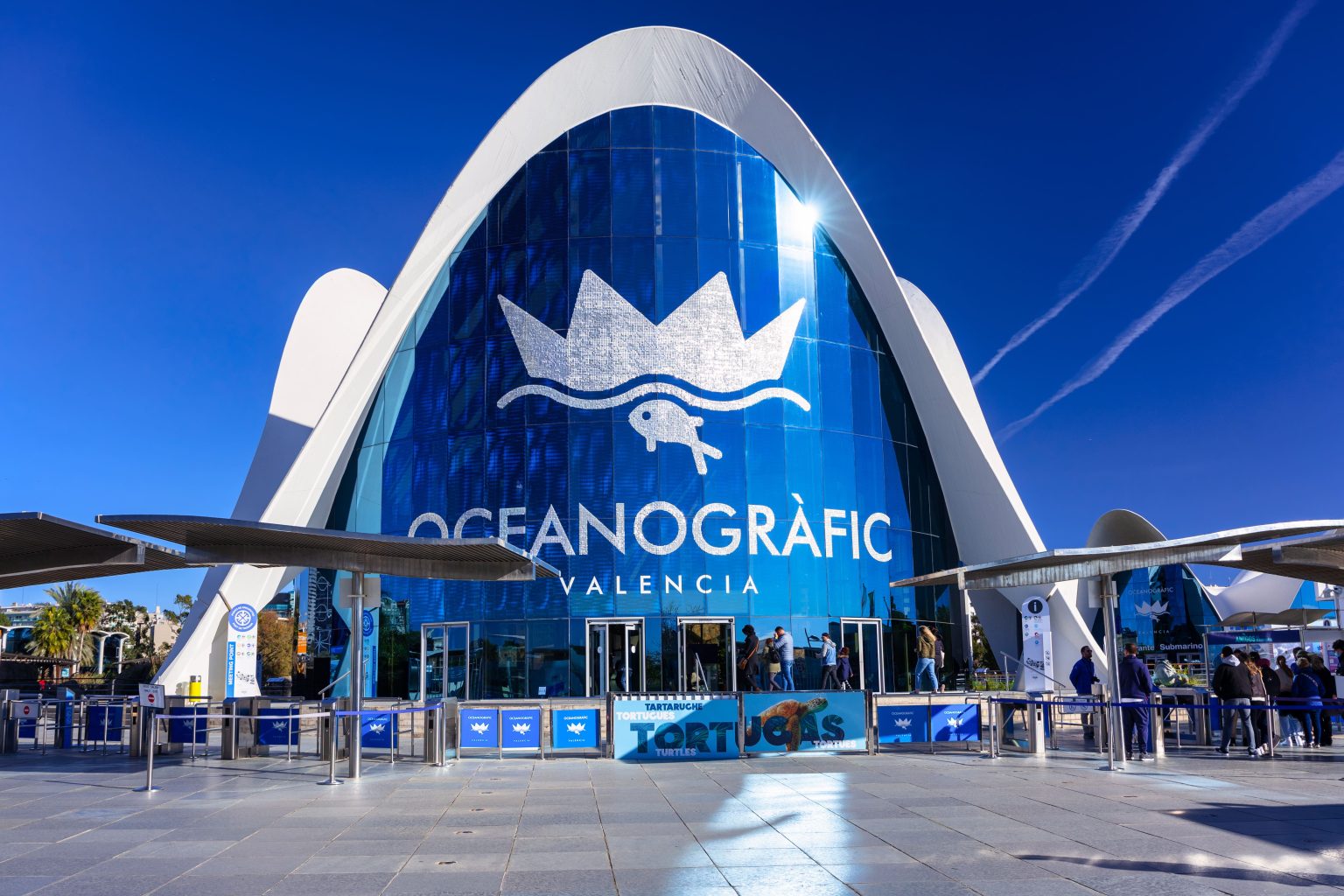
Actually, the Oceanogràfic is part of the complex of avant-garde buildings of the City of Arts and Sciences, but given its importance, it deserves to be granted its own space within our list.
The Oceanografic is the greatest tribute to the oceans and the sea on the face of the earth and undoubtedly one of the most beautiful and original. Made up of giant aquariums that recreate the most important marine ecosystems, a visit to its interior is the closest thing to scuba diving in a destination such as the Azores Islands or the Maldives.
Among its most important attractions, the longest underwater tunnel in Europe stands out. This spectacular giant aquarium will allow you to walk next to huge sharks and discover an endless number of different marine species. We are talking about no more nor less than more than 45,000 living beings spread throughout its gigantic pools and a total of 500 different species.
Again, this is an ideal plan to enjoy with the children, who will live a truly unforgettable day.
La Lonja de la Seda (Silk Exchange)
From one of the most important avant-garde complexes of recent times, it is time to travel back in time several centuries, to discover another building very different from the previous ones, but equally relevant.
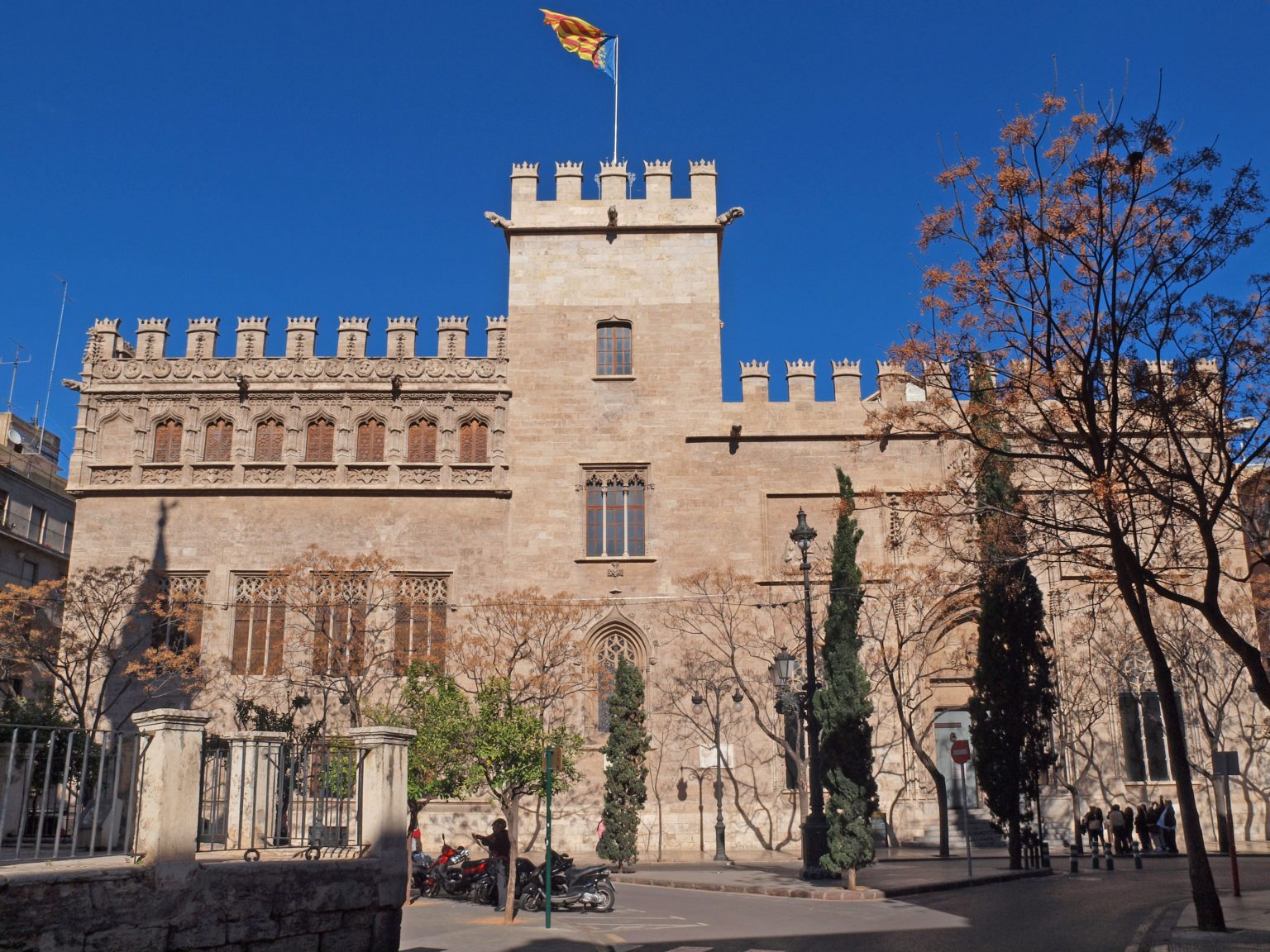
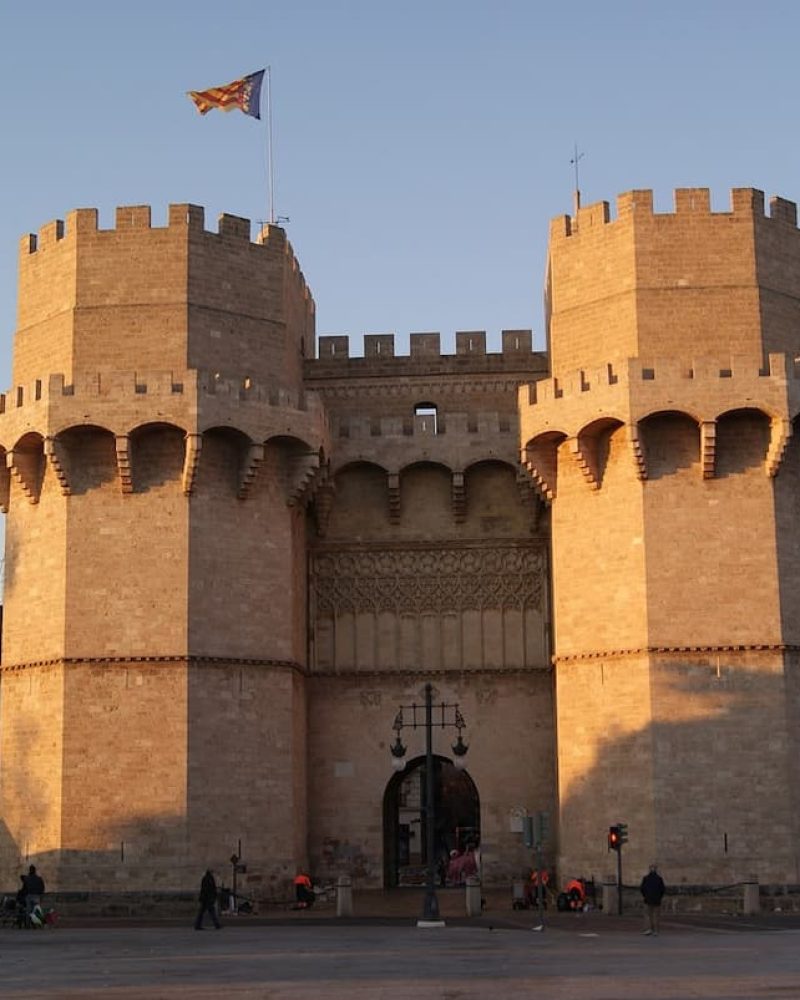
Declared a World Heritage Site by UNESCO, La Lonja de la Seda of Valencia is one of the great representations of Spanish Civil Gothic.
Its first walls date from the mid-fifteenth century and in 1931 it was recognized as a National Historical and Artistic Monument.
Also known as the Lonja de Mercaderes, it is one of the most important buildings in the Valencian historical center, composed of three large structures and a beautiful garden, the famous Patio de los Naranjos.
When you look at it from its surroundings, it looks like a church or a castle, but really, it has always had that mercantile character so unique.
Did you know that on its walls you can find figures of witches and even the character of Chewbacca from Star Wars? If you are traveling with children, we suggest playing to see who finds it first. There is also a caganer as in the typical Valencian nativity scenes!
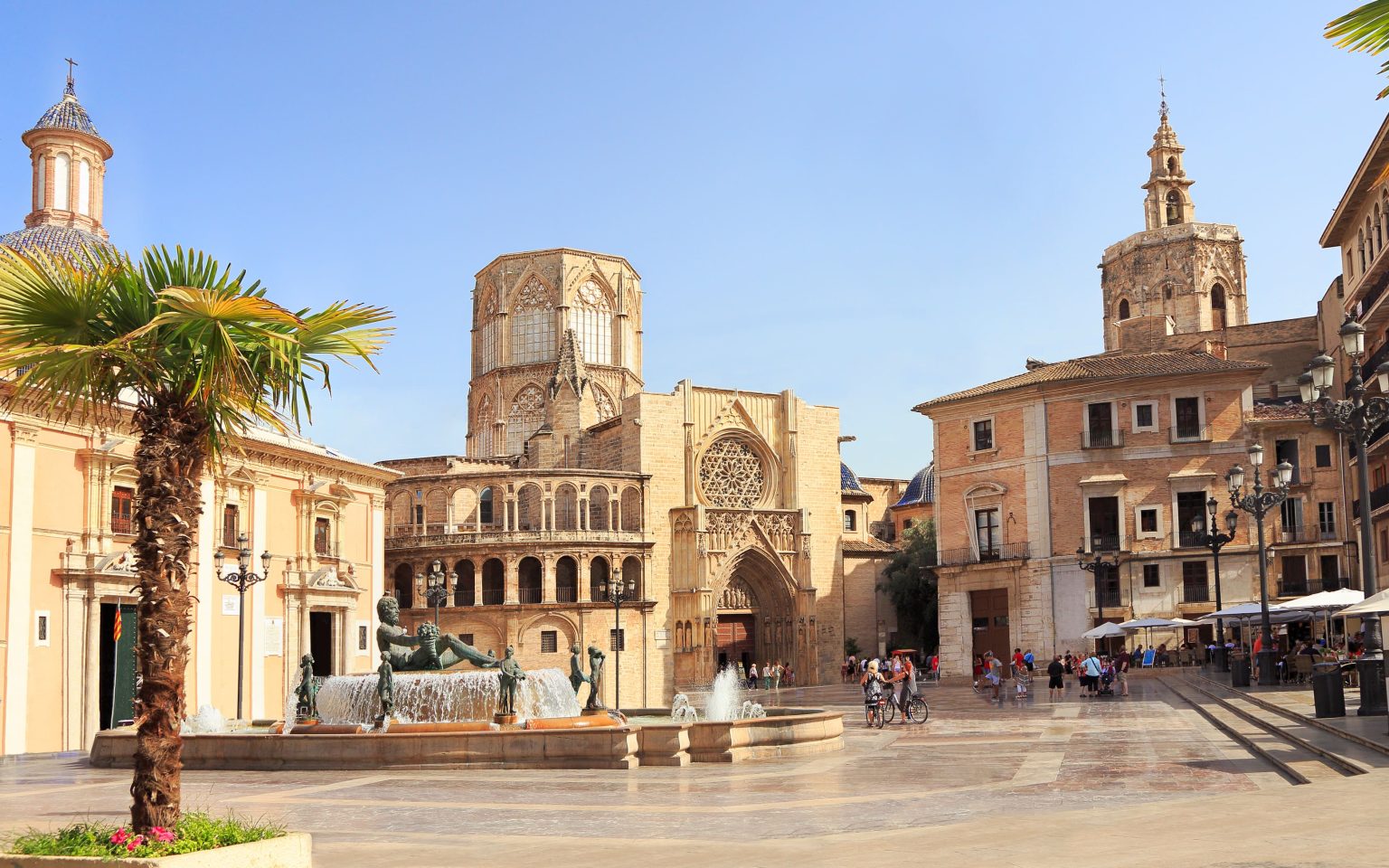
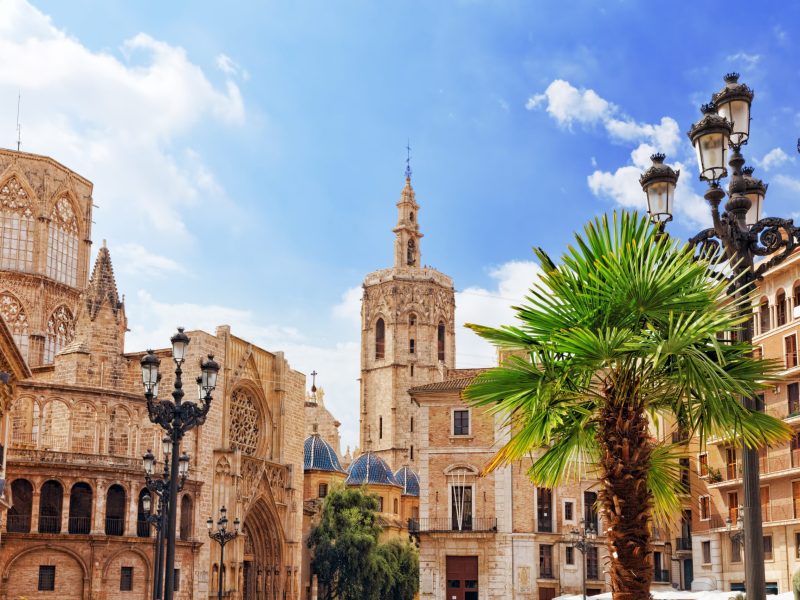
Valencia Cathedral
Another of the architectural jewels of the beautiful Valencian historical center. Did you know that within its walls there is nothing less than the Holy Chalice according to Aragonese tradition?
Its construction was carried out on what was an ancient Roman temple and later, a mosque. Although of a clear Gothic character, it also shows elements from different eras, with Baroque and Romanesque details.
Its origins date back to the thirteenth century, when its construction was ordered in honor of the Assumption of Saint Mary.
Currently, it is one of the most visited tourist attractions in Valencia, due to the presence of the Holy Chalice according to Aragonese tradition and for its exterior and interior beauty, it is also possible to admire works by artists such as Goya or Maella.
If you are lucky enough to visit it, we recommend that you ascend the stairs to reach the highest part of its Miguelete, from where you will enjoy one of the best panoramic views of the old town of Valencia.
Few cathedrals in the world combine such an important religious, artistic and historical background, under such a beautiful framework.
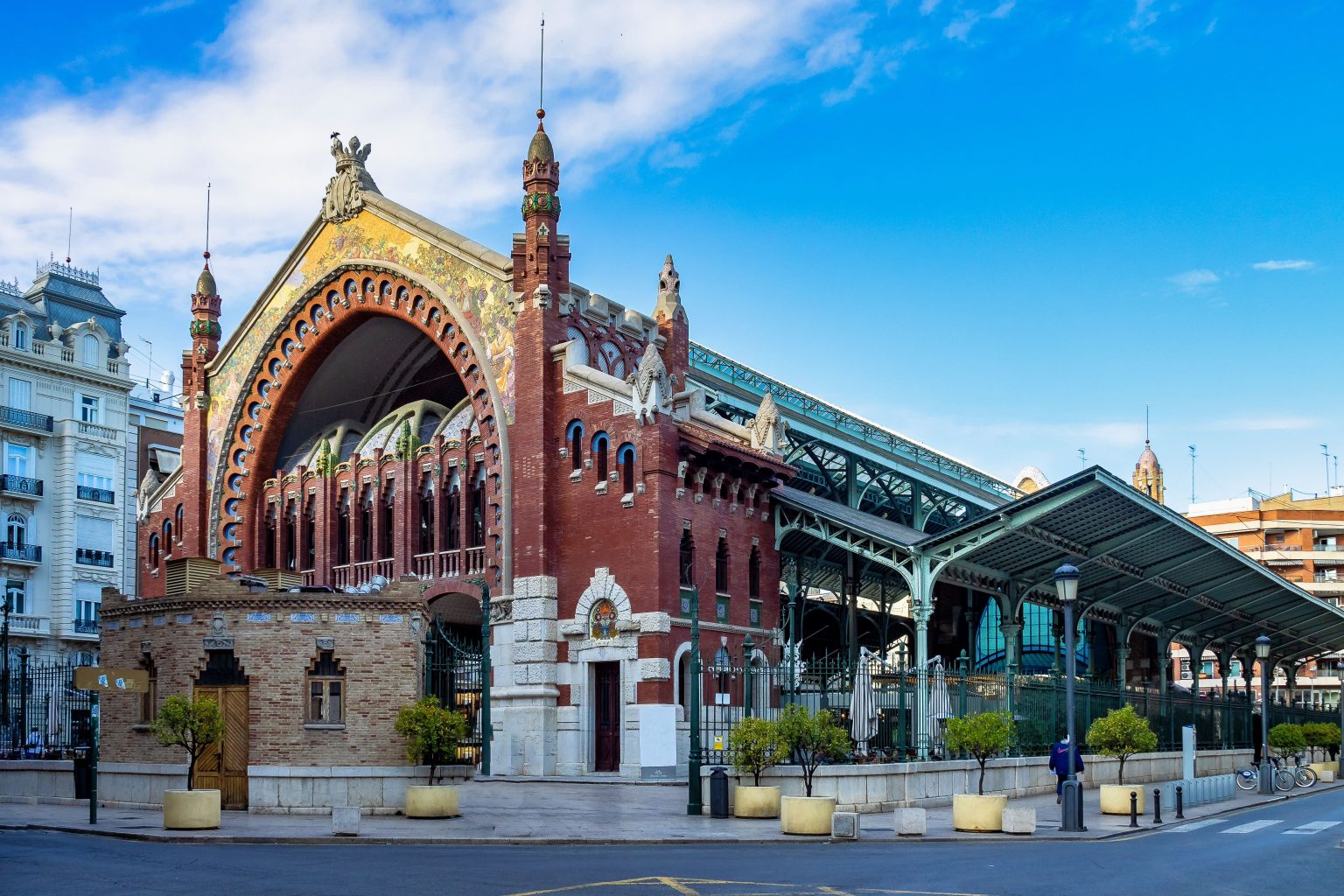
Central Market
If we previously suggested you visit what was the main market of Valencia hundreds of years ago, our next stop will take you to the current largest fresh produce market in Europe.
The Central Market of Valencia has more than 8,000 square meters in which it is possible to find gastronomic products of all kinds, with a special presence of the Valencian vegetable garden.
The building in which it is located is a spectacular iron structure, reminiscent at times of the Eiffel Tower itself.
With about 300 stalls for sale to the public, this market is a tribute to the Mediterranean diet and undoubtedly the ideal place to buy food from all over the city.
When you go to visit it, remember to respect the activity of the stalls: avoid blocking the aisles and take photographs only with the consent of the owners. Do not forget that in addition to being one of the main tourist attractions in Valencia, it is still an active market where there are a lot of people working.
San Nicolás de Bari and San Pedro Mártir Church
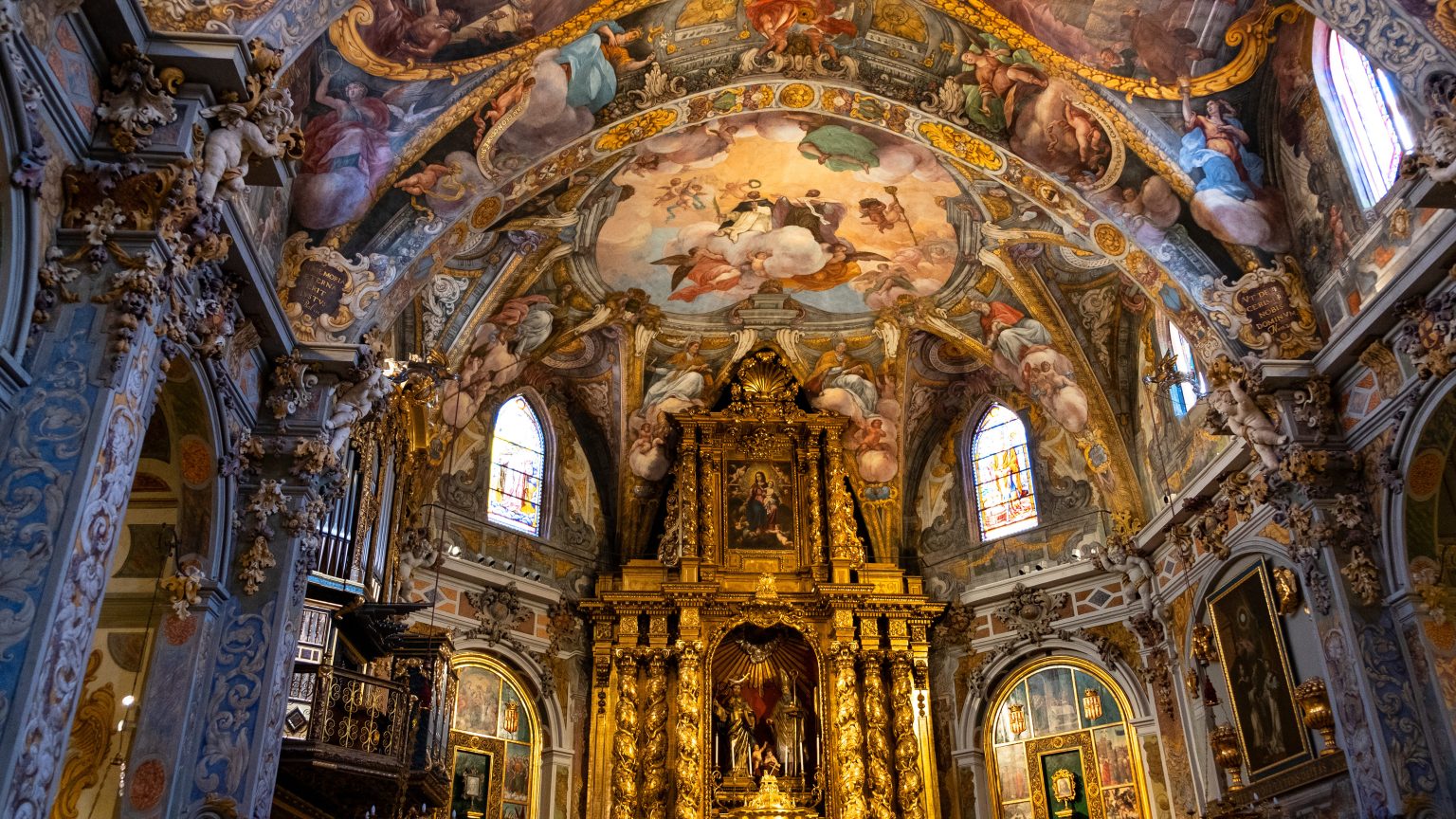
This spectacular thirteenth-century church is popularly known as the Valencian Sistine Chapel and as soon as you cross the entrance door you will easily understand why. After its recent restoration, the frescoes that populate its ceiling turn its interior into a real visual spectacle.
Although the church was built in 1238, two centuries later, between 1419 and 1455, the Gothic ribbed vault was built in the central nave and its interior paintings were made between 1690 and 1693.
The frescoes narrate scenes from the life of San Pedro Mártir and San Nicolás de Bari, under the signature of Dionís Vidal, who painted them following a design by Antonio Palomino.
Entrance to the temple is not free, but we promise that it is very worth it.
Turia Garden
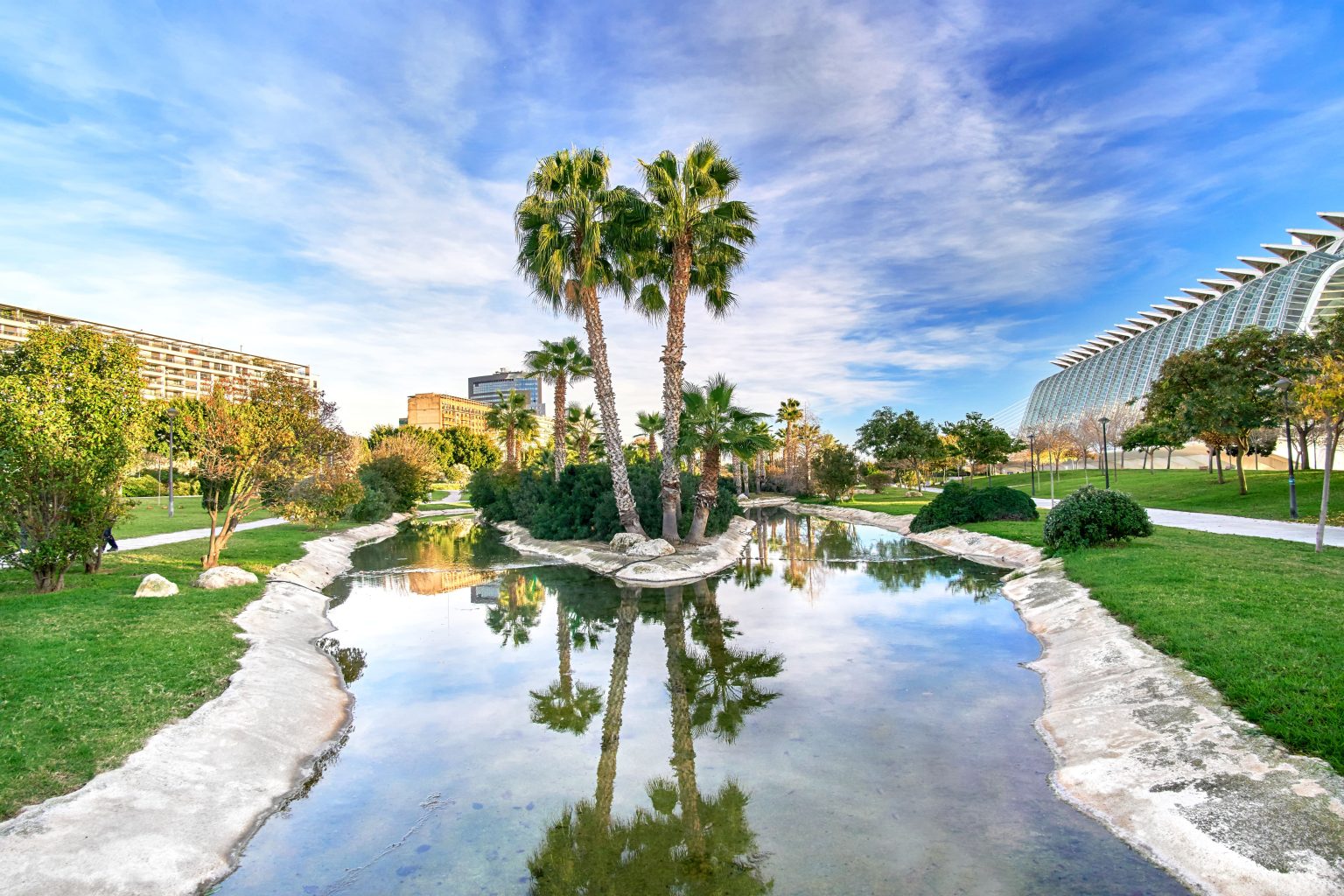
The Turia Gardens are the green lung of Valencia and next to the beach, one of the best places to enjoy an outdoor walk, practice a little sport or just sit and relax enjoying nature.
We are talking about one of the largest urban parks in all of Spain, with more than nine kilometers of extension that combine from sports facilities to beautiful well-kept gardens.
Built on the old riverbed, which was diverted after the great flood of 1957, it crosses the city from east to west around its historic center. To the west it borders the Parque de Cabecera and the Bioparc and to the east, with the City of Arts and Sciences.
If you are traveling with children, we recommend that you do not miss its huge slide park known as Gulliver, which stands out for its giant figure inspired by the work of Jonathan Swift.
Throughout the garden, you will find up to 18 different bridges, from different eras and with different architectural styles. The most important ones due to their rich history are in chronological order: the Trinidad Bridge (XV century), the Real Bridge (XVI century), the Sea Bridge (XVI century) and the San José Bridge (XVII century).
Barrio del Carmen
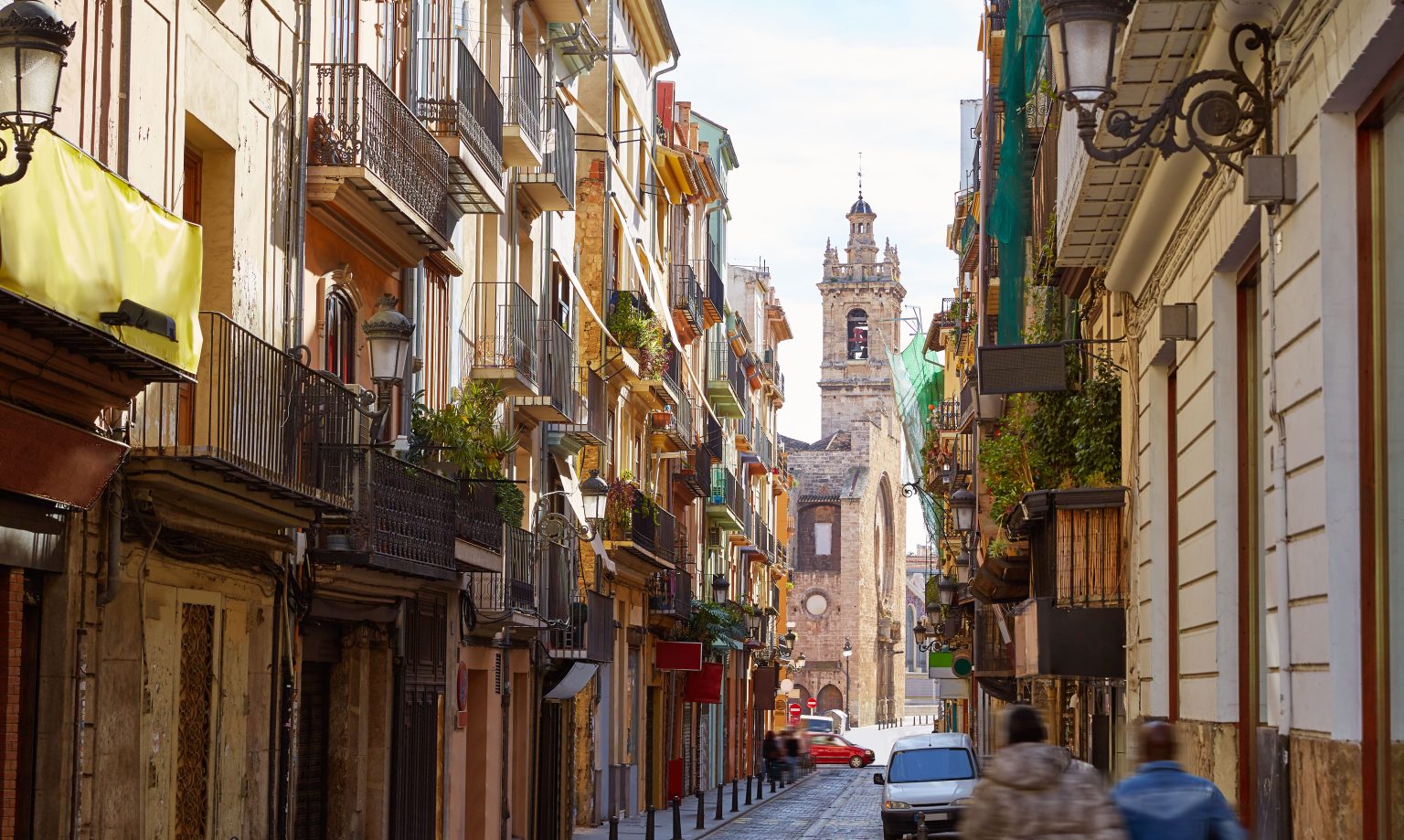
The Barrio del Carmen is the most important district of Valencia, both for its history and for its leisure and restaurant offer.
The neighborhood corresponds to the Ciutat Vella area, an area with a millennium of history behind it, which still retains medieval glimpses of its origins.
In the Barrio del Carmen there are several of the tourist attractions mentioned in our list, but it also brings together some others that are also worth knowing. To the already named Central Market, Valencia Cathedral, La Lonja de la Seda or Church of San Nicolás de Bari and San Pedro Mártir, we should add, for example, the Portal de la Valldigna, the Centre del Carme Cultura Contemporània, the Institut Valencià d’art Modern (IVAM), the Church of Santa Catalina, the Palau de la Generalitat or the Plaza Redonda among others.
Among its streets there is also L’Iber, which is the largest museum of historical miniatures in the world, or the House of the Rocks, where you will find the mythological floats that leave every year in procession during the celebration of the Corpus.
It is even possible to visit anti-aircraft shelters from the times of the Spanish Civil War.
To all these artistic, historical and cultural wonders, we must add a commercial and leisure offer like in no other area of the city. The Tapinería Market or the Mossen Sorell Market give a good example of this, as well as Roteros Street, Baja Street or Tossal Square, where several of the best restaurants and pubs in Valencia are located.
National Ceramics Museum
A visit to the National Ceramics Museum is one of the best things to do in Valencia.
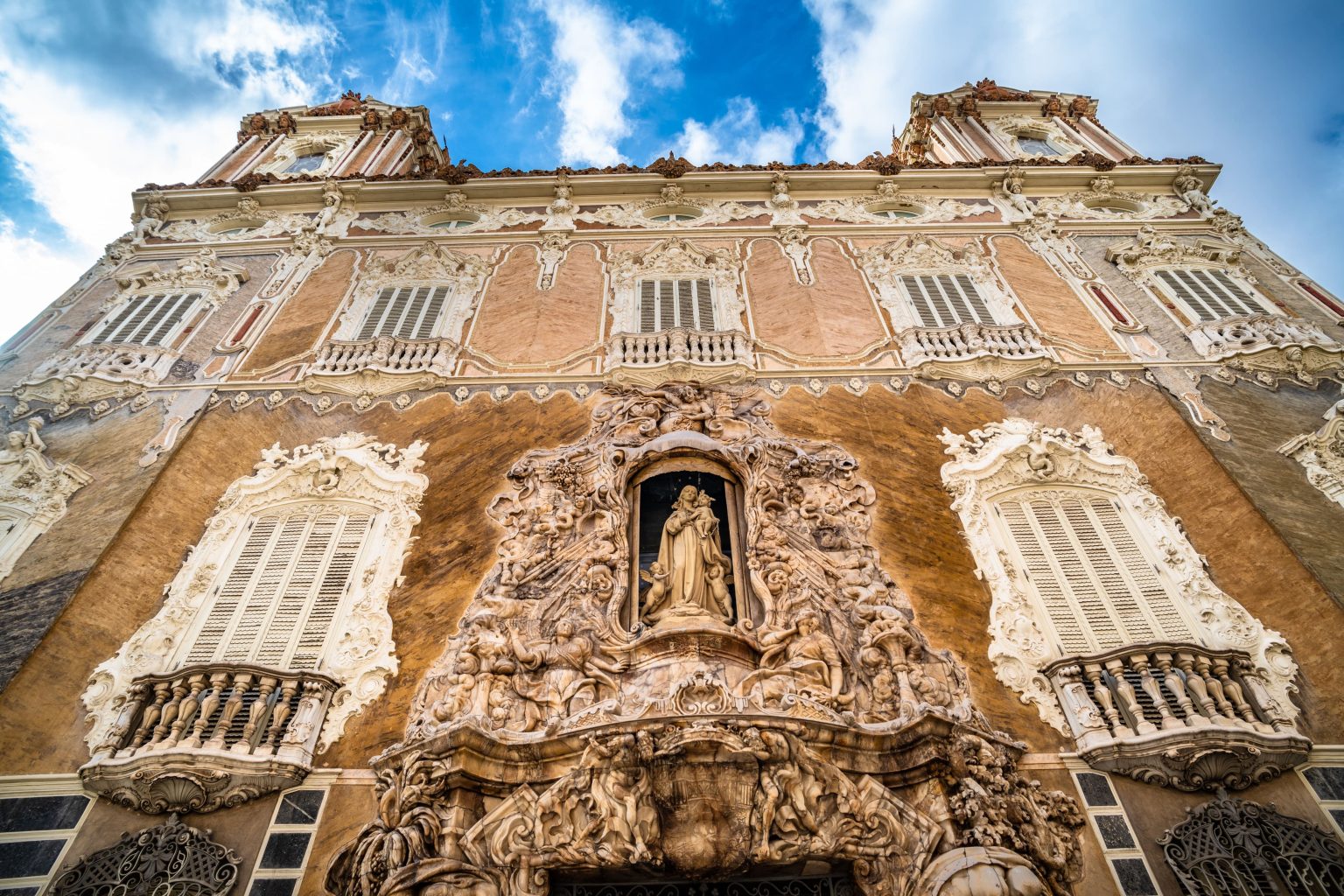
Simply, its entrance is already a work of art. Located in the Palace of the Marquis of Dos Aguas, one of the most representative examples of the heyday of the Spanish Baroque, this spectacular museum has the most important national ceramics collection in the country.
Among his works, you will find pieces from the eighth century to more current creations, for example, pieces under the signature of Picasso stand out.
It is not necessary to be a particular lover of ceramics to enjoy its interior. We promise you that it is a visit that will surprise you.
Barrio de Ruzafa
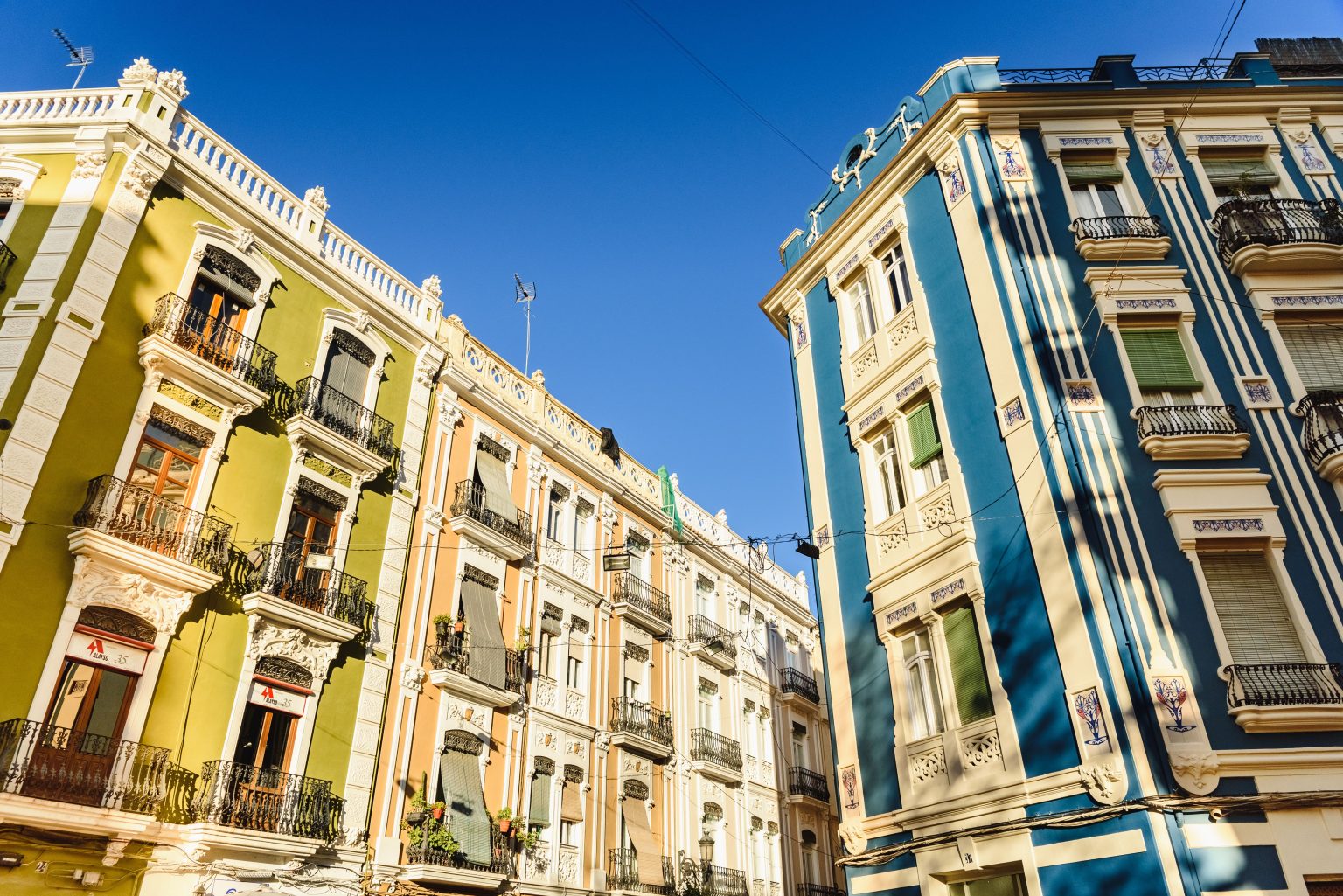
We could say that the area of Ruzafa and Ensanche are something like the Soho of Valencia. You will not find a better area in the city to go shopping and between its streets, also shops and boutiques, restaurants of all kinds abound, with proposals that combine modernity and tradition.
Ruzafa is a modern neighborhood, where behind a chic bar, you will find a florist, then a vintage clothing store and in between, a theater or an indie disco.
To get to know it in detail, we recommend that you take a guided tour of its streets, in which, in addition to visiting architectural jewels such as the Colon Market, they will give you recommendations about the bars and restaurants that you should not miss.
By the way, if you are planning to go out partying in Valencia, Ruzafa is undoubtedly one of the best areas.
L’Albufera
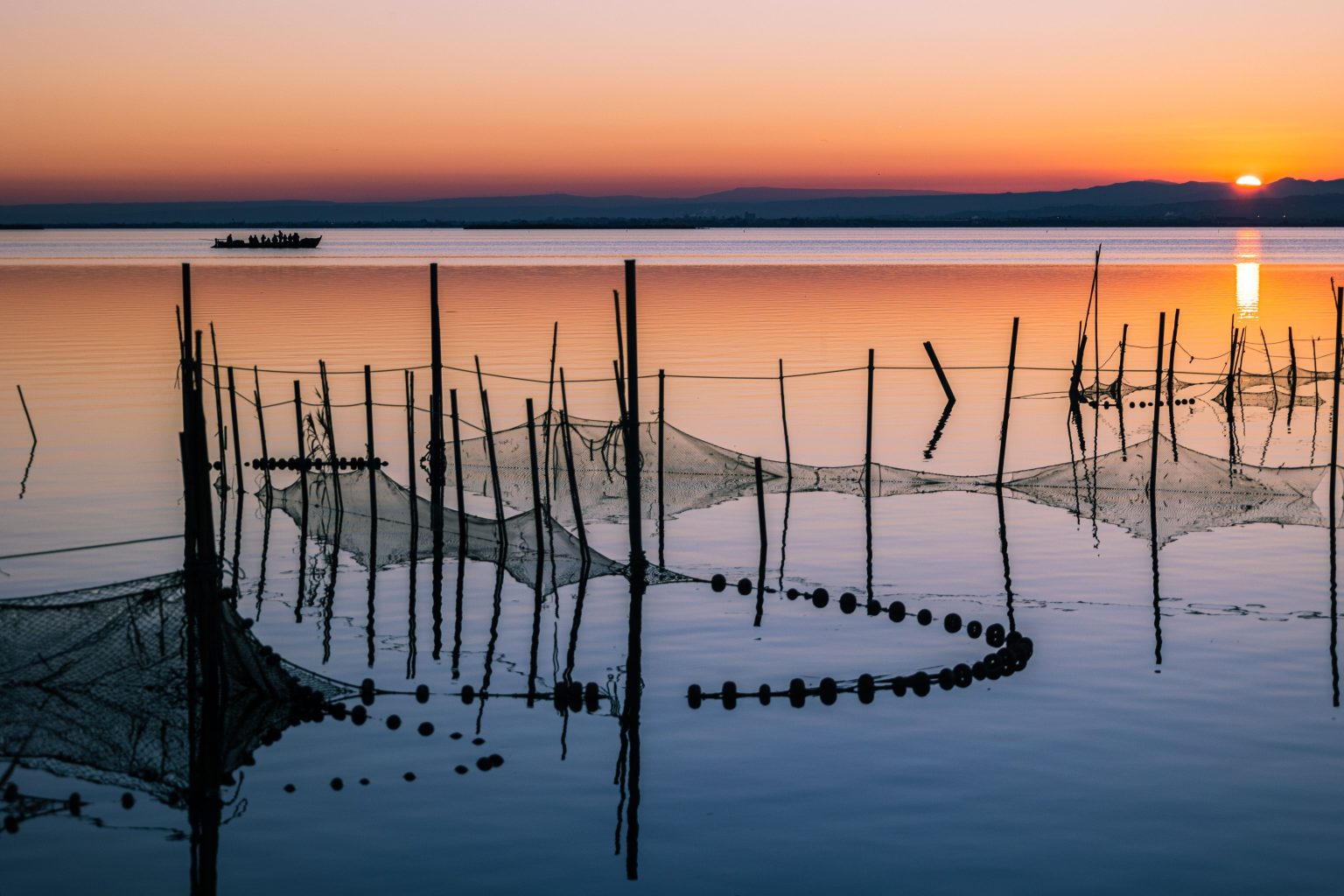
Located just 10 kilometers from the city, the Albufera Natural Park is undoubtedly one of the essential destinations to see near Valencia.
It is believed that paella has its origin in the Albufera area, since it is an important Valencian wetland that is known for its rice cultivation. We can’t think of a better excursion to finish our list of recommendations than this natural wonder.
We recommend that you book a boat trip to enjoy its wonderful sunsets and take the opportunity to taste some of the most typical dishes of Valencian cuisine in the small town of El Palmar. The all-i-pebre of its restaurants is quite a delicacy.
L’Albufera is also one of the best birdwatching spots in the whole country, including aquatic species such as flamingos.
The best thing is that you can get there directly from Valencia by bus in less than half an hour, which makes it an accessible option for any visitor.
If you are planning to stay several days in Valencia, you can not miss this magical place.
Frequently Asked Questions Valencia
What places should you not miss in Valencia?
Valencia is a city full of places that you should not miss. But if we had to choose which are its essentials, we would stay with the Malvarrosa Beach, the Barrio del Carmen, the City of Arts and Sciences and the Oceanografic.
Where to eat in Valencia?
Undoubtedly, both the Barrio del Carmen and the Ruzafa and Ensanche areas, both named on our list, are the ideal places to eat the best dishes of delicious Valencian cuisine. The Malavarrosa Promenade is also a good place to eat good rice.
How many days do you need to see Valencia?
It takes a minimum of four days to see Valencia. Keep in mind that you should spend at least a whole day visiting the Oceanografic and the City of Arts and Sciences. This will ensure that you do not miss anything.
How to travel to Valencia?
To travel to Valencia you can choose different options and you can travel to its beautiful streets by car, bus, boat, plane or train, including a high-speed line.
When is the best time to travel to Valencia?
To tell the truth, the best time to travel to Valencia will depend on the type of tourism you want to do in the city. If, for example, you want to enjoy a few days of sun and beach, we recommend that you opt for a summer month, although the spring or early autumn months can also be a good option, with good weather and fewer people.
To enjoy urban tourism in Valencia, spring is undoubtedly the best season of the year, with good weather, clear skies almost always and a mild and pleasant temperature.