




Things to Do in Tanzania: Safari, Culture and Zanzibar Beaches
Table of Contents
Reviewed November 20, 2026. Park details come from Tanzania National Parks (TANAPA) and public park information; travel rules and advisories come from Tanzania Immigration Services, the U.S. State Department and the UK FCDO. Fees, rules and dates change, so confirm them with the official sources before you book.
The best things to do in Tanzania include safaris in the Serengeti and Ngorongoro Crater, the views of Kilimanjaro, local cultures and the beaches of Zanzibar. Here we show you what to include and how to combine a Tanzania and Zanzibar trip in 7, 10 or 14 days.
A quick note on our approach: at Catalonia we are not safari specialists, so this guide is for orientation, not a sales pitch. We focus on what to see, how the pieces fit together and where to confirm official information.
Things to Do in Tanzania at a Glance
These are the highlights that most often make it into a Tanzania and Zanzibar trip. Each one links to its section below:
- Serengeti: the great wildebeest migration, one of the world’s best-known wildlife spectacles.
- Ngorongoro Crater: a volcanic caldera packed with wildlife and a UNESCO World Heritage Site.
- Tarangire and Lake Manyara: elephants, baobabs and varied landscapes close to Arusha.
- Kilimanjaro: Africa’s highest peak, which you can admire without climbing it.
- Cultures of Tanzania: Maasai communities and Swahili heritage, visited responsibly.
- Dar es Salaam: the main gateway and your link to the island.
- Zanzibar: beaches, Stone Town and coral reefs to finish the trip.
Safari Parks in Northern Tanzania
The northern safari circuit is organized from Arusha and brings together the country’s best-known parks: wide plains, a volcanic crater and smaller, easier parks. Every extra park means more hours on the road or another domestic flight, so we recommend choosing fewer parks and spending more time in each.
Serengeti
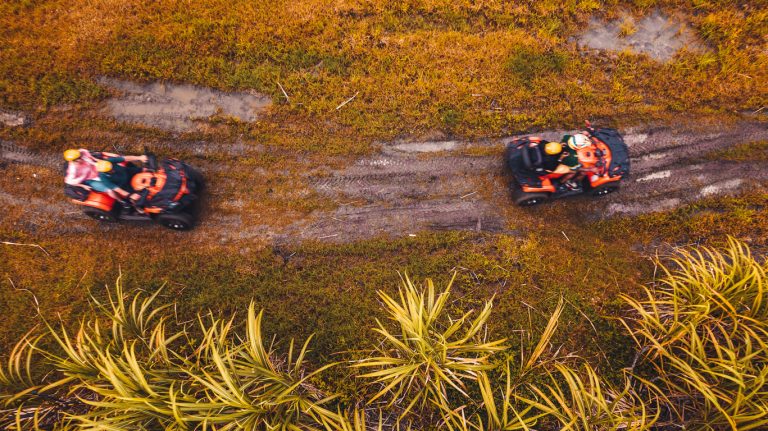
The Serengeti is famous for the great migration. According to TANAPA, more than 1.5 million wildebeest move across its plains alongside zebras and other grazers. The park authority gives June to October as the best time to see the migration and January to February for the calving season. River crossings are usually linked to July through October, but no operator can promise one on a specific day.
It is the largest of the northern parks and needs the most time. With only a week, you may prefer to save it for another trip or reach it by domestic flight. It suits travelers who dream of the migration and can spend several nights.
Ngorongoro Crater
Designated a UNESCO World Heritage Site in 1979, Ngorongoro Crater is a huge volcanic caldera about 19 km (12 miles) across and roughly 600 m (nearly 2,000 feet) deep, with a floor of around 264 km² where wildlife concentrates. It lies about 180 km (110 miles) west of Arusha.
Visits follow specific rules: you stay in a 4×4 and, outside designated areas, you don’t leave the vehicle, and visits to the crater floor are limited to around six hours. Pastoralist Maasai communities live within the wider conservation area, though not on the crater floor. It is an excellent choice for a first safari or a short trip.
Tarangire and Lake Manyara
Tarangire is known for its elephants and baobab trees. In the dry season, large numbers of animals gather along the Tarangire River, the park’s main water source, so June to October tends to bring strong sightings. Lake Manyara, around 70 km (43 miles) away, is a smaller park with a very different landscape of forest, lake and escarpment.
Both are close to Arusha, which makes them practical as a first or last stop or for travelers with limited time. They suit families and anyone who prefers shorter drives.
Kilimanjaro, Moshi and Arusha
At 5,895 m (19,341 feet) at Uhuru Peak, Kilimanjaro is Africa’s highest mountain and a UNESCO World Heritage Site. You don’t need to climb it to enjoy it: on clear days its snow-capped silhouette is visible from Moshi and Arusha, the two usual base towns. Kilimanjaro International Airport serves both, so this area is often where trips begin or end.
If you are thinking about the ascent, remember that it is a multi-day expedition. TANAPA requires climbers to go with licensed guides through a registered operator. There are seven official routes: Marangu typically takes five to six days and Machame six to seven. The U.S. embassy advises asking operators whether head guides are certified first responders, whether they carry a pulse oximeter and emergency oxygen, and what their evacuation protocol is. Altitude illness is a serious risk, so talk to your doctor first.
Cultures of Tanzania
Tanzania is much more than wildlife. In the north, Maasai pastoralist communities live alongside the parks, including within the Ngorongoro Conservation Area. On the coast and in Zanzibar, Swahili culture dominates, with a long maritime and trading heritage you can see in Stone Town.
If you visit a community, do it responsibly. Choose visits arranged with the community’s consent, ask before photographing people, agree any payment openly and treat the encounter as an exchange, not a performance. The U.S. State Department advises dressing modestly outside hotels and resorts, particularly in Zanzibar, and notes that photographing government buildings, airports, bridges and police officers is illegal.
Dar es Salaam and the Coast
Dar es Salaam is Tanzania’s largest city and its main gateway by air and sea. For anyone combining a safari with the beach, its value lies in the connection: Zanzibar is about 20 minutes away by plane or between 1 hour 20 minutes and 2 hours by ferry, depending on the operator.
It is a busy city that most travelers pass through rather than linger in. The U.S. State Department reports pickpocketing and bag snatching in tourist areas and home invasions in Arusha and Dar es Salaam, and recommends using taxis from a trusted source. On the wider coast, the mainland also has Pangani and Saadani, and the islands of Pemba and Mafia are known for diving and whale sharks.
Tanzania and Zanzibar: The Island as Your Finale
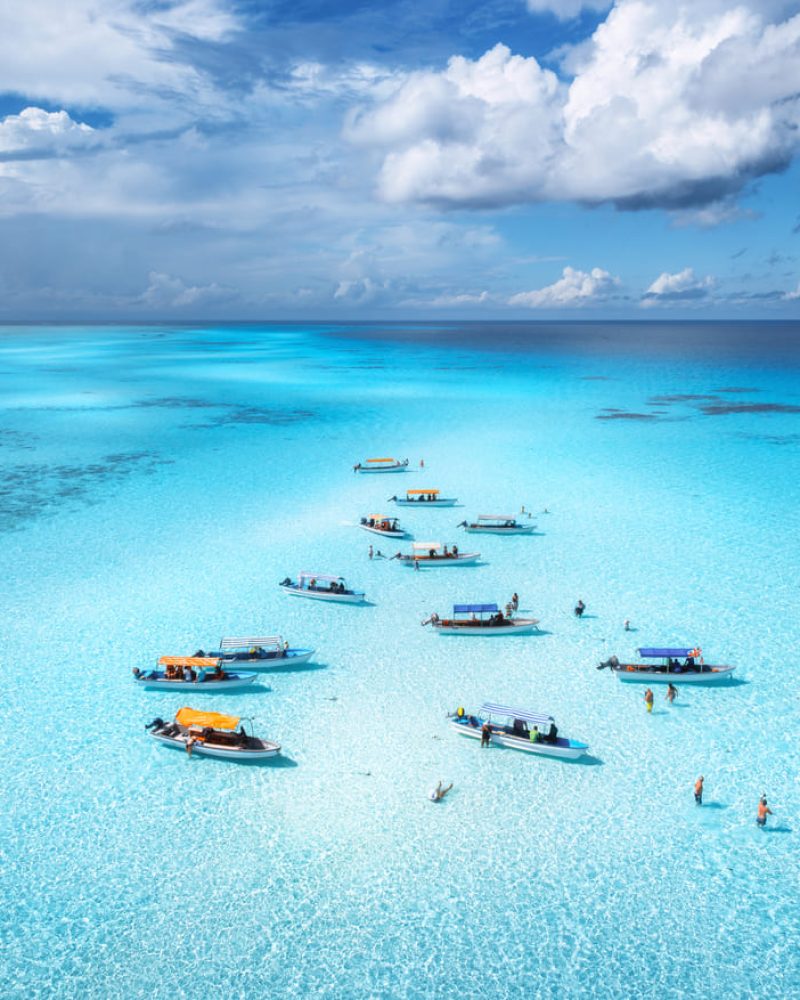
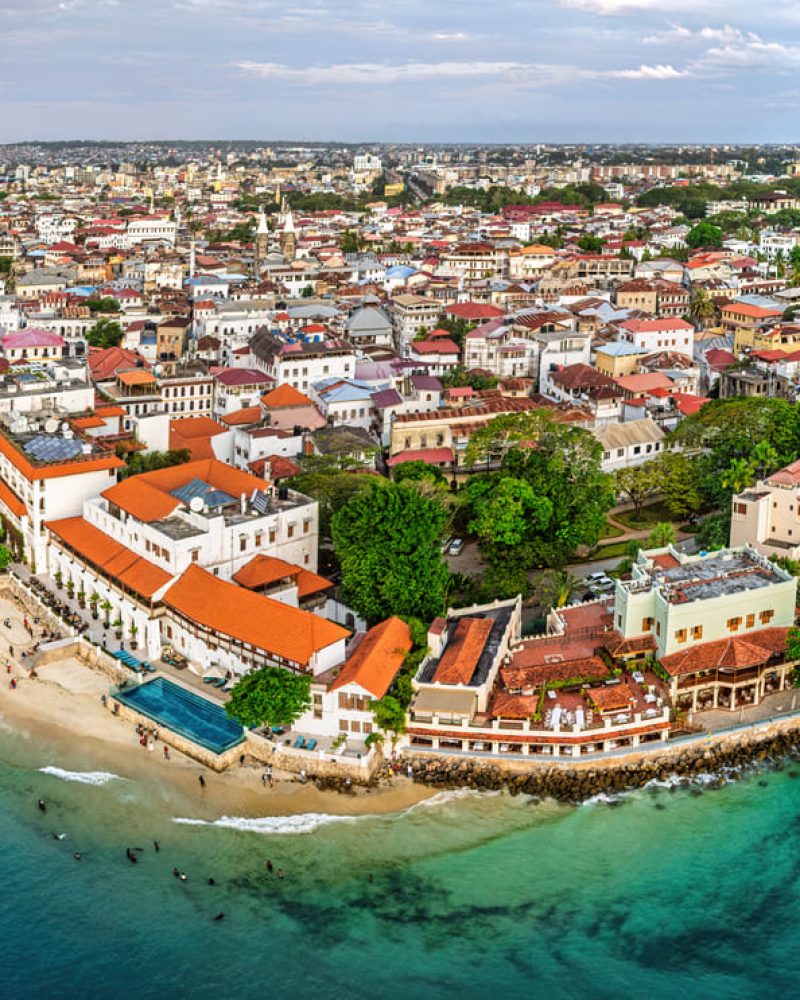
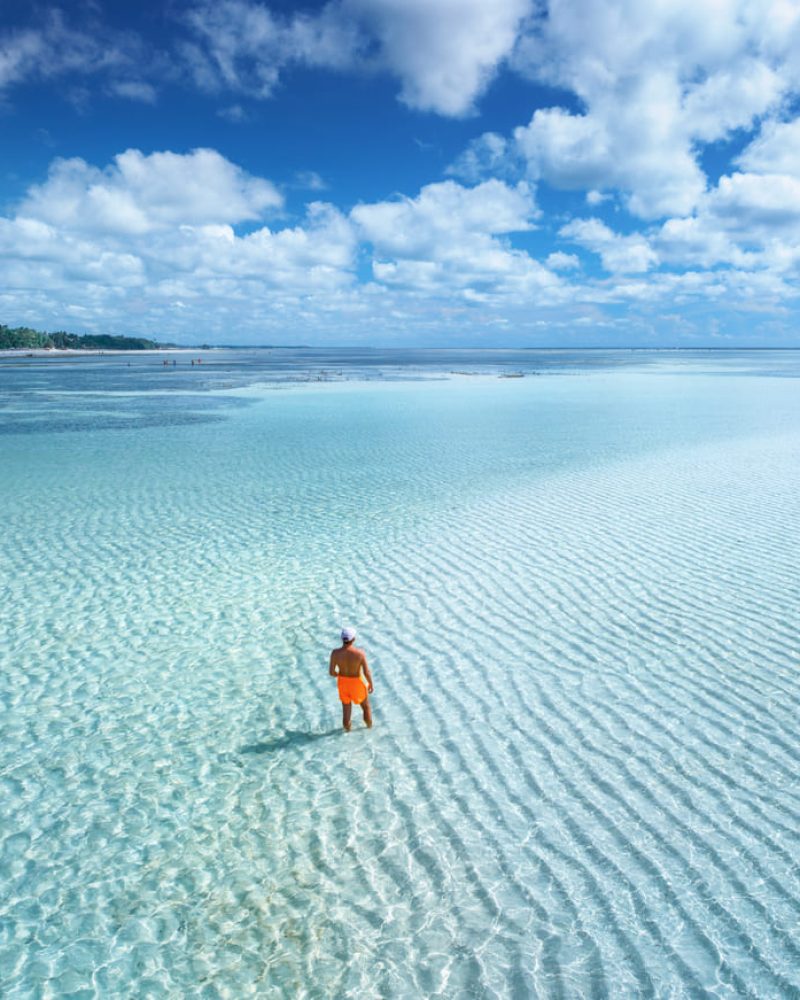
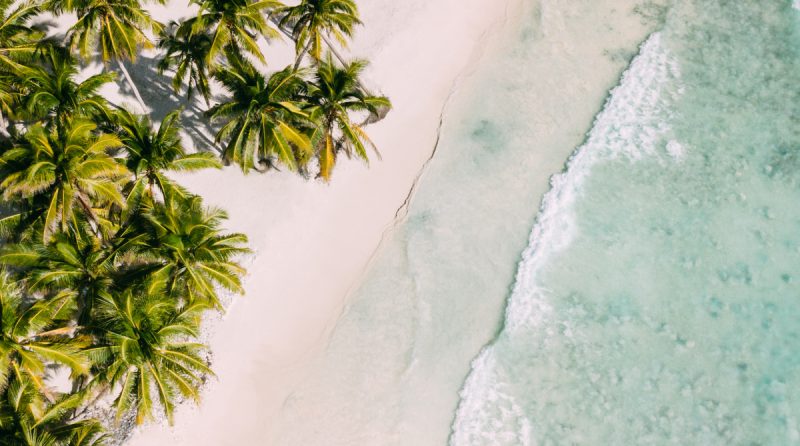
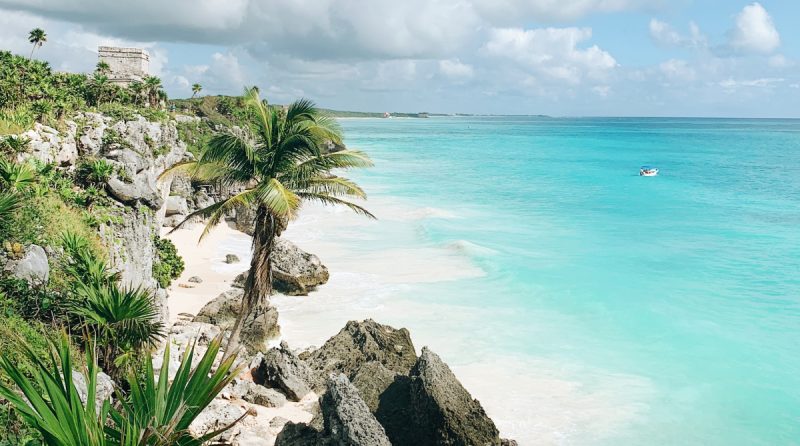
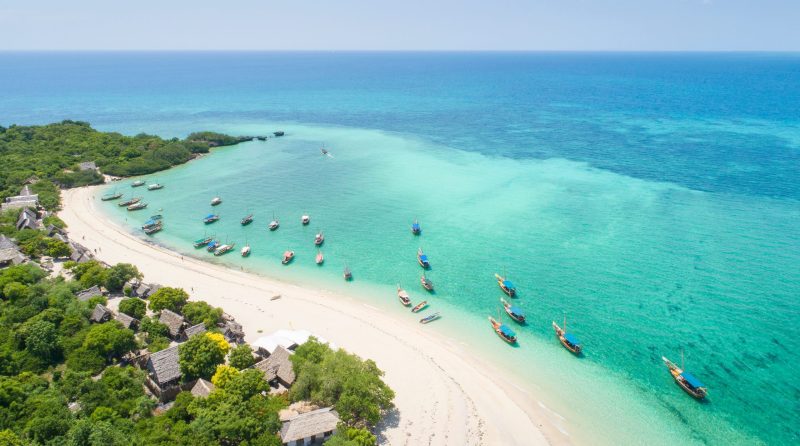
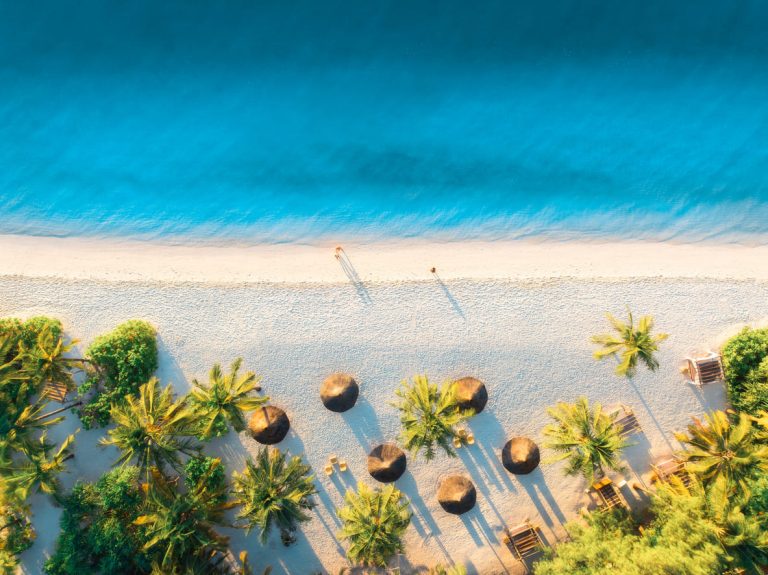
Ending a Tanzania and Zanzibar trip on the island makes sense: after days of early game drives, the beach arrives right on time. Three highlights stand out. Stone Town is the historic old quarter and a UNESCO World Heritage Site. Nungwi and Kendwa, on the north coast, are the beaches where swimming depends least on the tide. And Mnemba Atoll, off the northeast coast, is one of the island’s best spots for snorkeling.
For more ideas, see our guide to the best things to do in Zanzibar, and if you are choosing where to swim, our selection of the best beaches in Zanzibar compares each area.
Tanzania Safari and Zanzibar: 7, 10 and 14-Day Itineraries
A Tanzania safari and Zanzibar trip can be organized in many ways. This table shows three outline plans:
Length | Safari days | Parks | Zanzibar beach days |
7 days | 3–4 | Tarangire or Lake Manyara, and Ngorongoro | 3 |
10 days | 5–6 | Tarangire, Ngorongoro and Serengeti | 4 |
14 days | 8–9 | Tarangire, Manyara, Ngorongoro and Serengeti (more nights), plus an optional Kilimanjaro day | 5, split between two areas |
We suggest doing the safari first and the beach second, for two practical reasons: baggage limits on small aircraft, and the chance to rest at the end. Transfer times vary by park and airline, so confirm them when you book. A Tanzania and Zanzibar itinerary that is too tight means more hours traveling than enjoying, so prioritize.
When to Visit Tanzania and Zanzibar
The dry season, from June to October, is the classic safari window and also brings dry weather to Zanzibar. January and February add calving season in the Serengeti, per TANAPA, and hot, dry beach days on the island. The long rains (March to May) and short rains (November to December) are wetter. The U.S. State Department notes that during the rainy seasons many roads are passable only with 4×4 vehicles.
Spain’s foreign ministry also relays an October 20, 2026 forecast from the Tanzania Meteorological Agency that El Niño could bring above-average rainfall and flood risk, especially on the coast. For the island, see our guide to the best time to visit Zanzibar.
How to Get From Safari to Zanzibar
You have three main options. Flying is fastest: from Arusha or Kilimanjaro, flights to Zanzibar take roughly one to two hours depending on the airline, and from Dar es Salaam about 20 minutes. The ferry from Dar es Salaam takes about 1 hour 20 minutes to 2 hours; the U.S. State Department advises the high-speed ferry, with tickets bought inside the terminal or online in advance. Small aircraft often limit bags to 15–20 kg, including hand luggage, and prefer soft bags, so check with your airline.
Before You Go: Visa, Insurance and Health
For UK citizens, the standard tourist visa costs USD 50 and is valid for up to 90 days; Tanzania Immigration’s guidelines direct US tourists to a multiple-entry visa at USD 100, valid for one year. Both governments ask for a passport valid six months beyond arrival with blank pages. Government inbound insurance is mandatory, bought for your first port of entry (USD 44 per adult for Zanzibar, per the U.S. State Department). The U.S. advisory is Level 2, with Level 3 only near the Mozambique border; the FCDO advises against all but essential travel only within 20 km of it. Full details are in our guide to Zanzibar visa requirements.
Frequently Asked Questions
-
What are the must-see places in Tanzania?
It depends on your time, but a typical trip combines one safari park (Serengeti, Ngorongoro or Tarangire), a view of Kilimanjaro and a few beach days in Zanzibar, with a visit to Stone Town.
-
How many days do you need for Tanzania and Zanzibar?
Seven days allows a short safari and three beach days. Ten or fourteen days gives a more relaxed Tanzania and Zanzibar itinerary and room to add the Serengeti.
-
Can you combine a safari and a beach stay on one trip?
Yes, it is a very common combination, with flights or a ferry linking the mainland and the island. We recommend doing the safari first and resting on the beach afterward.
-
What is the best park for a first safari?
For a few days, Ngorongoro and Tarangire are practical because of their proximity to Arusha. If the migration is your goal, the Serengeti is the destination, with more nights.
-
What do I need to travel to Tanzania?
A visa, a passport valid for six months beyond arrival, a return or onward ticket and the mandatory government insurance. Check vaccines and the latest advisories with official sources.
Conclusion
The best things to do in Tanzania depend on your time and pace: a couple of well-chosen parks, a view of Kilimanjaro and the local culture can fill a trip, and the island is the ideal ending. With a well-planned Tanzania safari and Zanzibar plan, the key is not trying to see everything, and confirming official data before you leave. When you are ready to choose where to stay on the island, see Catalonia Grand Zanzibar.
Plans not to be missed in Zanzibar
- Itinerary, Nature, Places of interest