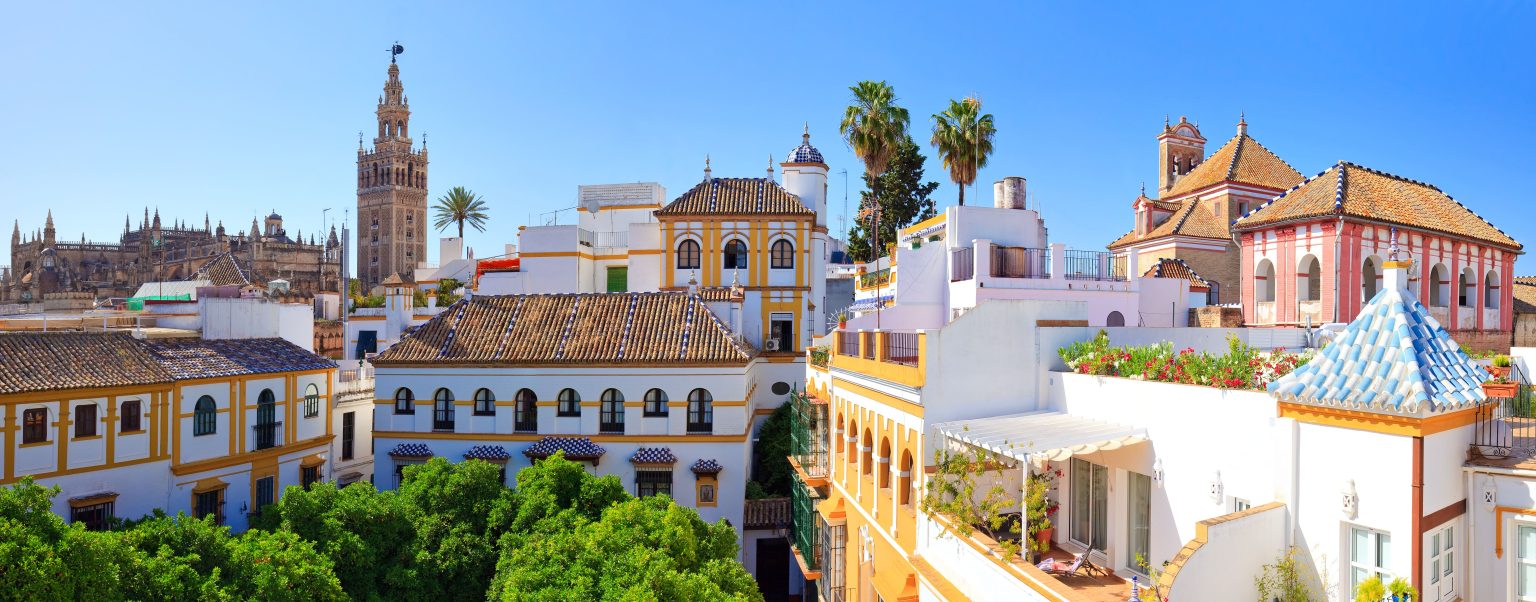
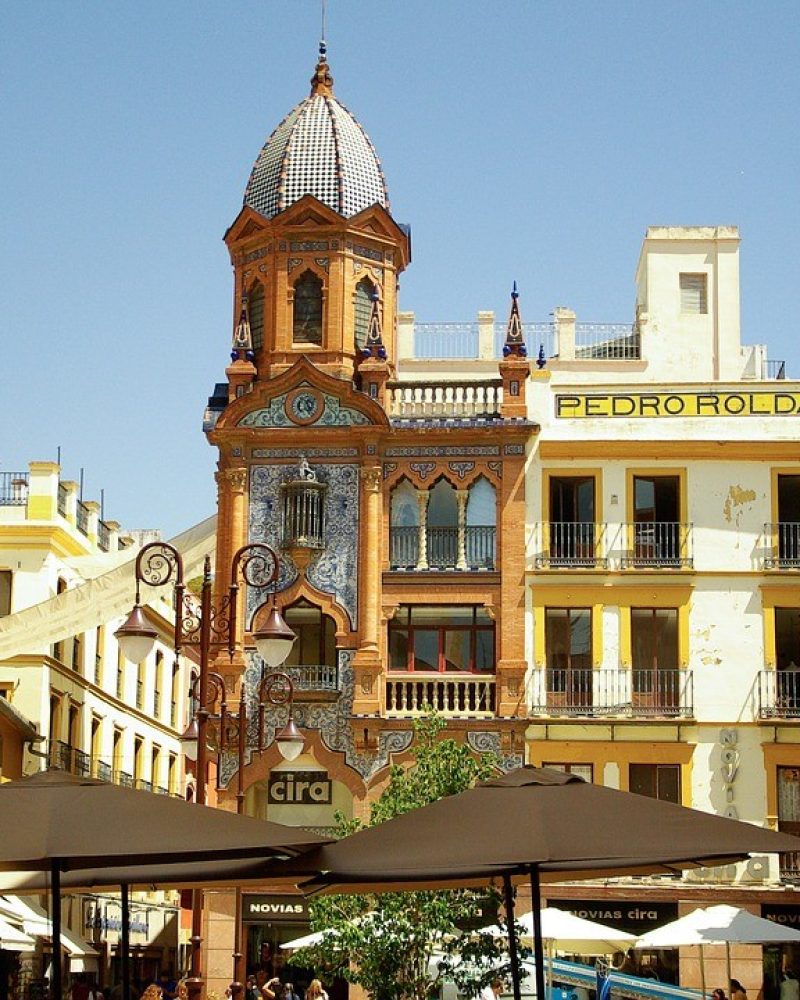
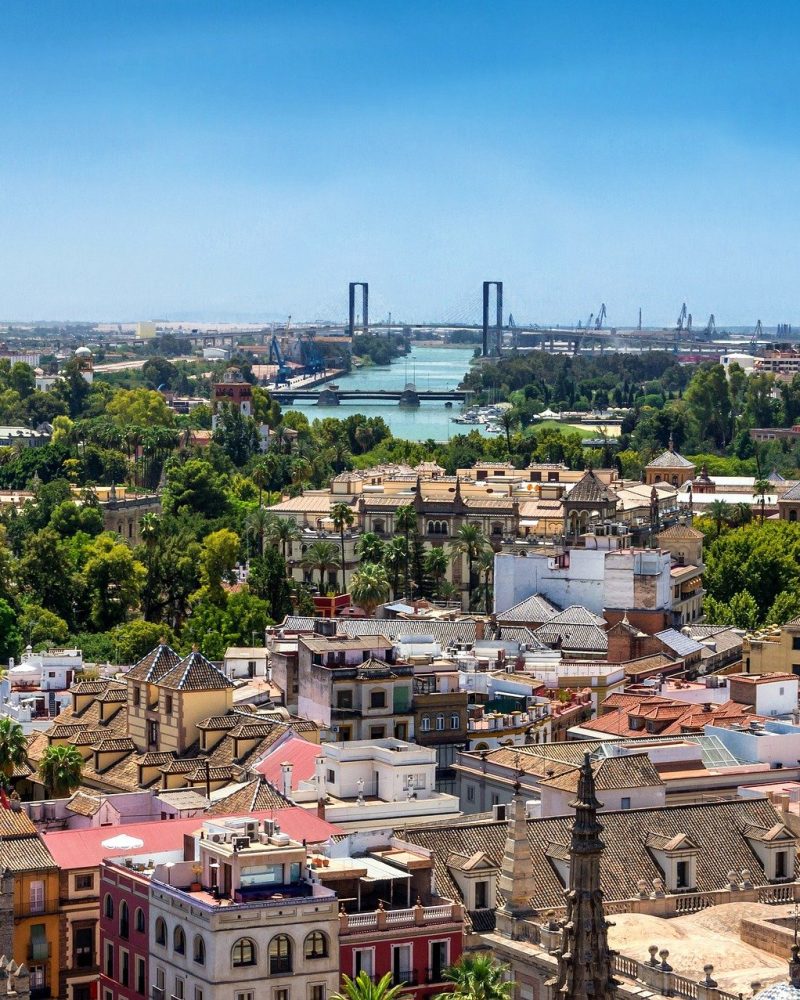
There is a famous song that says Seville has a special color, and the truth is, we can think of no truer statement to define this wonderful city.
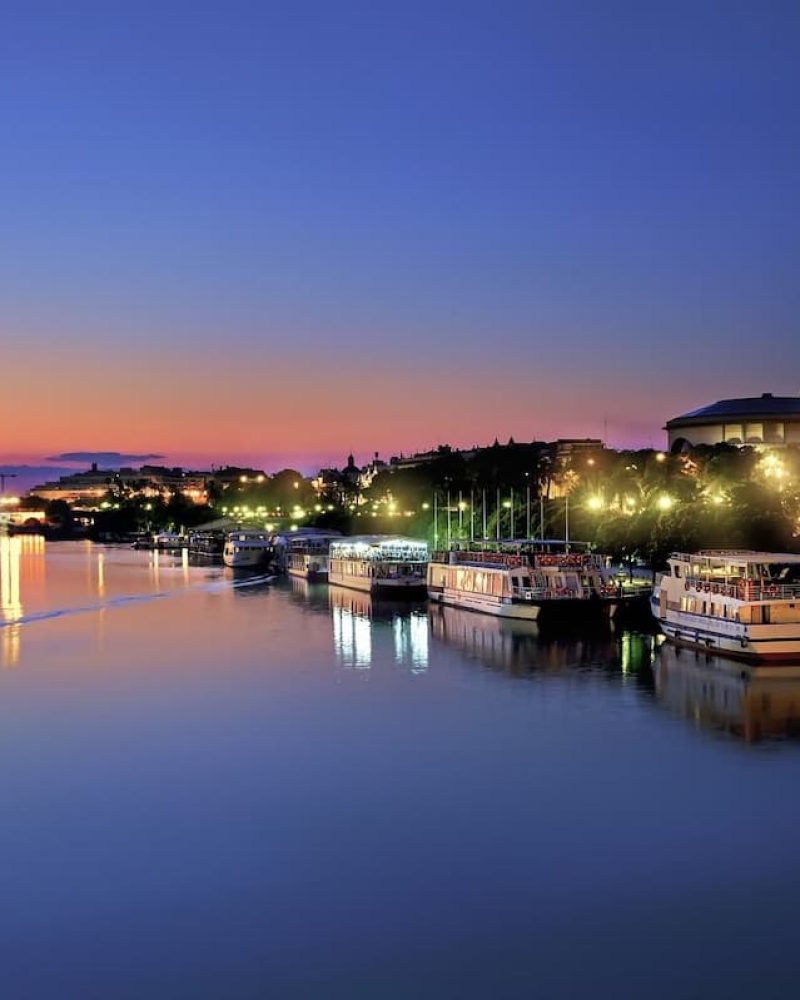
But as well as colour, Seville is light, both by day and by night. Its monuments and bridges, illuminated on the banks of the Guadalquivir river at sunset, give a good account of this.
Seville is also art, flamenco, and gastronomy, being one of the most iconic in Spain, and a unique offer of bars and restaurants in the south.
Seville is history and culture, but also modernity and avant-garde. Along its streets you will find true architectural treasures, neighbourhoods of white houses in which Andalusian art is breathed behind every corner, flamenco tablaos whose guitars set the soundtrack of the city centre and above all, a very special atmosphere and ambience. As special as the colour that, according to the song, this magical city has and that undoubtedly dyes the heart of everyone who visits it, even if it is only for a few days.
Table of Contents
Seville Cathedral
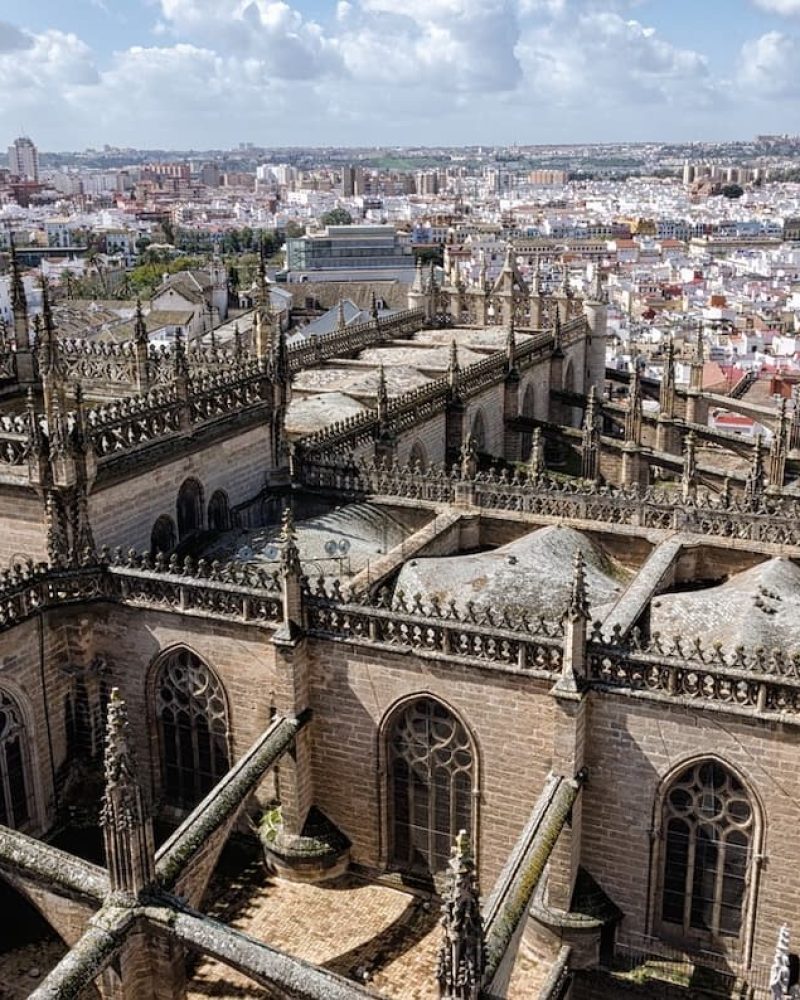
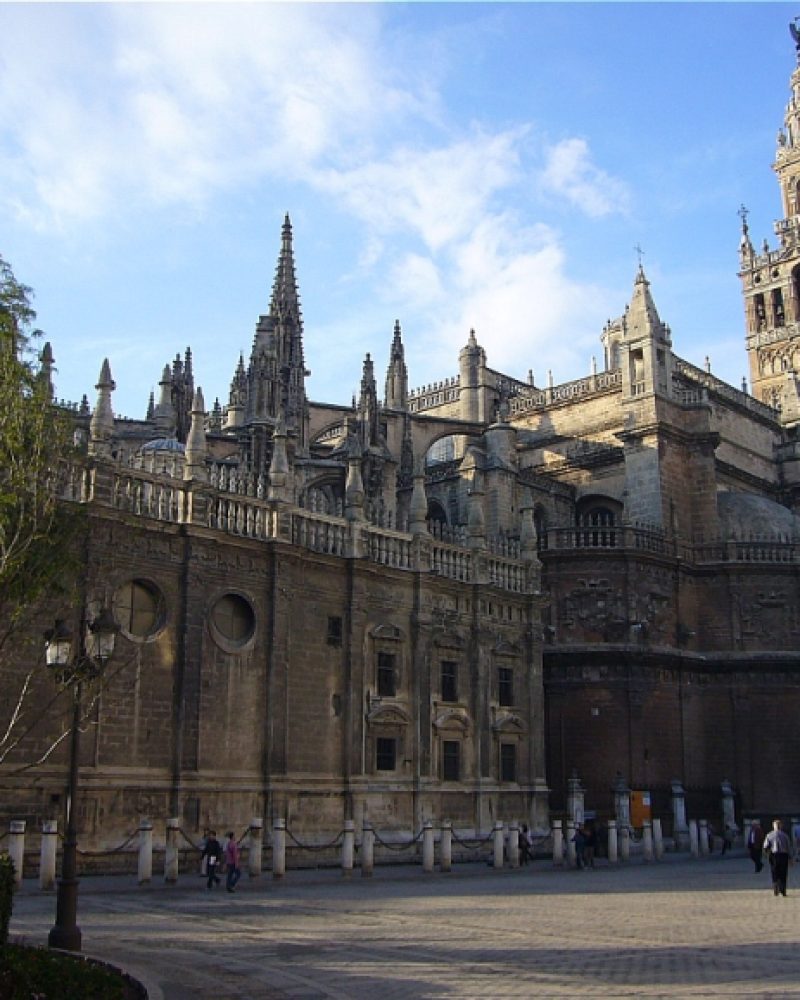
We begin our review of the best places to see in Seville with one of its hallmarks. The Giralda tower, the highest point of its cathedral, is one of the most iconic towers in our country and the undisputed queen of the Sevillian skyline.
Did you know that Seville Cathedral is the largest Gothic temple on the planet? It was declared a World Heritage Site in 1987 and its first stones date back to no less than the 12th century.
Although it may seem surprising, it was originally a mosque and not a cathedral, as is the case with the Mosque-Cathedral of Córdoba. However, in this case, the only vestiges of its Arab era still present today are its famous Patio de los Naranjos, the Puerta del Perdón and its aforementioned minaret, the Giralda tower.
The fact that it was built on top of the old mosque gives it one of its distinguishing features from the rest of the Gothic temples on the planet, its square shape and not a Latin cross.
Inside, as well as marvelling at the colour and play of light in the stained-glass window of Charles V, you can visit the tomb of Christopher Columbus, along with that of four other kings of Castile. But this is not the only surprise that its walls contain. On entering through the Puerta del Lagarto, you can see a stuffed crocodile hanging from its ceilings, along with an elephant tusk, both gifts that the Sultan of Egypt made to King Alfonso X ‘The Wise’ to ask for his daughter’s hand in marriage.
Torre del Oro
On the left bank of the Guadalquivir River you will find another of the most representative and famous buildings of the city.
The construction of this particular tower, of 36 metres high, commenced in the early 13th century at the hands of the Arab empire.
It was originally conceived as part of the wall that protected the city, but throughout its history it has served as a prison or weapons warehouse.
It is well worth visiting its interior, where you will find a Maritime Museum of the city, as well as one of the best panoramic views of Seville.
The best time to take a photo next to the Torre del Oro is undoubtedly at night, with its illuminated figure and the golden and bright reflection on the waters of the Guadalquivir. You can also enjoy it from a privileged perspective if you take the tour included as the next recommendation in our list of the best things to do in Seville.
The cruise on the Guadalquivir
A boat trip that is as recommended to do during the day as at night. The cruise on the Guadalquivir is a different way to enjoy some of the most important buildings and monuments of Seville, while learning about its history.
The journey, which lasts approximately one hour, includes a unique view of such emblematic points as the Torre del Oro, whose pier serves as a starting point, the Palace of San Telmo, the Triana Bridge, the Plaza de Toros de la Real Maestranza, the Navigation Pavilion, the Barqueta Bridge or the Tower of Seville, among others. All enlivened with the commentary of an expert guide, who, through headphones, will give you his particular version of the different tourist attractions on the tour.
Royal Alcazar of Seville
Next to the Cathedral, the most important and beautiful building in the entire city. It is also quite close to it.
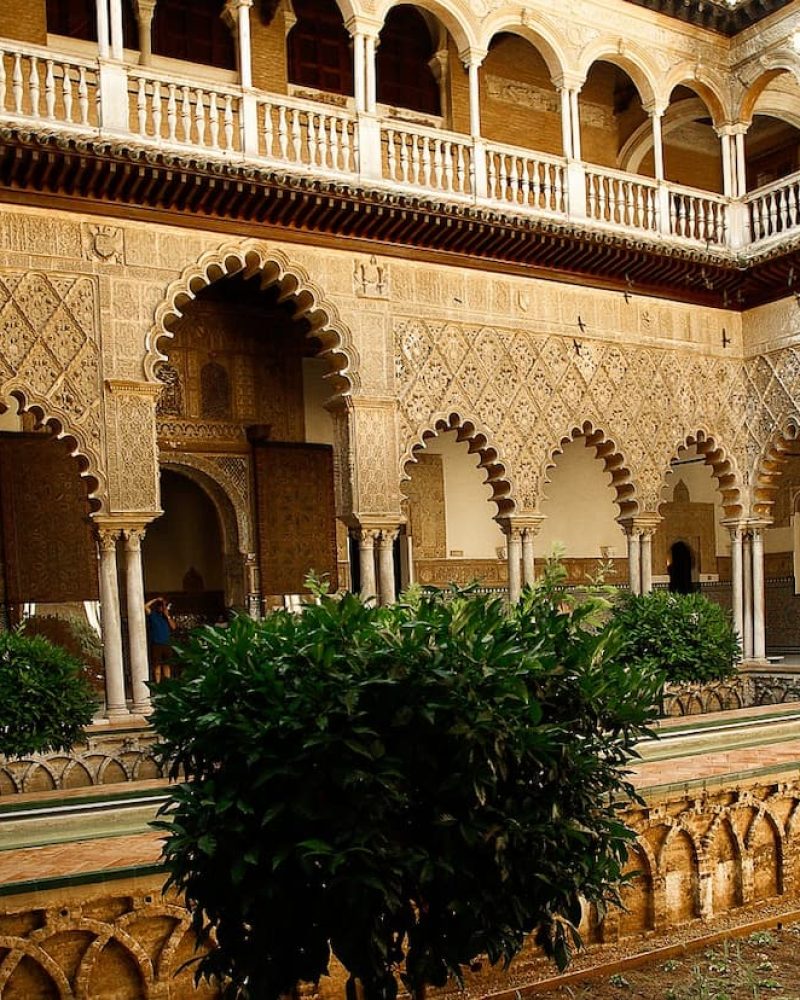
It is no exaggeration to say that the Alcazar of Seville is one of the most beautiful palaces on the face of the Earth. If you have little time for sightseeing in the city and you are hesitating about what to visit in Seville, this should be one of the obligatory stops on your itinerary.
Its origins date back to no less than the year 913, when the Arab empire began its construction.
Its walls masterfully combine the presence of different architectural styles such as Mudejar, Classical, Renaissance or Baroque.
Its interior courtyards are a true sensory experience. The smell of its abundant flowers and orange trees, the sound of the water from its fountains and ponds, the harmony of its gardens and all the precious details of its façades, make up a postcard that quickly becomes unforgettable.
The main areas that make up its visit, lasting approximately two hours, are: the Patio del Yeso, the Patio de las Muñecas, the Patio de las Doncellas, the Alcoba Real, the Salón de Tapices and the Salón de Embajadores.
To visit it, it is best to enjoy its guided tour through the internet, in order to avoid queues and long waits at the entrance.
Macarena
This beautiful basilica owes its fame especially to its procession during Seville’s Holy Week.
Although it is not particularly close to the other monuments in the city centre, we recommend that you move away from the historic centre to enjoy this visit.
Built in a clear Andalusian Baroque style, its beauty increases considerably once you cross the portico of its entrance. Inside, you will find different shades of marble and fresco paintings by Rafael Rodríguez.
Its side chapels house gilded wooden altarpieces whose goldsmith decoration is truly worthy of admiration. In particular, that of the Holy Virgin Hope, designed by Fernando Marmolejo Camargo.
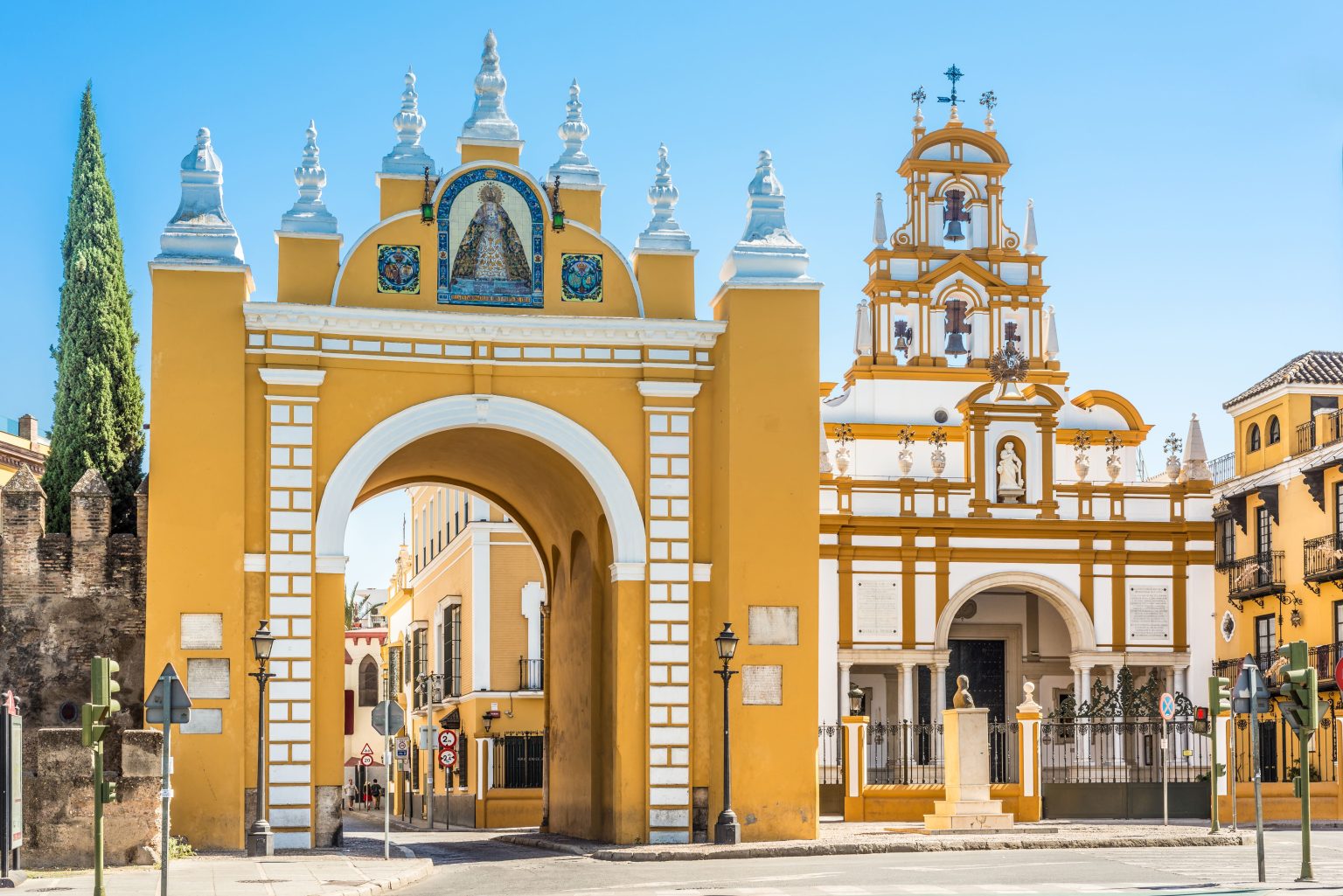
Right next to the Basilica, you will find the Puerta de la Macarena, which in the days when Seville still had its wall, served as the entrance to the city. This gateway, in fact, was the one chosen by the kings of Spain to enter Seville for the first time.
Plaza de España
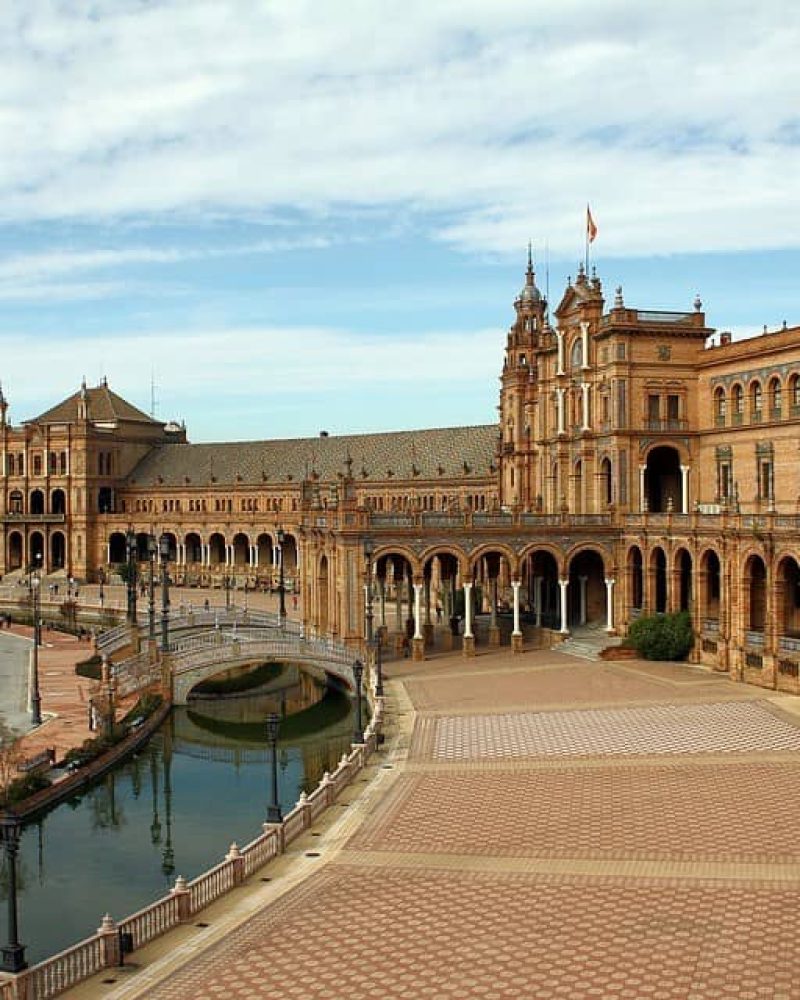
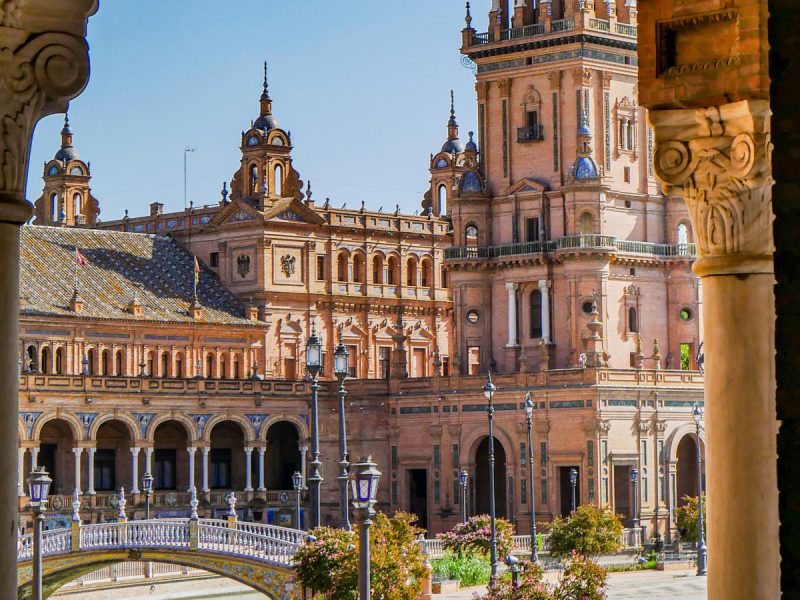
What if we told you that in addition to all the places already mentioned, Seville has the most beautiful square in the whole country? It is true that there is nothing written about tastes, but it would be difficult for anyone to leave it out of a top 3 Spanish squares in terms of beauty.
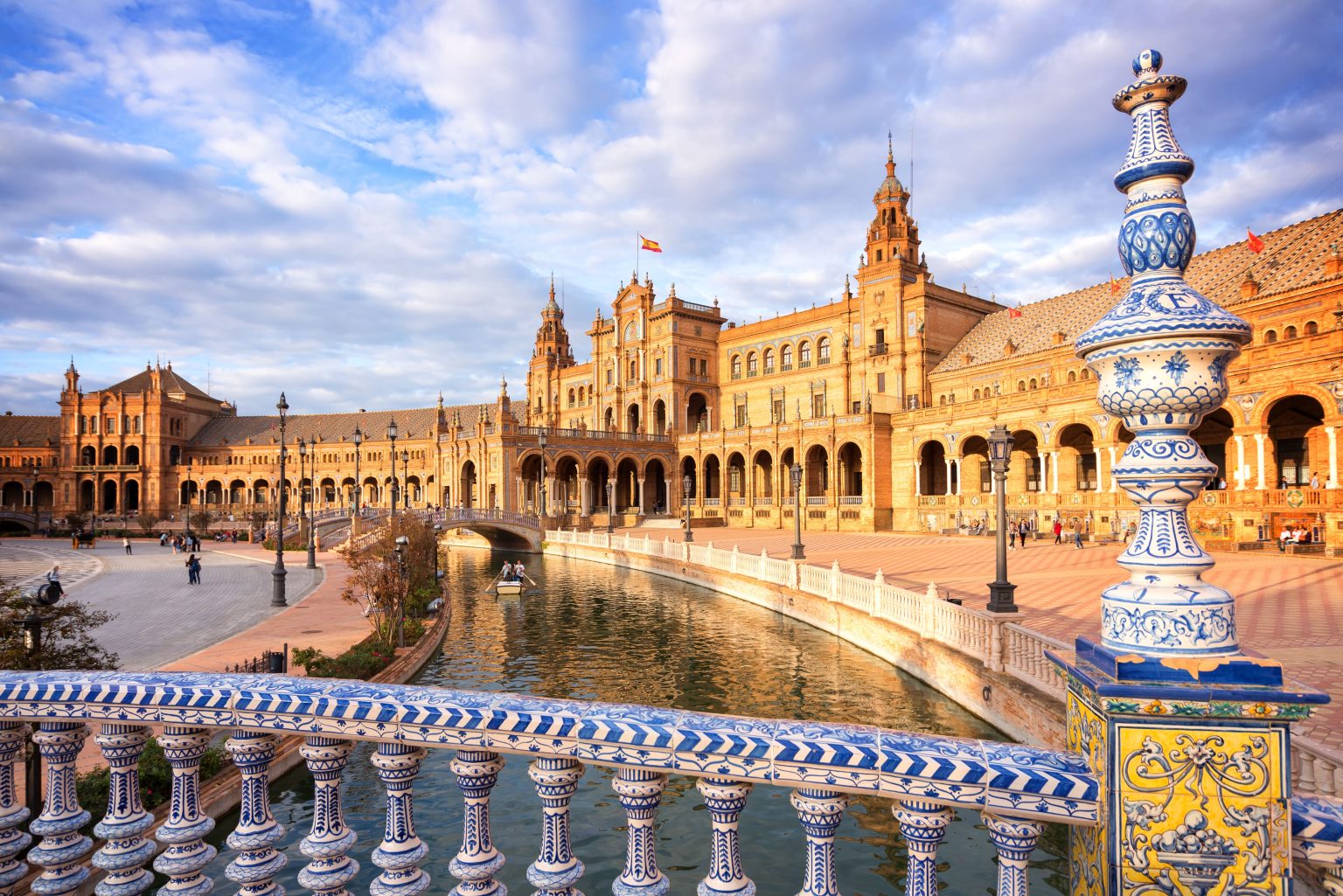
Its construction dates back to the Ibero-American Expo of 1929 and it has an area of more than 50,000 square metres, where it is very common to see the classic Sevillian horse-drawn carriages.
Few squares in the world have their own navigable canal, which you can also navigate yourself by renting a little boat.
The tiled benches in the square are a magnet for selfies and all kinds of photographs. Don’t forget to take yours next to the picture representing your province, a classic among tourists in the city.
The four bridges that cross the canal represent the ancient kingdoms of Spain and its beautiful arcaded galleries are the ideal place to take a break from the sun’s rays, which are always present in Seville’s capital.
Finally, the Plaza de España is the starting point for numerous Free Tours, making it the ideal place to start your tour of what is one of the most beautiful cities on the planet.
Triana neighbourhood
One of the great cradles of Sevillian flamenco and one of the neighbourhoods with the best atmosphere in all of Seville.
Also when you visit it, you have to cross the famous bridge with which it shares its name, the Triana Bridge, another of the city’s most iconic monuments.
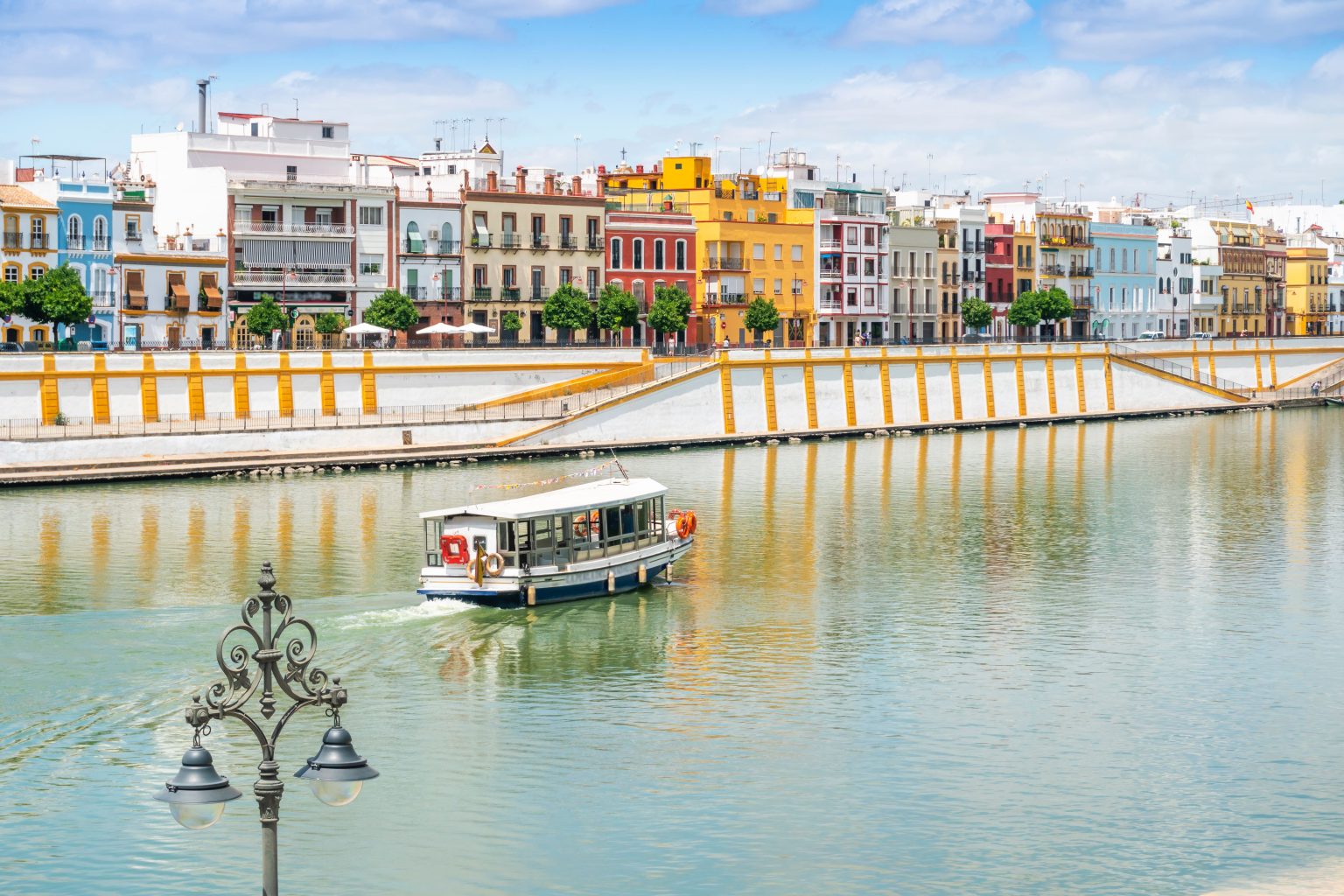
Among its most famous streets are Calle Betis, Calle del Rocío and Calle Pureza, where you will find some of Seville’s most traditional and highly-rated taverns and restaurants.
If there is one thing that characterises this picturesque neighbourhood, it is the colourful façades of its buildings, but also its old churches, such as the Capilla de los Marineros or the Iglesia de Santa Ana.
To talk about the Triana neighbourhood is also to talk about its famous market, just a few steps from the Castle of San Jorge and what is, one of the best tablaos in Seville, the mythical tablao Baraka.
Triana is also synonymous with traditional craftsmanship, pottery and ceramics, tapas, singing and dancing and above all, a lot of pure Sevillian character.
Santa Cruz neighbourhood
And from one of Seville’s most representative districts, we move on to another that has little to envy in terms of fame, atmosphere and beauty.
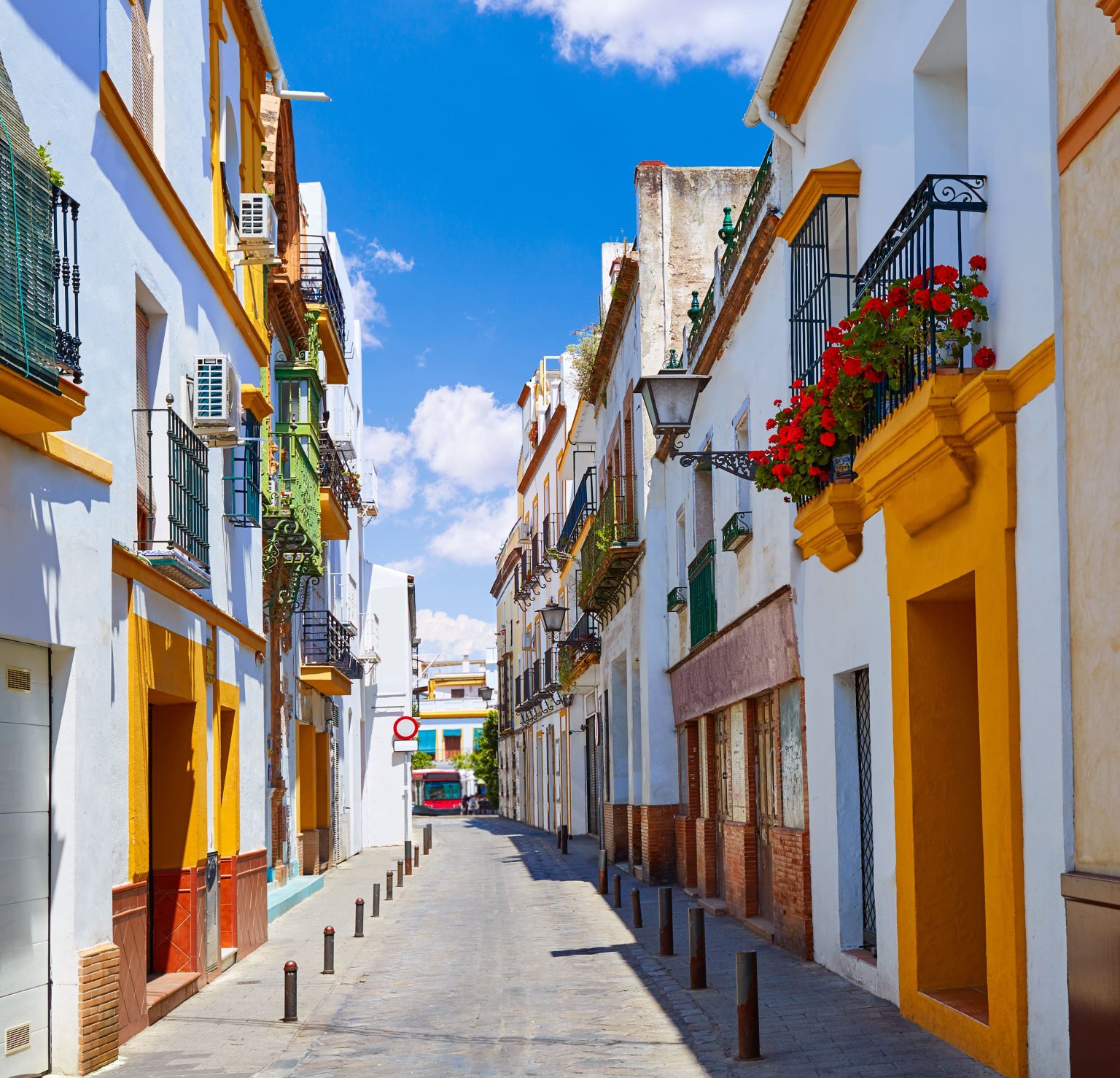
Its narrow streets begin right at the entrance to the Alcázar, forming a myriad of labyrinths in which it is well worth getting lost. On your walk through its alleys you will discover ancient churches, squares, tapas bars, flamenco tablaos and flower-filled courtyards.
Some of its most recommended places of interest are the Plaza de Santa Cruz, Calle Pimienta, the Patio de Banderas, the Plaza de Refinadores, the Hospital de los Venerables Sacerdotes, the Plaza de Doña Elvira and the Callejón del Agua.
But if there is one thing that makes this particular district famous, apart from its intrinsic beauty, it is its numerous tapas bars. Santa Cruz neighbourhood is the ideal place for tapas in Seville and to savour the many delicacies of the local cuisine. In its bars and taverns each caña or manzanilla is accompanied by meat in sauce, shrimp omelettes, the best chacinas, prawns, pescaito frito (fried fish) and a host of other delicacies. A tour of its taverns is an outstanding gastronomic experience.
María Luisa Park
At this point you probably missed a green space on our list of the best places to see in Seville.
María Luisa Park is the lung of the city and one of the best areas to take a walk, especially on hot days.
Its gardens and ponds make up the ideal place to make time during your holidays to enjoy nature.
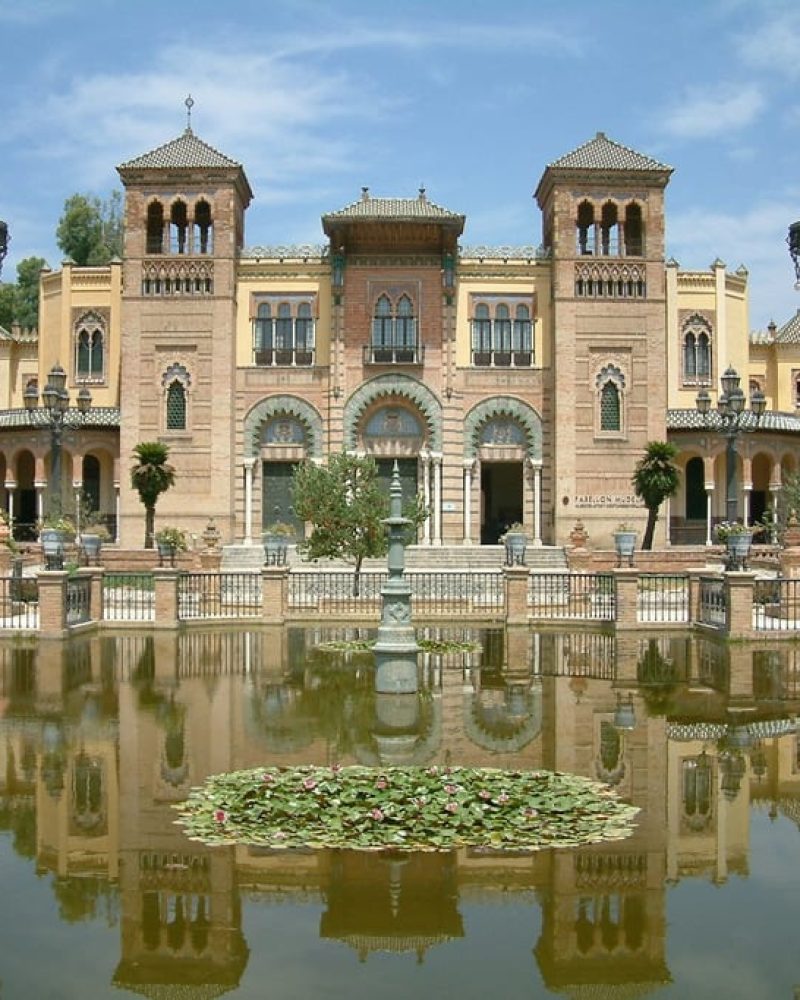
Among its well-kept vegetation you will find different types of sculptures, such as the monument dedicated to Gustavo Adolfo Bécquer, and even a Museum of Popular Arts and Customs, located in the Plaza de América and situated inside a beautiful Mudejar-style building.
The origins of this beautiful park date back to 1849, when it was designed by the French engineer Jean-Claude Nicolas Forestier, following a particular irregular layout that was intended to serve as a representation of love, so unpredictable and irrational.
For years, the old Seville Zoo was located there, where it was possible to see all kinds of wild animal species, including lions and pink flamingos. But during the first half of the 20th century, the zoo was closed and all its animals were transported to the Jerez Zoo.
Archivo de Indias
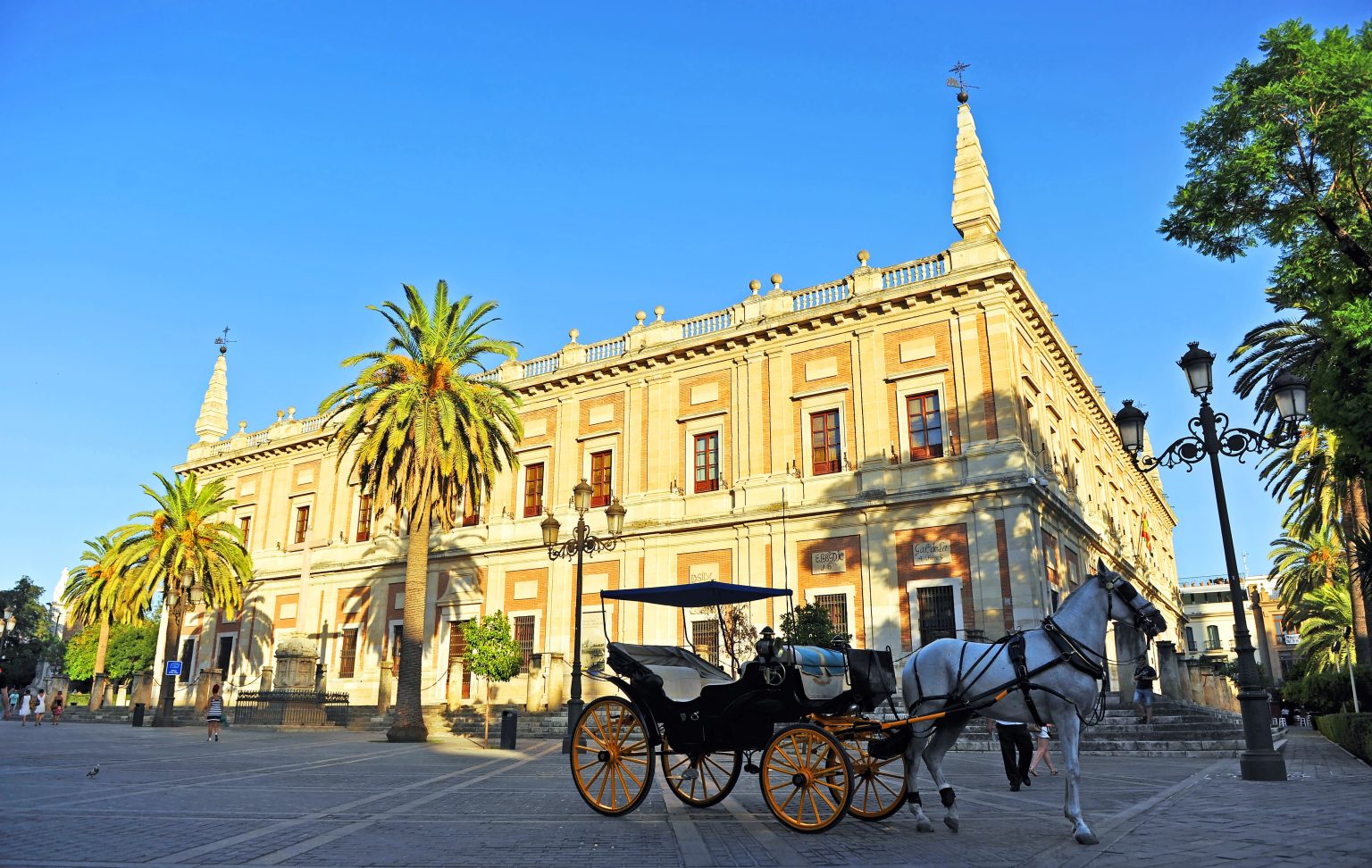
Archivo de Indias is one of the most important buildings in the city, both for its beauty and its incalculable historical value.
Located in a beautiful Renaissance-style building built at the end of the 16th century, Archivo de Indias in Seville preserves documents of all kinds related to Columbus’ voyages to the American continent and the administration of the colonies by the Spanish Crown.
And when we say documents of all kinds, we are not exaggerating at all. Inside, you will find up to 43,000 files, 8,000 maps, hundreds of drawings and 80 million pages with texts by Columbus, Magellan, Hernán Cortés, Pizarro and other conquistadors.
It is undoubtedly the largest database related to the discovery of America and all the voyages that were made during the time to the New World.
Although the building itself was declared a World Heritage Site, it is everything inside that makes it an obligatory stop on any visit to Seville, especially for history lovers.
Metropol Parasol
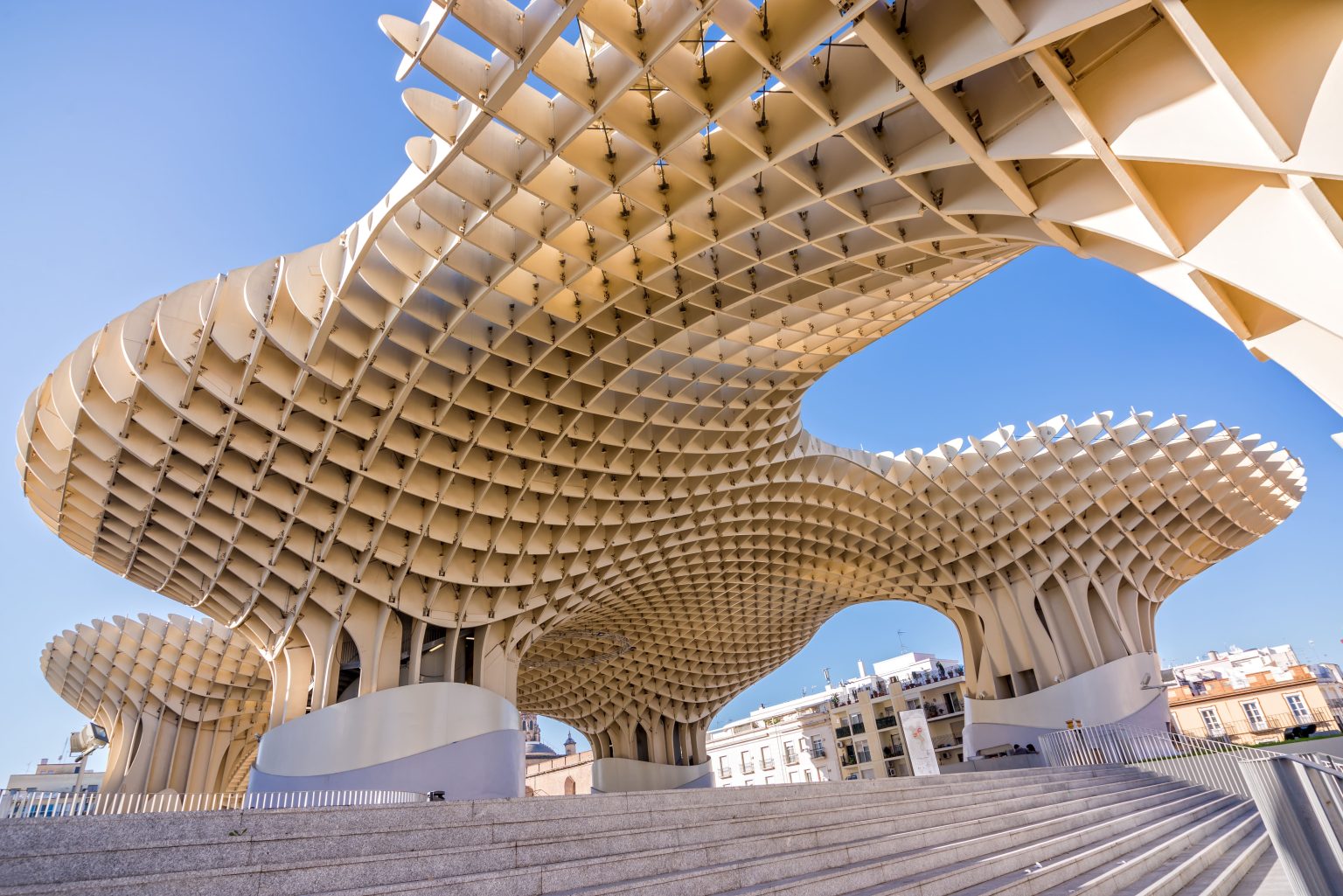
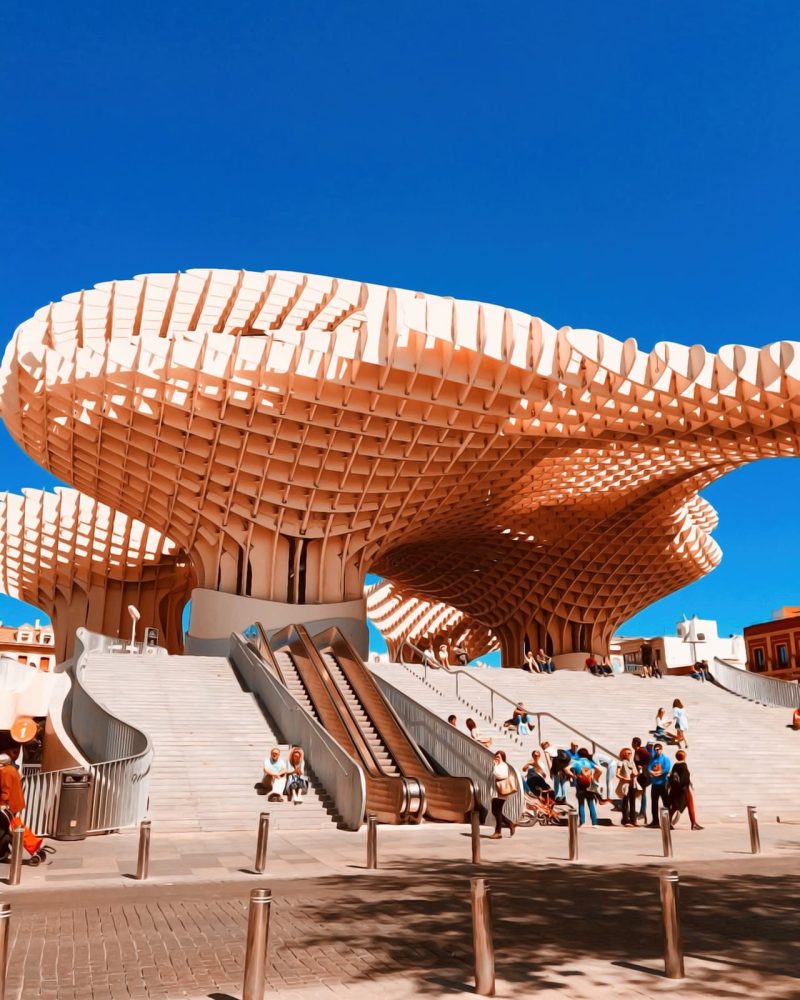
If you talk to any Sevillian about the huge wooden structure next to the Plaza de la Encarnación, there will be very few who refer to it by the name of Metropol Parasol. This famous viewpoint in Seville is known by everyone as ‘the mushrooms’ and when you look at its shape you will easily understand why.
It is the largest wooden structure in the world and to tell the truth, it is not its avant-garde style that has invited us to include it in our list, but the spectacular panoramic view that awaits you when you ascend to its highest point.
What, in our opinion, is the best viewpoint in the entire city of Seville, in its day was not well received by the inhabitants of the area, who claimed that its style broke with the rest of the architectural elements of the city. But with the passage of time, it can be said that even the most traditional Sevillians have taken a certain affection for its mushrooms. It is not in vain that from them they can admire its beautiful Seville like from no other vantage point.
Itálica
Our last recommendation is not in the city, but it is undoubtedly one of the best things to see near Seville.
To get there, you can opt for the bus that leaves from the Plaza de Armas and will take you to the walls of this ancient Roman city in less than 45 minutes.
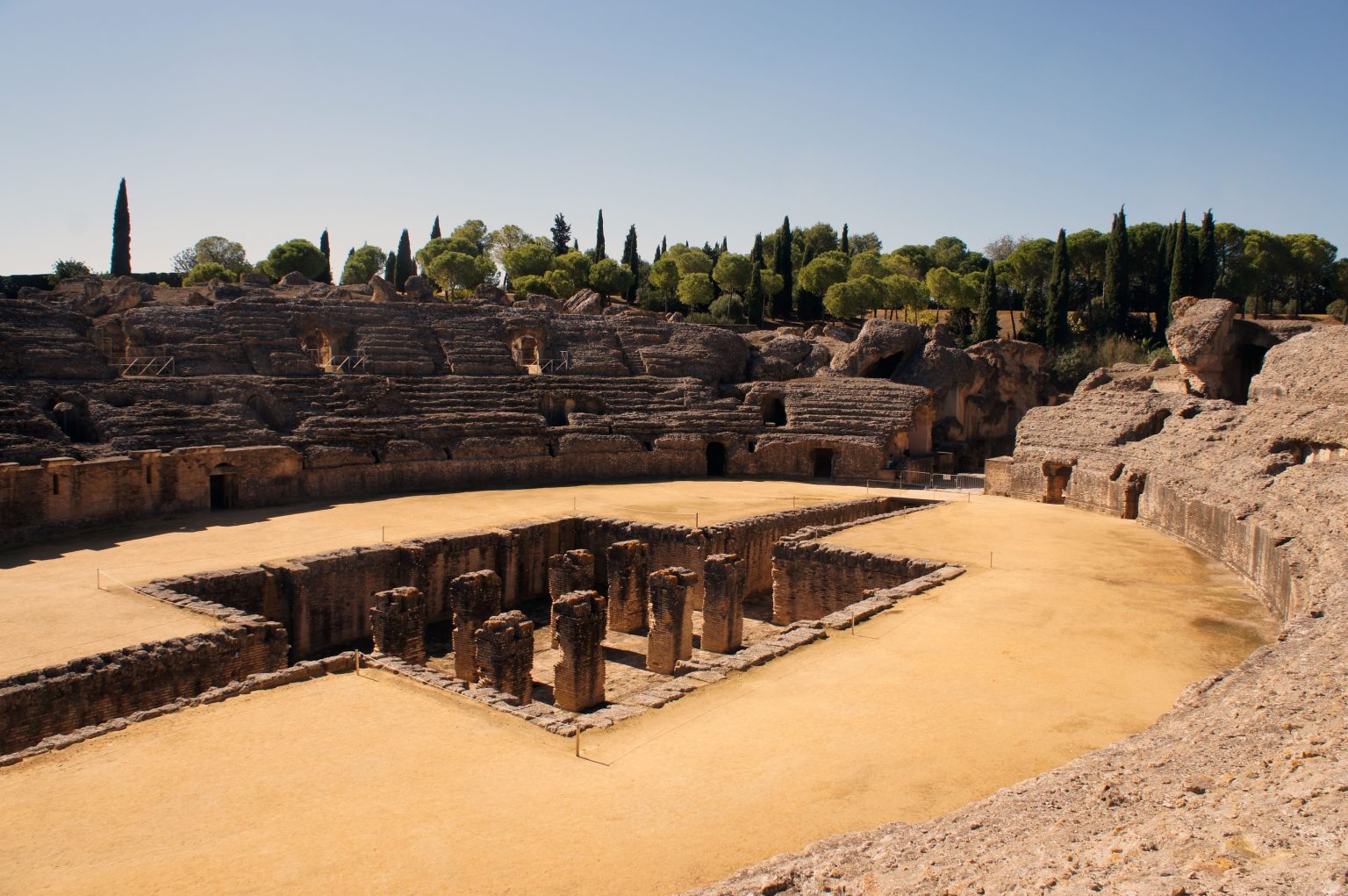
Italica is a journey back in time to 206 BC through ancient Roman architectural treasures that stand out for their good level of preservation. Some of them are, for example, its Amphitheatre, the famous mosaics on its floors or its ancient Roman baths.
Italica was the cradle of Roman emperors such as Hadrian, Trajan and Theodosia I the Great and among its ruins you will also find a first century aqueduct and a sewage system that is still in operation today.
In 1949, as part of the archaeological excavation of the city, the sculpture of the Venus of Italica was discovered, which can currently be visited in the Archaeological Museum of Seville.
Frequently Asked Questions Seville
What are the must-see places in Seville?
If we had to choose five places that you should not miss in Seville, these would be: its spectacular Cathedral, the Plaza de España, the Torre del Oro, the Santa Cruz quarter and the Alcazar.
Where to eat in Seville?
The Barrio de Santa Cruz, apart from its beauty, stands out for being one of the best areas to eat and enjoy the famous Sevillian tapas.
The Alameda de Hércules area offers an alternative with a more bohemian character, but just as attractive. And of course, the Triana neighbourhood is another essential area in terms of gastronomy.
Beautiful places in Seville to take photos
If you are a great lover of photography and are looking for beautiful places in Seville to take photos, we especially recommend the Plaza de España, the Real Alcazar of Seville, the María Luisa Park and the Santa Cruz neighbourhood. At all these stops you will find dream settings for your photographs.
What is Seville famous for?
By now you will have realised that this special colour so characteristic of Seville comes from its architecture, its tapas bars and restaurants, the warmth of its people, its enviable climate and, of course, its flamenco.
How to travel to Seville?
Seville has its own train station with a high-speed connection to the city of Madrid. In addition, you have plenty of bus connections and its own international airport that will allow you to travel to the city from different Spanish cities and from abroad.