Popularly known as the “city of wind” due to the frequent presence of air sweeping its streets and avenues during certain months of the year, Zaragoza is one of the most beautiful cities in Spain.
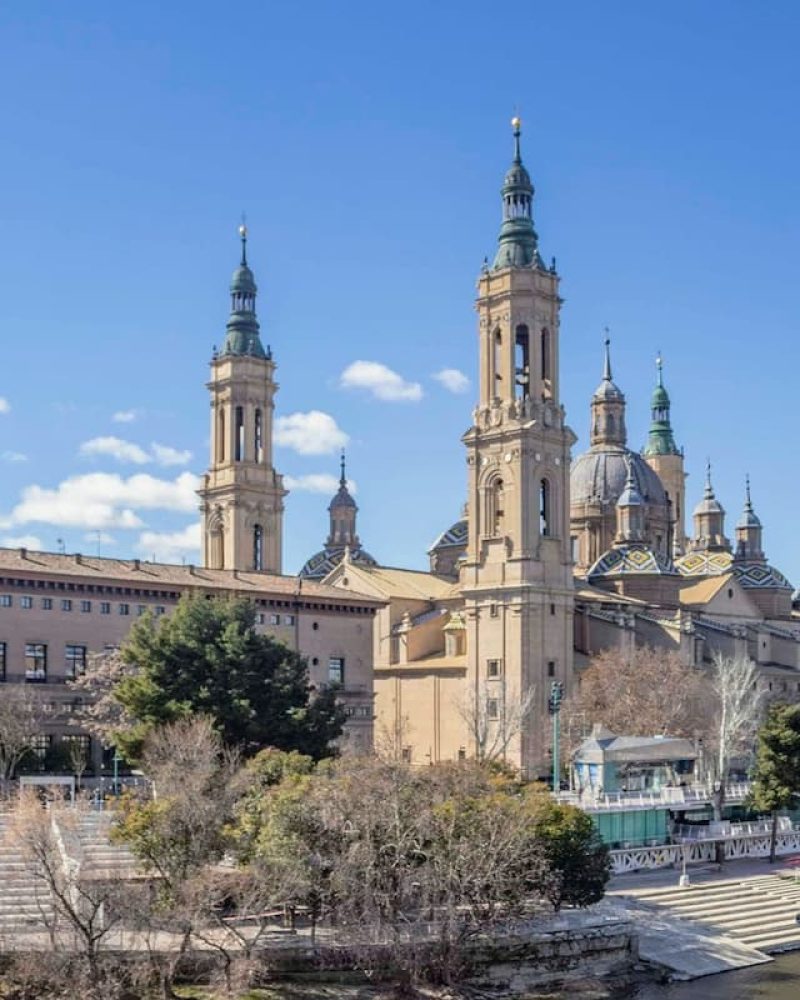
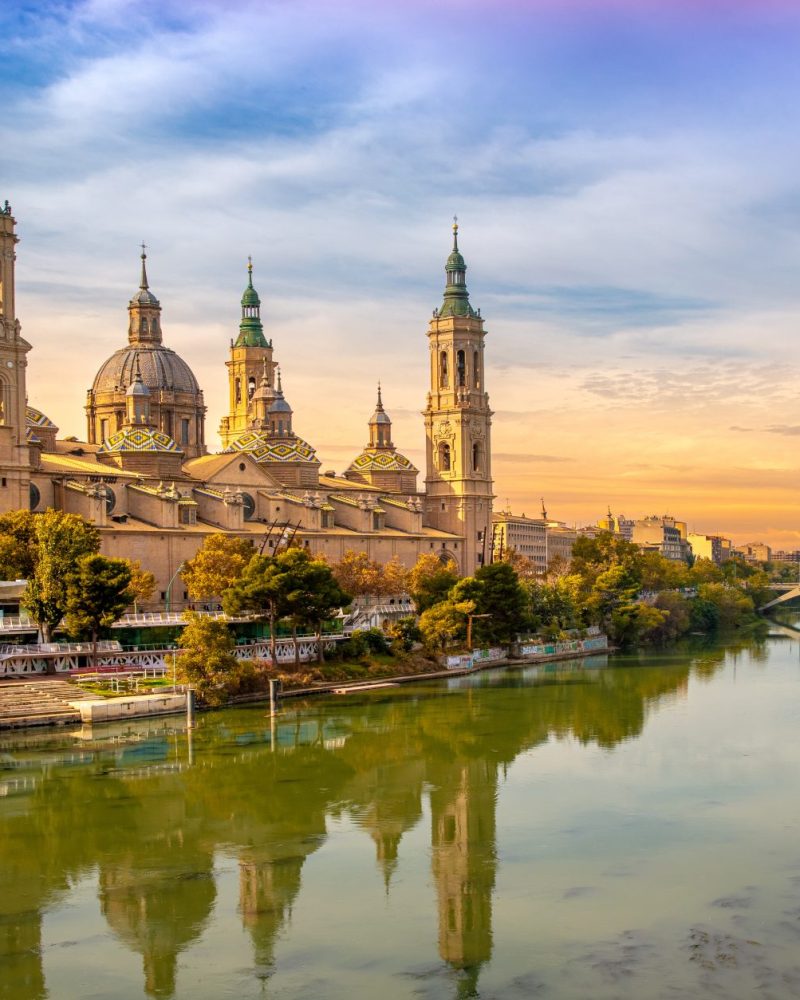
The Basilica del Pilar is one of the most spectacular religious buildings on the European continent, but Zaragoza is much more than its famous Pilar.
Its privileged location, halfway between Madrid and Barcelona, has boosted its economic growth in recent years, turning it into a very European city, with a remarkable quality of tourist services.
El Tubo neighbourhood, one of the most popular and recommended tapas areas in all of Spain, is a true labyrinth of narrow streets where you can try the best of Aragonese cuisine in the form of pinchos.
Zaragoza is one of the oldest cities in Spain, and in its streets, you will find remains of its Roman era, with ruins dating from the 2nd and 3rd centuries AD.
Moreover, it is possible to visit some of the most beautiful towns in the Iberian Peninsula in its vicinity, so while three days are enough to discover all the secrets of the Aragonese capital, we suggest you reserve at least one more day to visit several of the surrounding towns, such as Fuendetodos, Tarazona or Uncastillo, among many others.
Add to all this a lively nightlife and an endless number of activities, shows and celebrations, which reach their peak during the Fiestas del Pilar, one of the best times to visit the city.
Table of Contents
Cathedral-Basilica of Our Lady of Pillar
We couldn’t start our list of recommended monuments to visit in Zaragoza with any other choice.
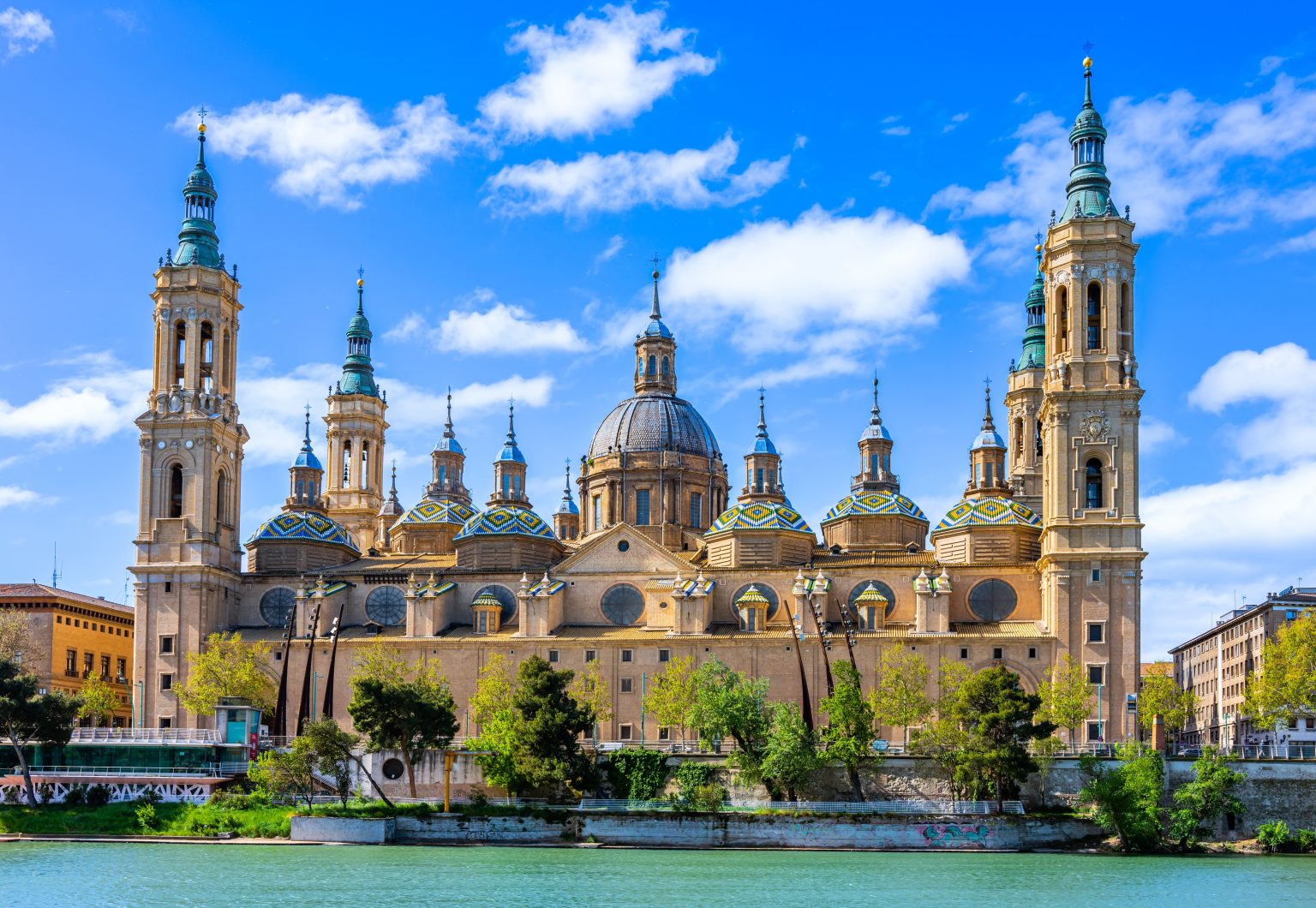
El Pilar is the symbol of the city and one of the most spectacular religious temples in the world. Observing its towers from afar, as you approach the city by road, is already imposing; however, contemplating it from the large square where it is located is, simply, a true marvel.
In the Basilica is the image of the patron saint of the city, but its interior holds many other artistic treasures. Some examples are the altarpiece by Damián Forment, its impressive Choir, the Holy Chapel and even some frescoes by Francisco De Goya.
We recommend that when you visit it, you ascend to the top of one of its towers, open to the public, to contemplate the Zaragoza skyline from a privileged perspective. Access to the viewpoint of one of the towers is paid.
Legend has it that the location of the basilica is due to the Virgin appearing in that very place in 40 AD. For this reason, the Basilica of Our Lady of Pillar continues to be a pilgrimage destination for devotees today.
Although, to tell the truth, whether you are Christian or not, it is a place that one must visit at least once in a lifetime.
Cathedral of La Seo de Zaragoza
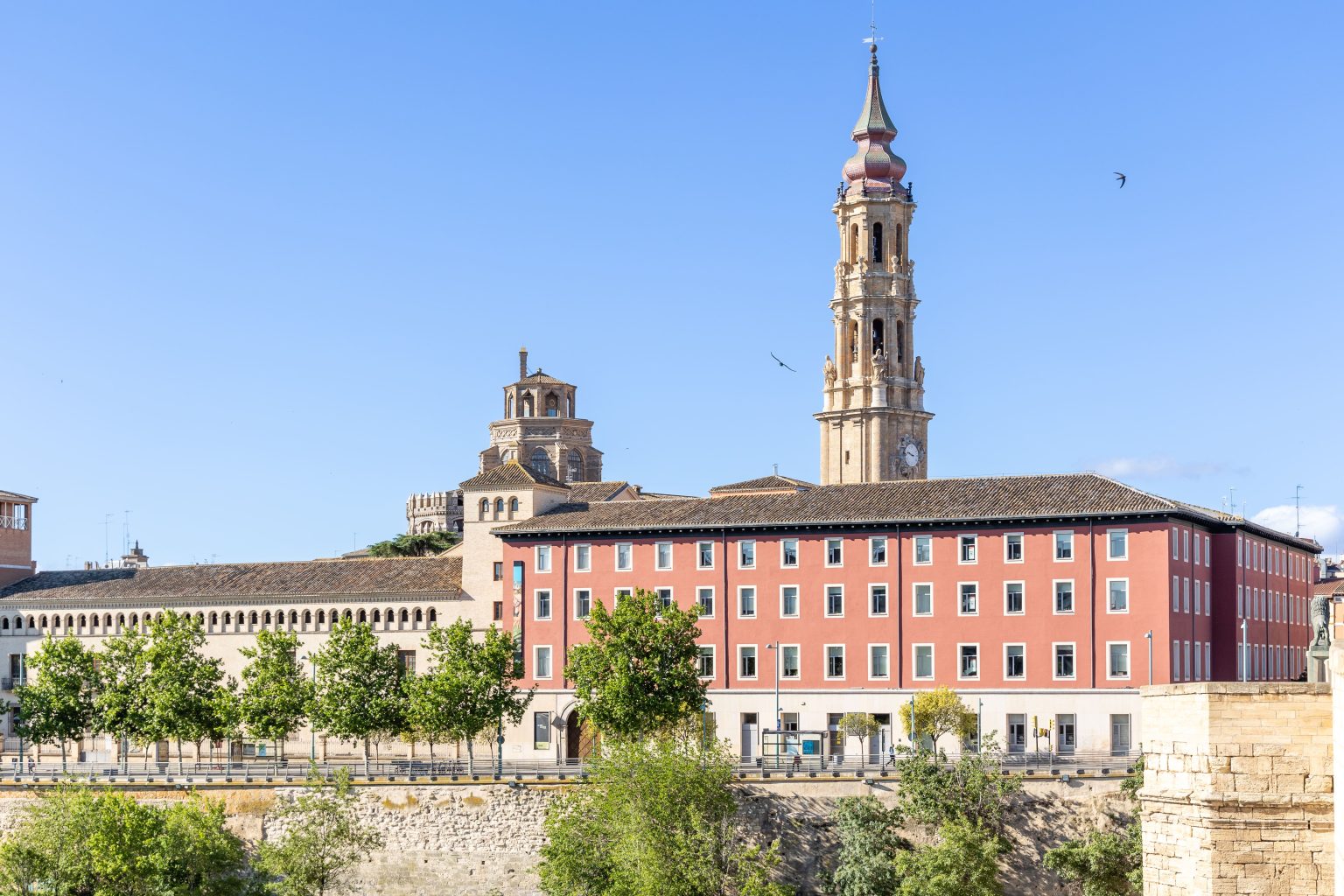
Although its official name is Cathedral of The Savior, everyone knows it as La Seo.
Such is its level of beauty that followers of the famous Lonely Planet guides’ Instagram account have chosen it as the most beautiful cathedral in Spain, surpassing the Cathedral of Santiago de Compostela.
It is the oldest Christian cathedral in the city and was built on what was the Great Mosque of Saraqusta. In fact, today, the minaret of the old mosque is part of the Cathedral’s structure, and the clear Mudéjar-style walls of the parish of San Miguel, annexed to the temple, are one of its most representative elements. The wall itself was declared a World Heritage Site by UNESCO along with the dome of the Church.
The gilded altarpiece inside is a true jewel of European Gothic and served as a model for similar later works such as the altarpiece of its neighbour, the Basilica of Our Lady of Pillar.
Furthermore, it has a museum with the best collection of Flemish tapestries in the world, including a total of 63 pieces from the 15th, 16th and 17th centuries.
Plaza del Pilar
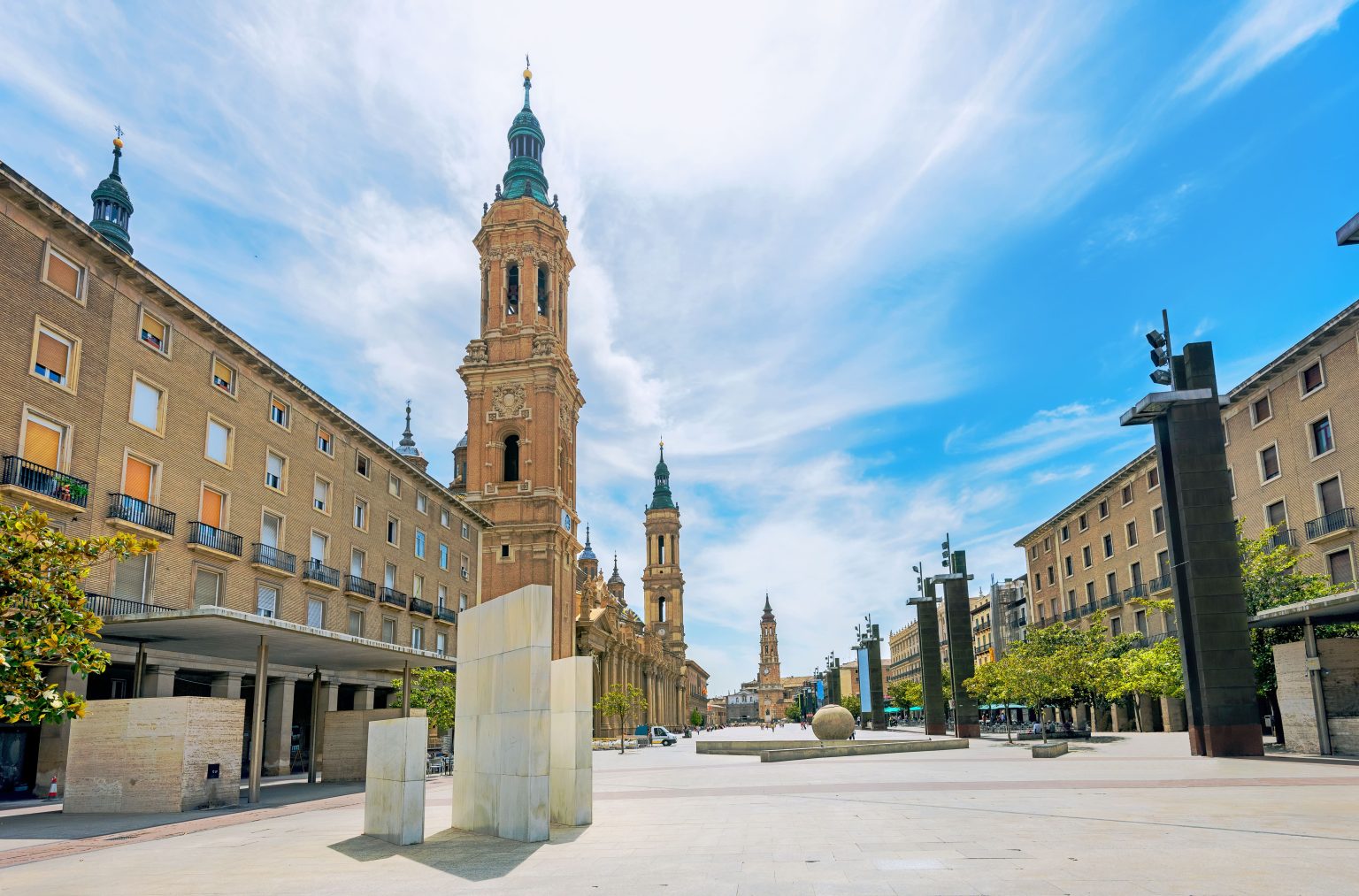
We have started our list with what is the undisputed queen of Zaragoza, its Basilica of Our Lady of Pillar. But this is located in a square with which it shares a name and which also has several additional attractions for tourism.
We are referring, for example, to the City Council, the Lonja or the Church of San Juan de los Panetes. You can also visit the Fountain of Hispanicity or a monument in honour of Francisco De Goya. Many recommendations for a single place, right? Not in vain, we are talking about one of the largest pedestrian squares on the entire European continent, with no less than 24,000 square metres of extension.
But if there is something that has made this spectacular square famous throughout Spain, it is the famous Fiestas del Pilar. Celebrated in the week of October 12, they turn this extensive space into the venue for concerts and other shows for several days, attracting people from all over the world.
Roman Walls
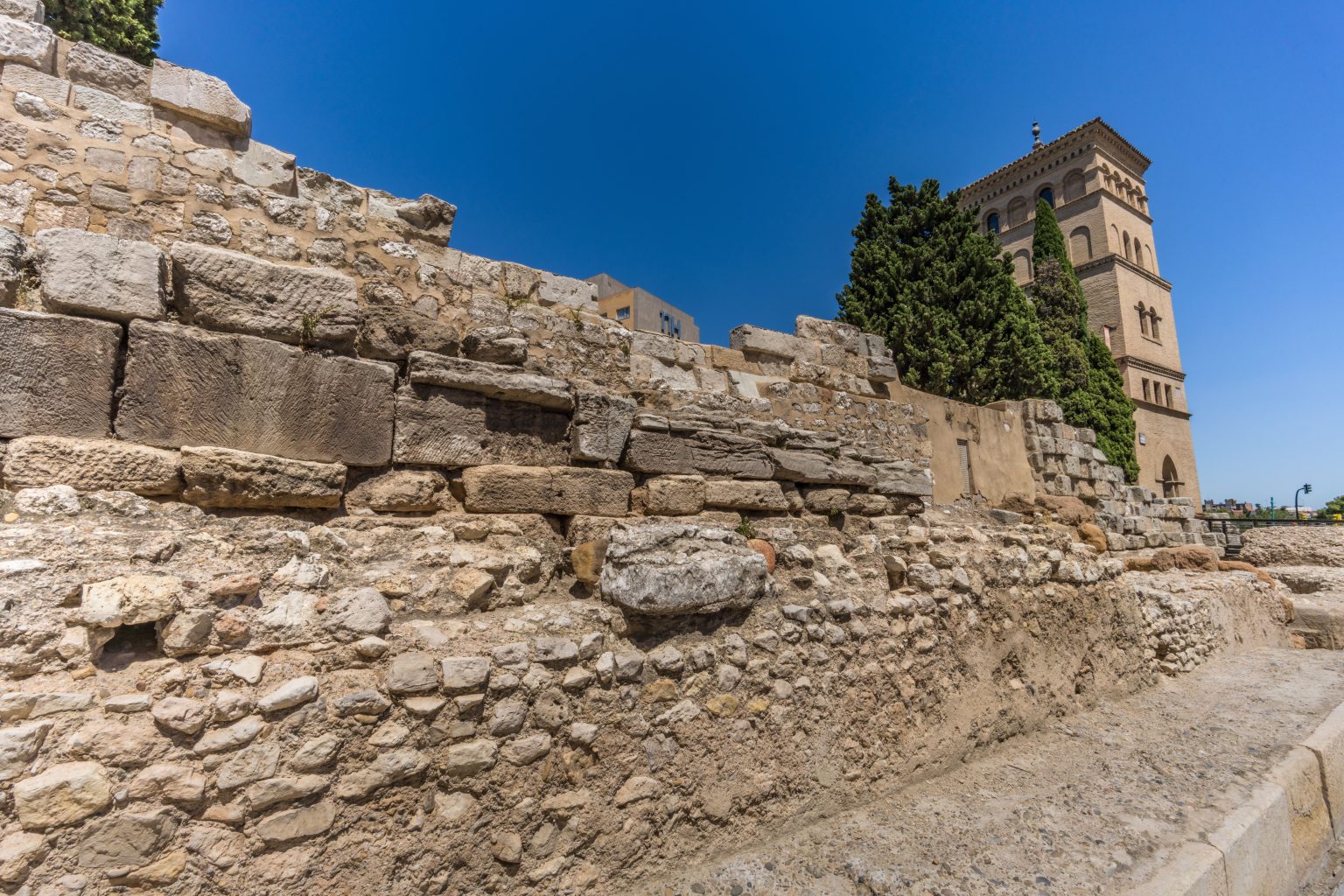
Their historical importance makes them one of the must-sees in Zaragoza. These stone walls were built no less than in the 2nd and 3rd centuries AD.
Known as the Wall of Cesaraugusta, it served to protect the city from possible enemy attacks.
Although currently, only a small representation of what they were is preserved, during their origins they reached 3000 metres in length, ten metres high and in some sections, they were seven metres wide.
The remains of the Roman Walls of Zaragoza are distributed along four main areas. The first of these is made up of what is known as the Walls of Avenida de César Augusto, which correspond to the longest section currently, with about eighty metres in length.
The other three are located in the Puerta Cinegia area, next to the Monastery of the Resurrection, and the most recently discovered, in a basement of a building on Calle el Coso 147.
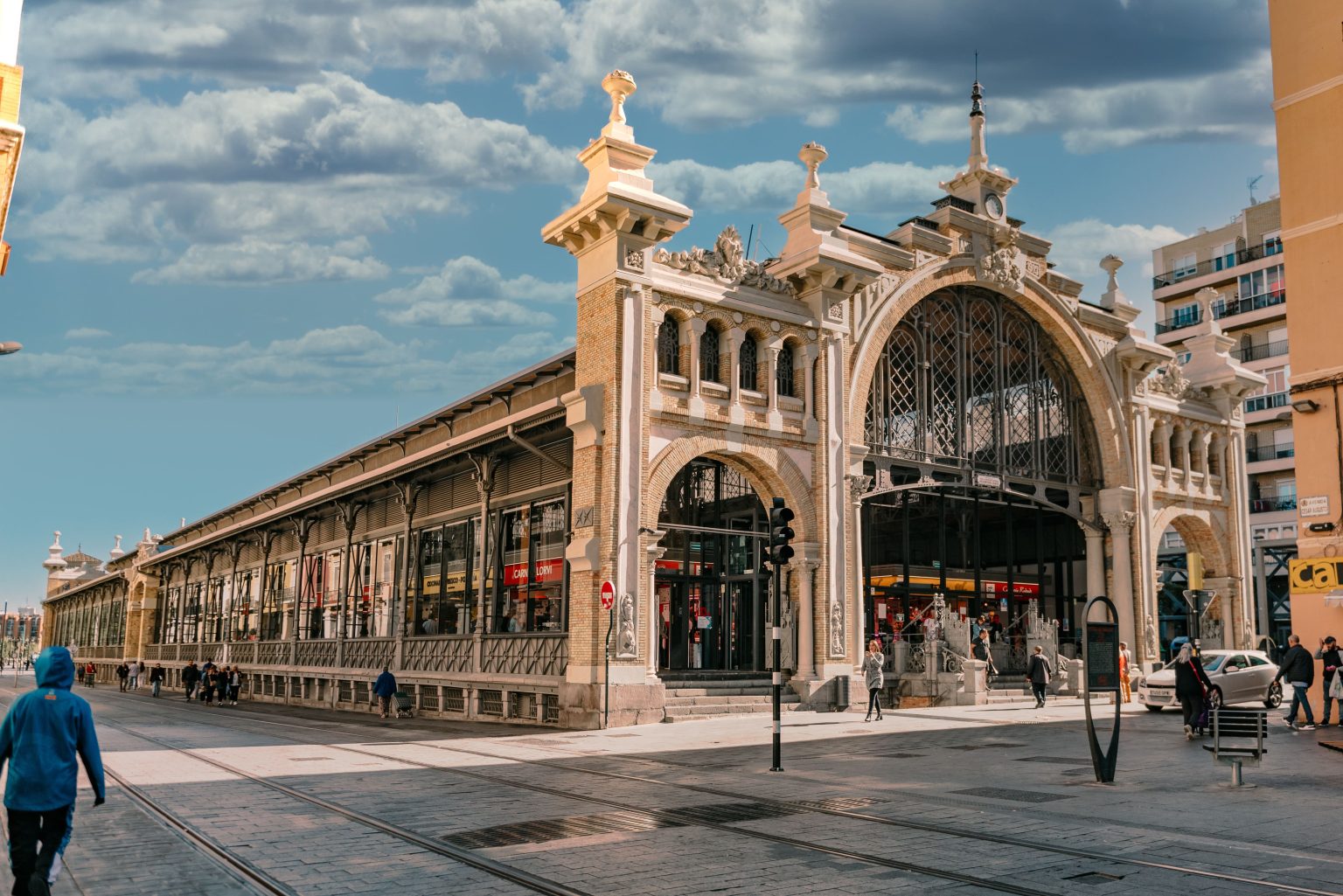
Zaragoza Central Market
The city’s Central Market is located in a beautiful iron building, whose architecture is said to be inspired by the Parisian market Les Halles.
Also called Mercado de Lanuza, its design dates back to 1895, by local architect Félix Navarro Pérez, and it was restored in 2020.
It is the most important commercial centre in Zaragoza, with different fresh produce stalls, which alternate with bars and cocktail bars. In fact, along with the Tubo area, it is one of the best places to try the typical Zaragoza pinchos.
Its multidisciplinary nature, combining all kinds of commercial establishments, makes it an ideal place to have breakfast, lunch, dinner or even a drink at night. And of course, also where to buy top-quality fruit, meat or fish, among many other products.
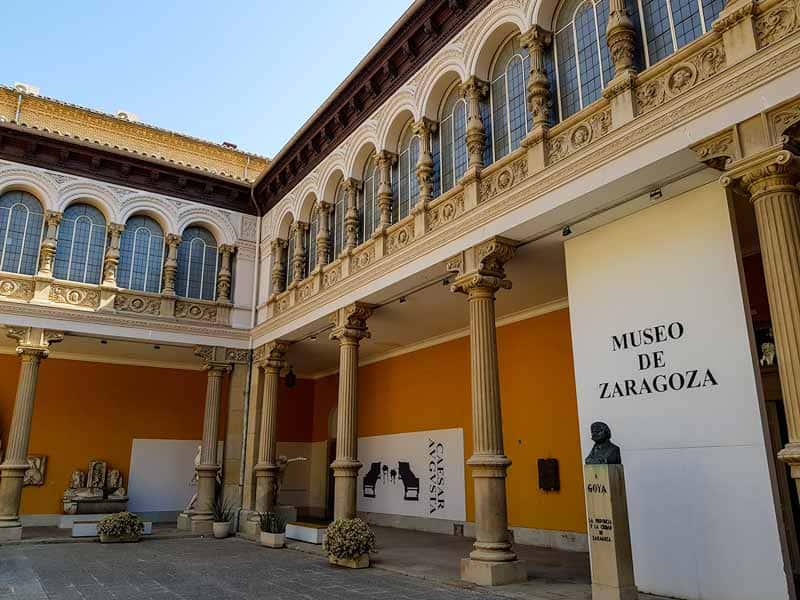
Goya Museum
Surely, we are talking about the most important museum in the city and one of the best places to visit in Zaragoza.
It is located inside the Palacio de los Pardo, which in itself is a place well worth a visit for its architectural beauty.
Inside the museum, you will enjoy the unique opportunity to contemplate up to 24 paintings by Francisco De Goya along with the complete collection of all his engravings. It is not surprising that it receives more than 50,000 visitors every year.
Along with the works of the Spanish artist, you can contemplate paintings from exhibitions by different artists. In recent years, it has exhibited, for example, works by Antonio López, Picasso or El Greco.
Undoubtedly, we are talking about an unmissable stop for lovers of pictorial art and one of the most important museums in Spain. The perfect plan, for example, for a day that is not accompanied by good weather during your holidays.
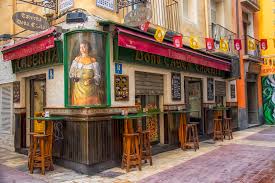
Tapas in El Tubo
We could say that almost on a par with the fame of El Pilar, are the tapas of the El Tubo neighbourhood. No visit to the city of Zaragoza that is worth its salt does not end with a drink and tapas in this characteristic area of its historic centre.
Among our favourite pinchos and tapas are the bagels from El Limpia, the mythical grilled mushrooms from El Champi, the croquetas from Doña Casta, the anchovies from Bodega Almau, the torreznos from Bar Casto and the octopus from La Miguería.
The good thing about El Tubo is that over the years, each of the bars and restaurants that make it up has gained its space through one or more specific specialties. That is why it is so attractive to go from bar to bar, trying different tapas.
If you add to this its wonderful location, in the heart of the old town of Zaragoza, surrounded by historic buildings and with its magical night lighting, it is not surprising that it is one of the most famous tapas areas in all of Spain.
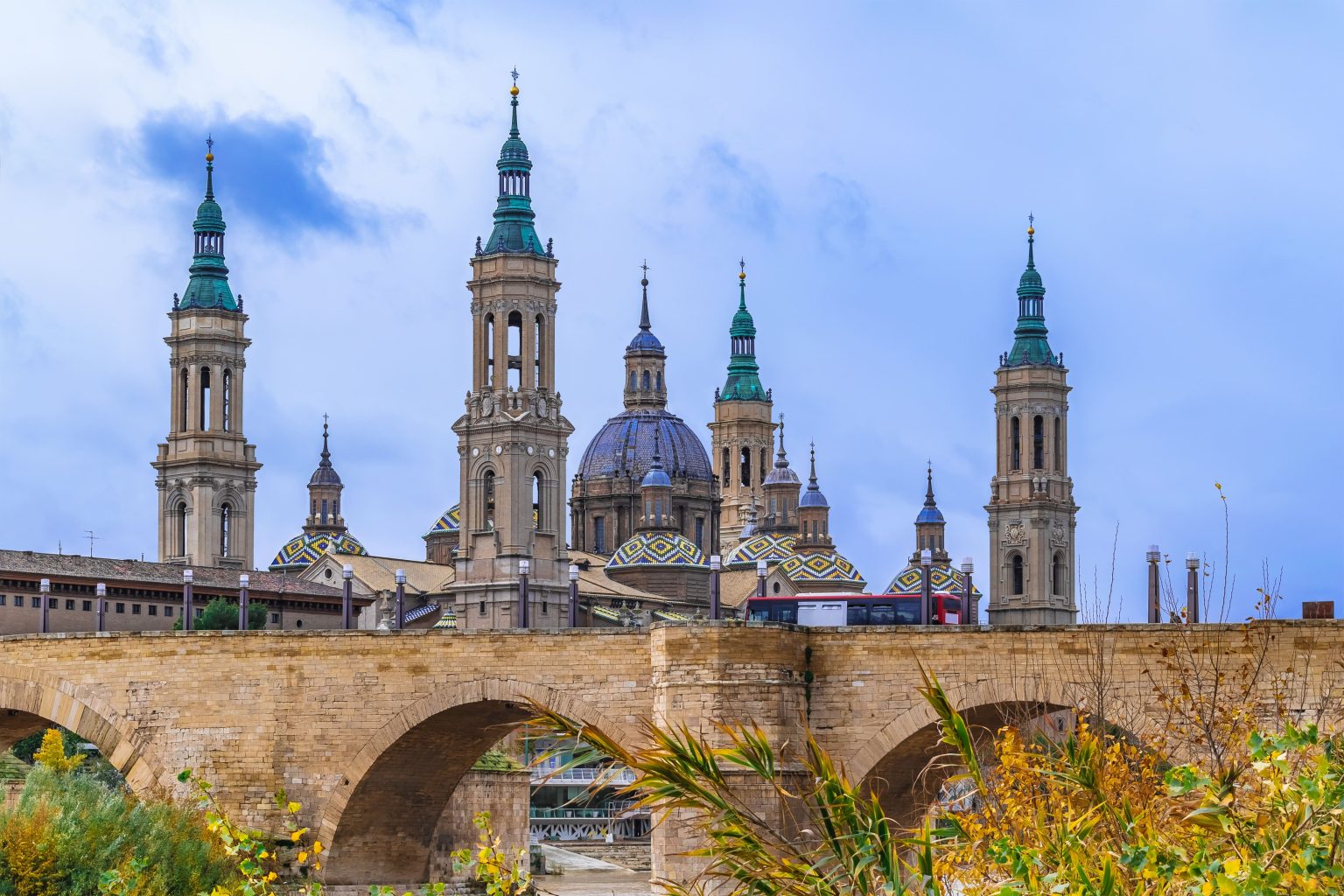
Stone Bridge
The Stone Bridge is another of the city’s great emblems and another of the important monuments to visit in Zaragoza.
Again, we have to travel back to the 15th century to discover its origins. Built in Gothic style, it was the only bridge leading to the city for many years, which meant that crossing it was linked to the payment of a tax.
During the years after its construction, it had a mill, of which it is still possible to see one of its pillars.
The bridge has suffered catastrophes of all kinds, from wars to floods, having to be remodeled and rebuilt on many occasions. The last one, in 1991, restored its original width, as well as adding its current stone wall in order to recover its medieval appearance.
Although for centuries it enjoyed outstanding strategic importance, offering the only possibility of crossing the Ebro within a radius of many kilometres, its current importance has more to do with its location than with its purest function. And it is that the Stone Bridge has one of the best views of the Basilica of Our Lady of Pillar in all of Zaragoza and, therefore, has become a magnet for selfies and photos in general.
José Antonio Labordeta Grand Park
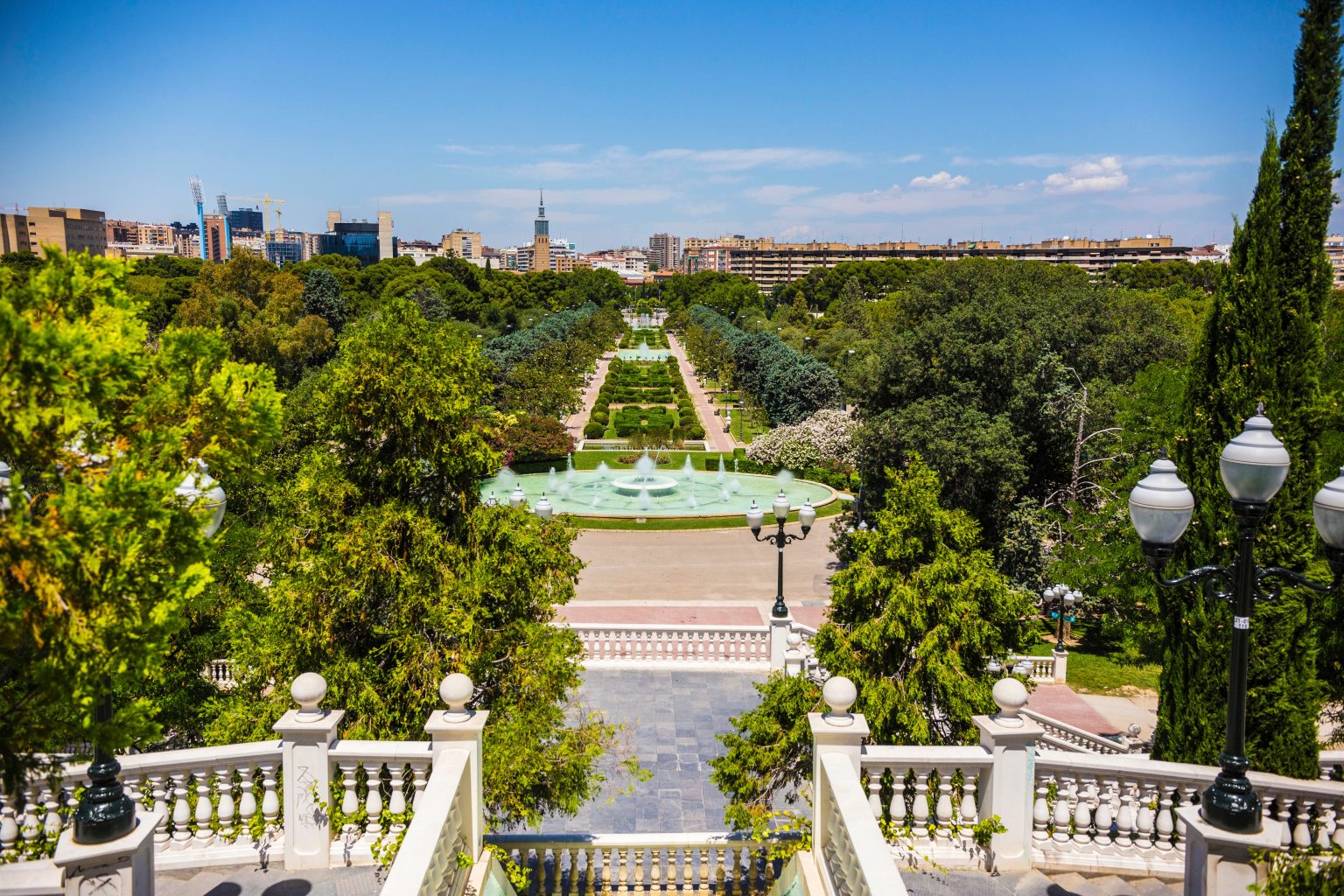
The José Antonio Labordeta Grand Park is the city’s true green lung. We are talking about an extensive space of approximately 27 hectares, full of gardens, fountains of all kinds, sculptures, staircases, ponds, cafeterias, terraces, children’s play areas, an outdoor gym and even, some waterfalls.
It is normal for it to be one of the most recommended places to enjoy a pleasant walk in Zaragoza, escaping for a few minutes from the hustle and bustle of the city.
It is also a fantastic setting for doing some sport during your holidays or simply sitting down for a drink, listening only to the sound of birds and the flow of water from one of its many fountains.
And of course, it is a highly advisable option for spending a fun afternoon if you are travelling with children. There they can run and have fun for as long as they want.
Patio de la Infanta
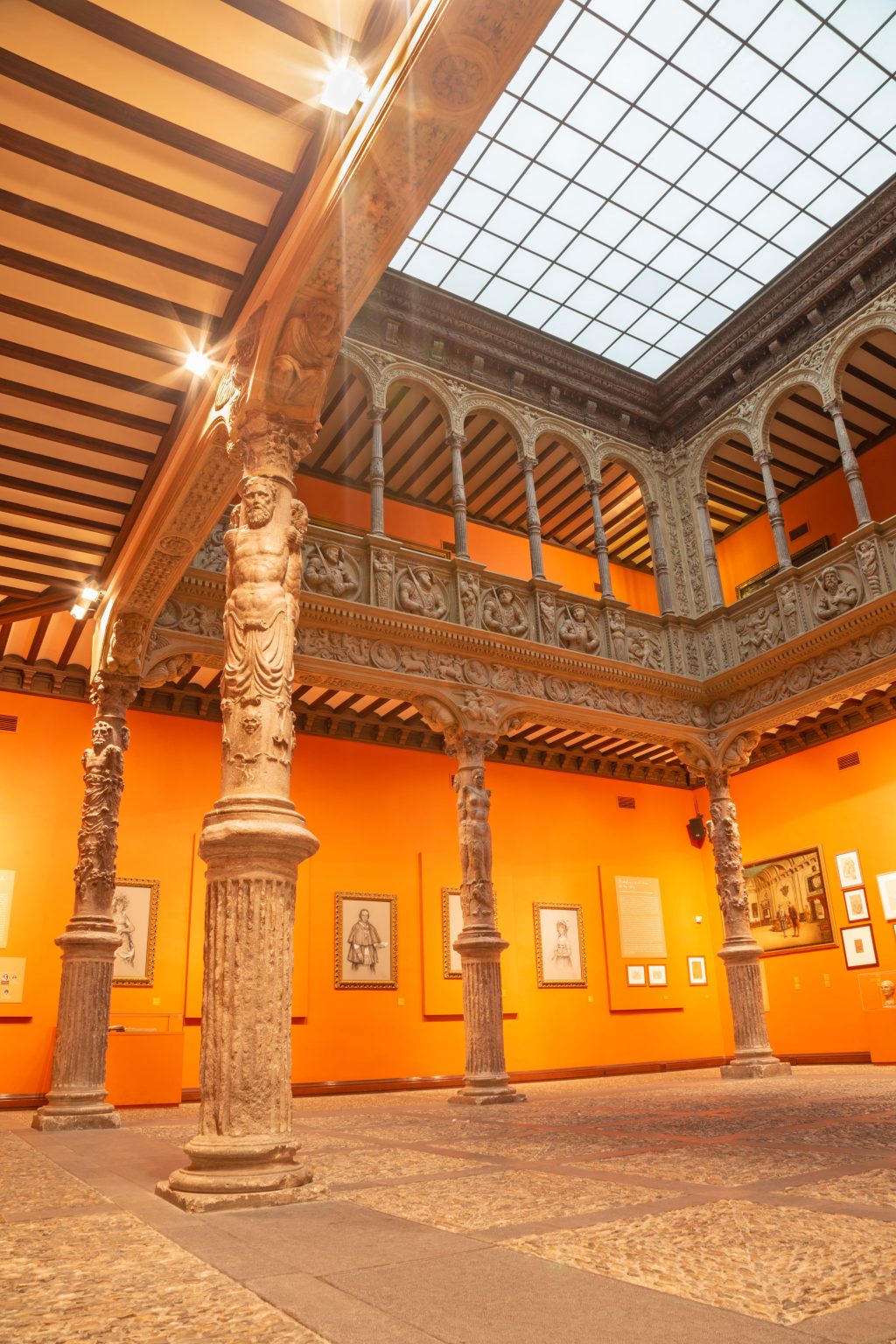
Inside the building that currently functions as Ibercaja’s main headquarters, is this magical 16th-century corner.
Originally, this beautiful patio belonged to the old Casa Zaporta, property of the first banker of the Crown of Aragon.
Although it currently houses the offices of a bank, it has also been, over time, a School of Fine Arts, the city’s School of Music and even a casino.
Fortunately, the Patio de la Infanta is a space open to the public, which you can visit as part of your visit to the city.
Built in Renaissance style, it replicates the same model as the patios of the great palaces of the era, with their characteristic ringed columns in the upper thirds.
This patio is one of the most chosen stops on guided tours of Zaragoza and undoubtedly, it is the best way to visit it, in order to learn its history and all its secrets in depth. We promise you that some of them will surprise you.
Water Expo Site
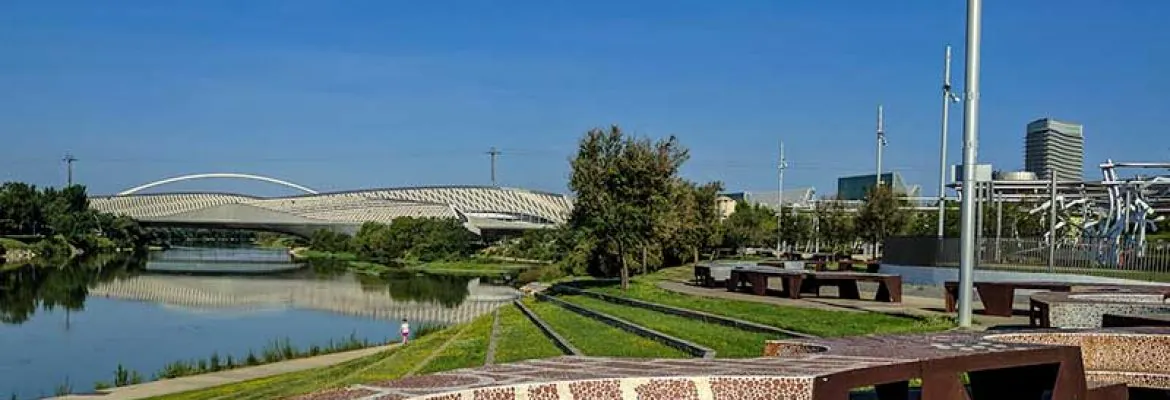
Did you know that Zaragoza hosted the International Expo on Water and Sustainable Development in 2008? Fortunately, even today, it is still possible to visit the site that housed it, located on the banks of the River Ebro.
It is a huge green space, which has several interesting attractions such as the Ecogeographical Bank, the Sound Forest, the Pavilion of Spain or that of Aragon.
As you may have imagined, it is a particularly recommended stop if you are travelling with children, as the little ones in the house will have a lot of fun in its numerous playgrounds.
In addition, the site itself is particularly curious, built with avant-garde architecture that contrasts with the history and antiquity of most of the places included in our list.
Aljafería Palace
We end our list of must-sees with one of the best places to see near Zaragoza. And it is that not all the jewels of this city are located in its historic centre.
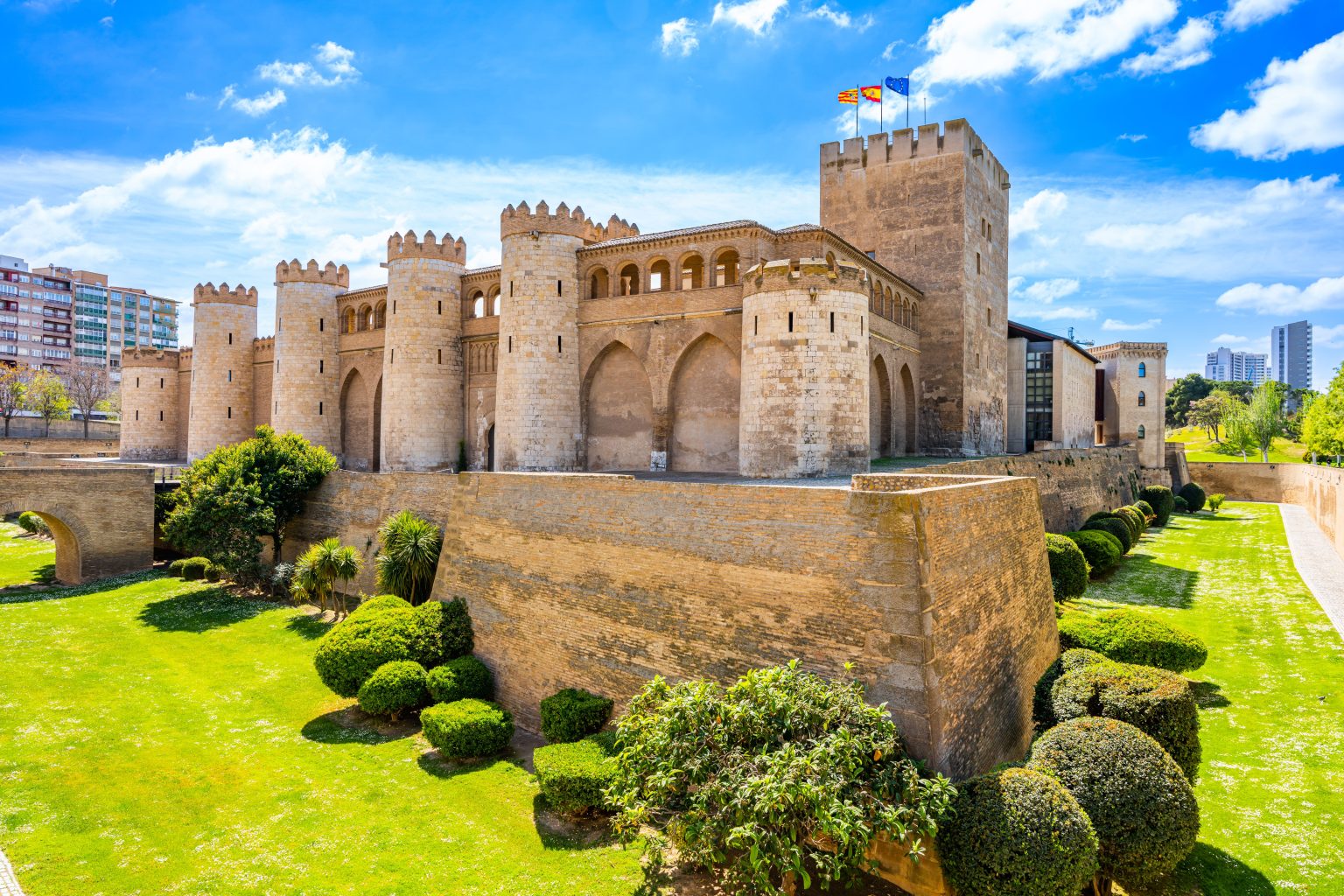
The Aljafería Palace (Palace of Joy in Spanish) is, along with the Alhambra in Granada and the Mosque of Cordoba, the best example of Hispano-Muslim art present in our country.
Built as a recreation place for the Taifa Kings for their stays outside the city, it is the setting where the action of the famous opera Il Trovatore by the composer Giuseppe Verdi takes place.
More than a palace, it is an architectural complex made up of a total of three different palaces: the Palace of the Catholic Monarchs, which also functioned for years as the Tribunal of the Holy Office of the Inquisition, the Taifa Palace of Al-Muqtadir and the Pedro IV Palace.
After the reconquest, it served as a residence for the Catholic Monarchs (when they travelled to Zaragoza), a fortress, a prison (in the times of the Inquisition) or a military barracks.
Among its many attractions, the Mihrab stands out, the private oratory mosque of the Muslim king and his court. Its construction dates back to the 11th century and was carried out orienting it towards Mecca.
Frequently Asked Questions Zaragoza
What places should you not miss in Zaragoza?
As you have already seen, Zaragoza hides many places that you cannot miss. But if you only plan to spend a weekend in the city, we especially recommend visiting the Plaza and Basilica of Our Lady of Pilar, La Seo, the Goya Museum, the Stone Bridge and, of course, the tapas of El Tubo.
Where to eat in Zaragoza?
The best area to eat and have tapas in the city of Zaragoza is its famous El Tubo neighbourhood. This area of labyrinthine alleys is full of all kinds of bars, with different specialities and preparations in which the most typical products of Aragonese cuisine are the undisputed protagonists.
How long do you need to visit Zaragoza?
The ideal time to visit the city of Zaragoza without leaving anything out is three to four days. But if you only have a weekend, it can also be a very interesting destination, as most of its architectural attractions are quite close to each other and can be visited on foot.
What is the best time to visit Zaragoza?
Undoubtedly, the best time to visit Zaragoza is spring. During the summer, the humidity of the Ebro causes the heat to be especially intense on some days, and in winter, as usually happens with inland peninsular cities, temperatures are quite low.
And of course, if we have to choose a specific week, although it corresponds to the beginning of autumn rather than spring, we would say the week of the Fiestas del Pilar. If you don’t mind the crowds typical of these types of celebrations, it is the best week to visit Zaragoza.
But in no case are we talking about extreme climates and, to tell the truth, the city is so good that any time is good to enjoy it.
How to travel to Zaragoza?
Being halfway between Barcelona and Madrid, Zaragoza is one of the best-connected cities in Spain. It has its own high-speed line, with connections to both cities. It has its own airport and bus station.