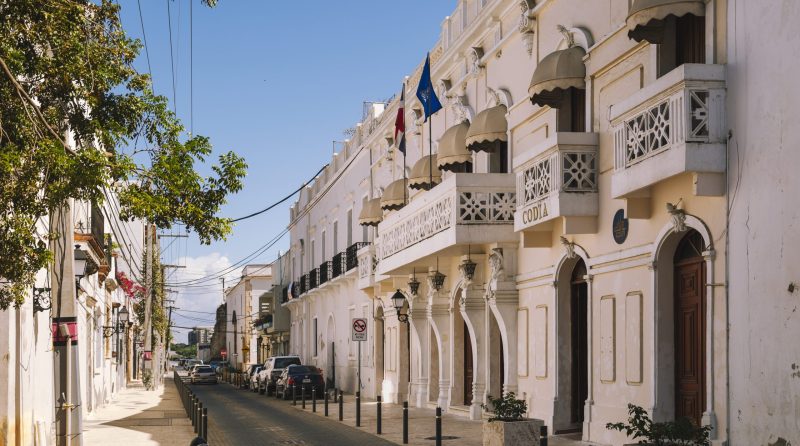
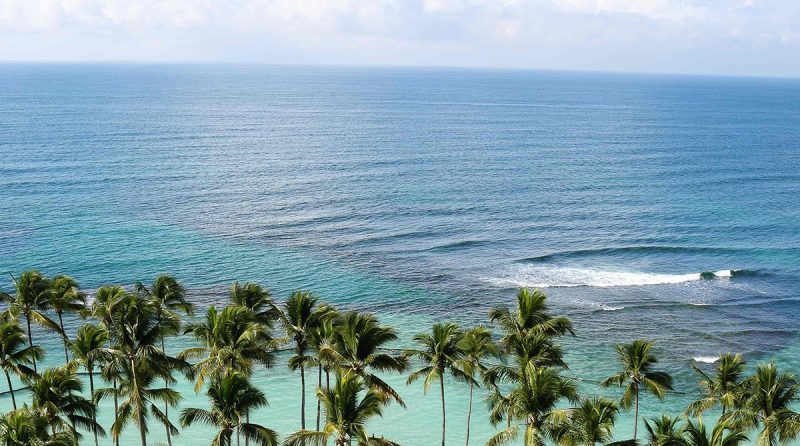
Donosti is a city as beautiful as it is elegant. Its streets, squares and stately buildings combine perfectly with its gastronomic excellence, which includes some of the best restaurants in the world. The tradition of Basque pintxos, a type of tapa that generally combines a toothpick and a slice of bread, reaches its peak in its bars and taverns.
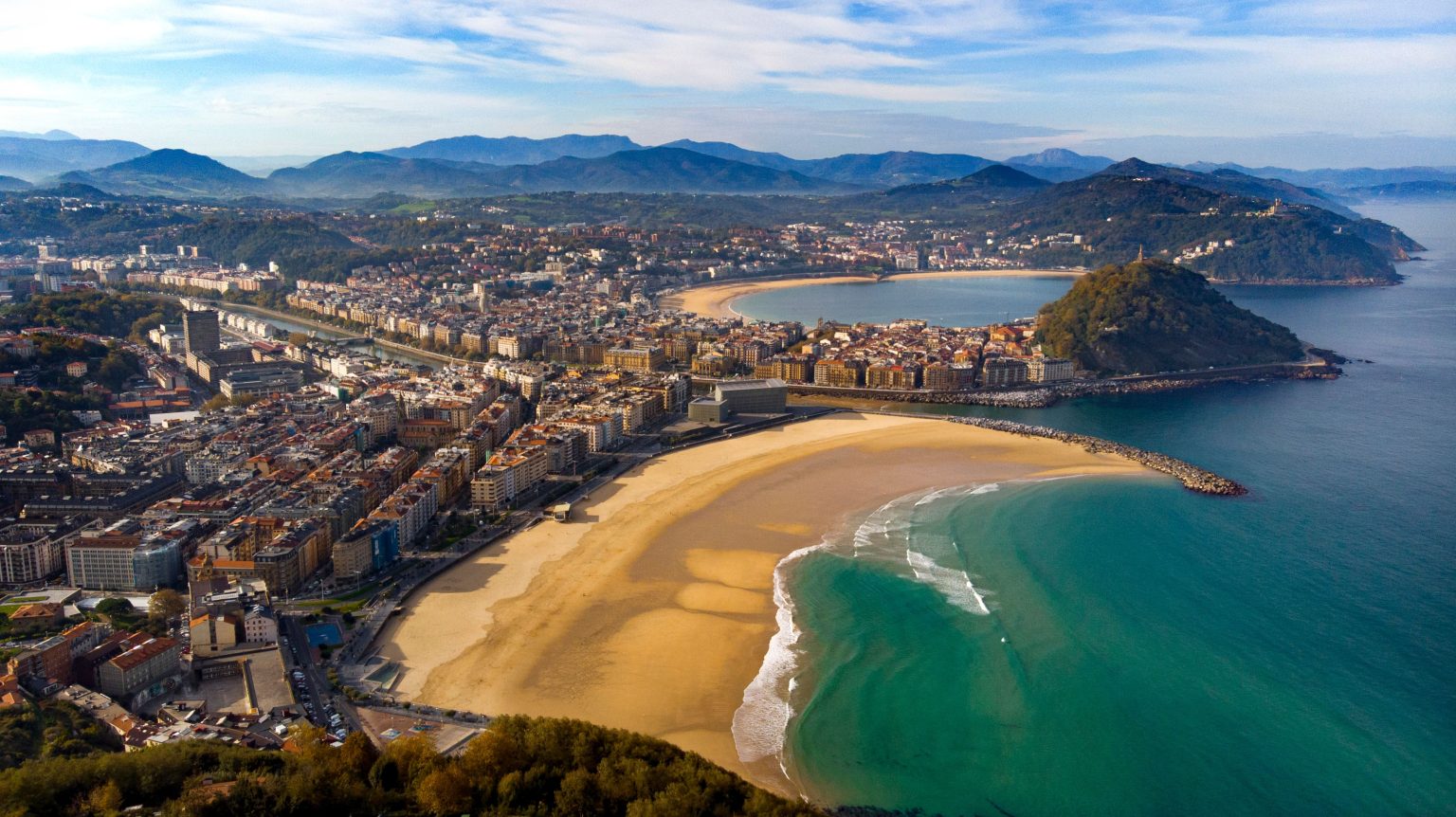
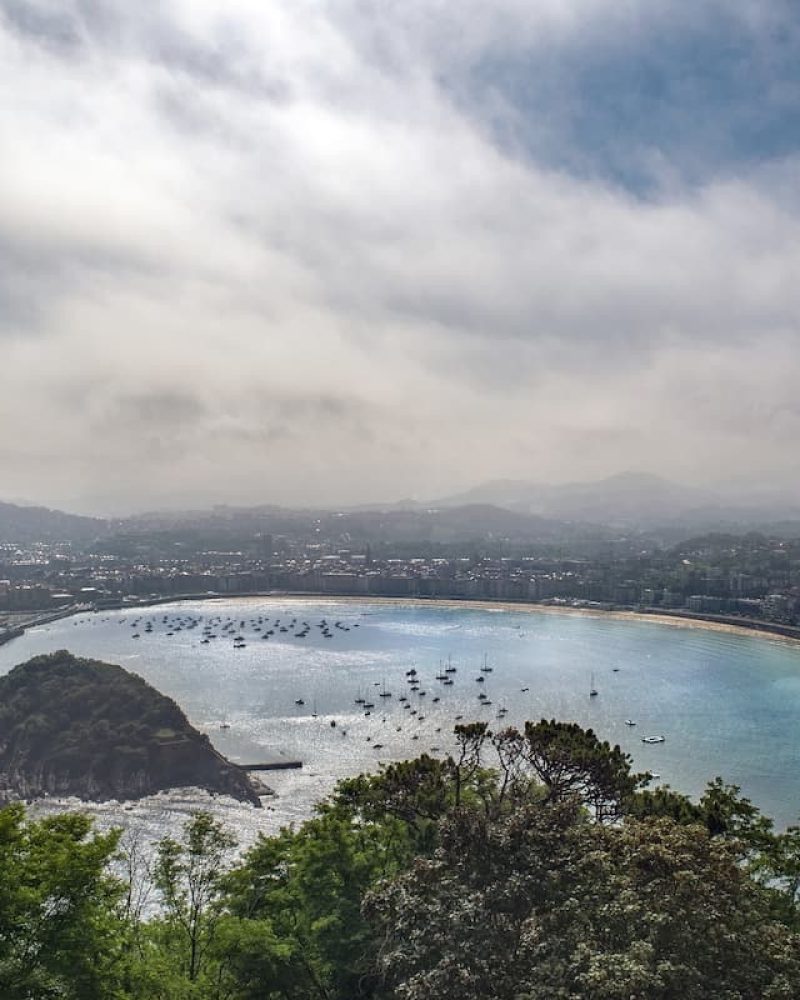
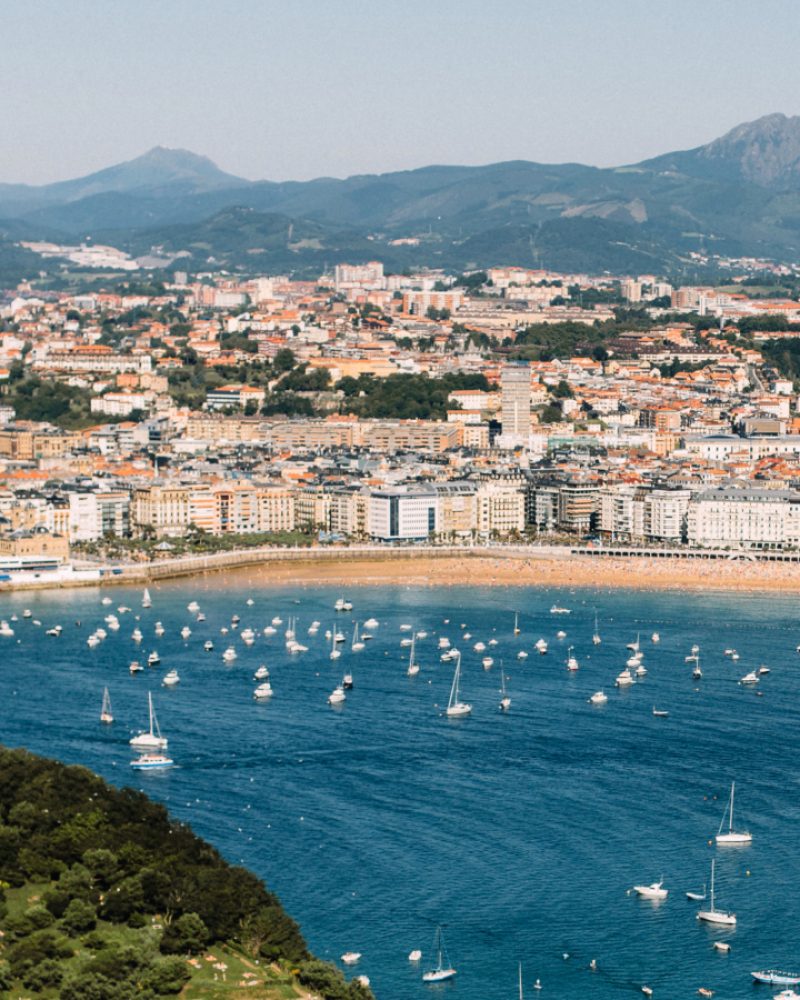
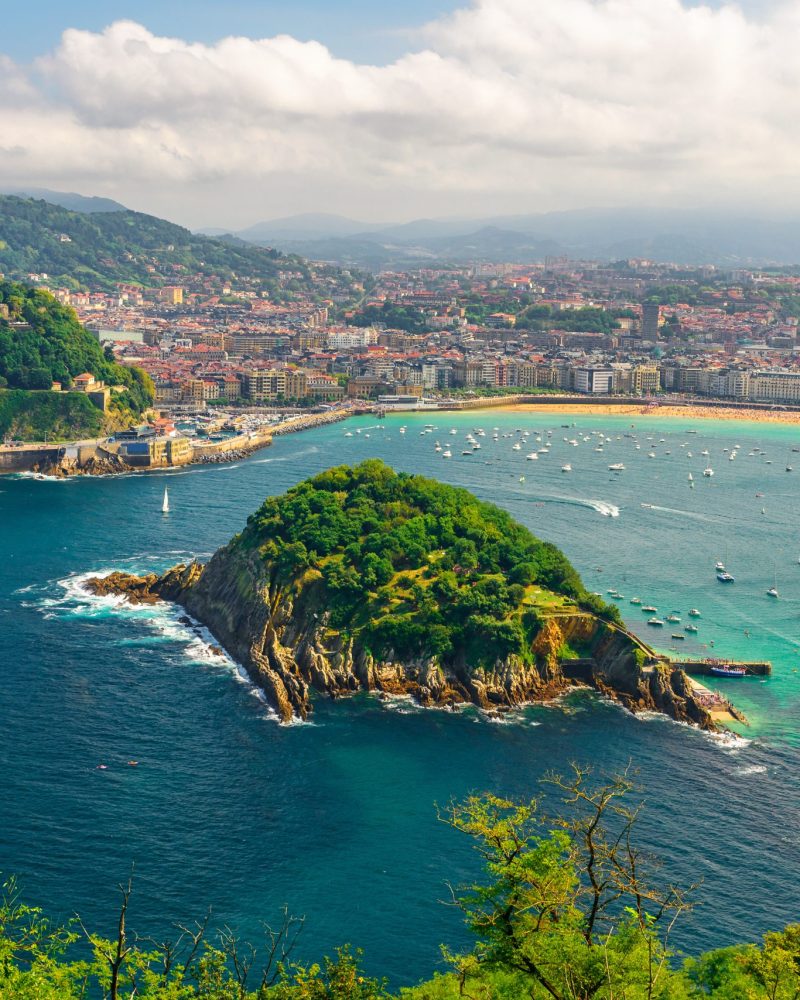
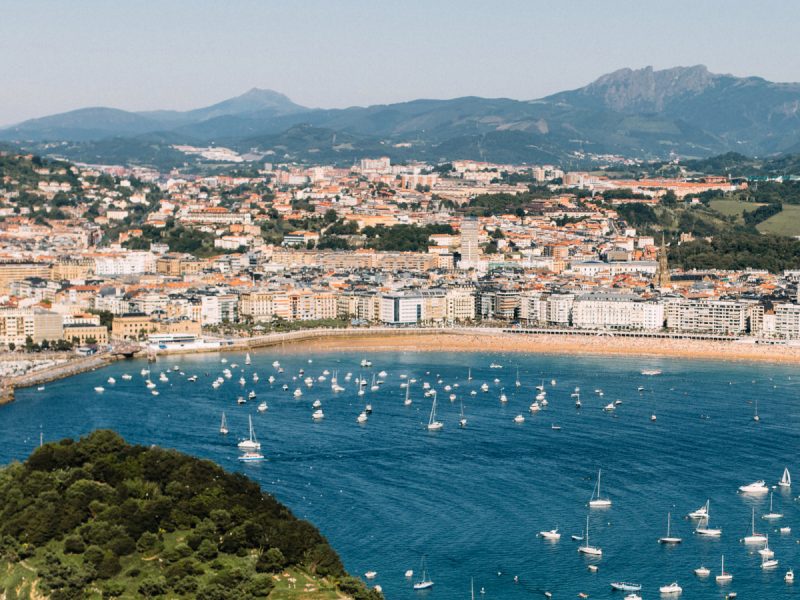
But the true hallmark of San Sebastián is none other than La Concha Beach, probably the most beautiful urban beach in Spain.
The city of San Sebastián is synonymous with quality of life, well-kept gardens and a gastronomy of truly outstanding quality. It is one of those destinations that, once you get to know it, automatically makes you want to live there.
The splendour of this pearl of the Cantabrian Sea began in the 19th century, when aristocrats and royalty chose it as a holiday destination, filling it with palaces and large mansions in which to enjoy their holidays.
Since then, it has preserved that characteristic stately charm, but today it is a modern, avant-garde city with an outstanding international reputation for gastronomy. It is no coincidence that we are speaking of the city with the highest number of Michelin-starred restaurants per square metre.
Its size makes it the perfect destination to enjoy sightseeing on foot, discovering all its streets and magical corners on foot.
Table of Contents
La Concha Beach and its promenade
We could not start anywhere else. La Concha Beach is Donosti’s most recognisable symbol and one of the most beautiful urban beaches in all of Europe. For good reason, it is included as one of the 12 treasures of Spain, alongside monuments of the stature of the Sagrada Familia or the Mosque of Córdoba.
Its 1,300 metres long and 40 metres wide provide the ideal setting for a pleasant stroll surrounded by the sea breeze.
The famous railings of its beautiful promenade are decorated with the emblem of the city of San Sebastián and its characteristic lampposts are an icon in Donosti.
The construction of this majestic promenade dates back to the beginning of the 20th century. Queen Isabel, who used to spend her summers in San Sebastián, used to go to the beach every day to combat her skin problems. Like a modern-day influencer, this wonderful beach began to acquire a certain fame among royalty and the aristocracy, making it the holiday meeting point for the Spanish nobility. Hence the construction of such an elegant promenade.
Nowadays, as well as continuing to welcome bathers of countless nationalities, it stands out for being the setting for the regattas of the trawlers in the Bandera de la Concha.
Miramar Palace
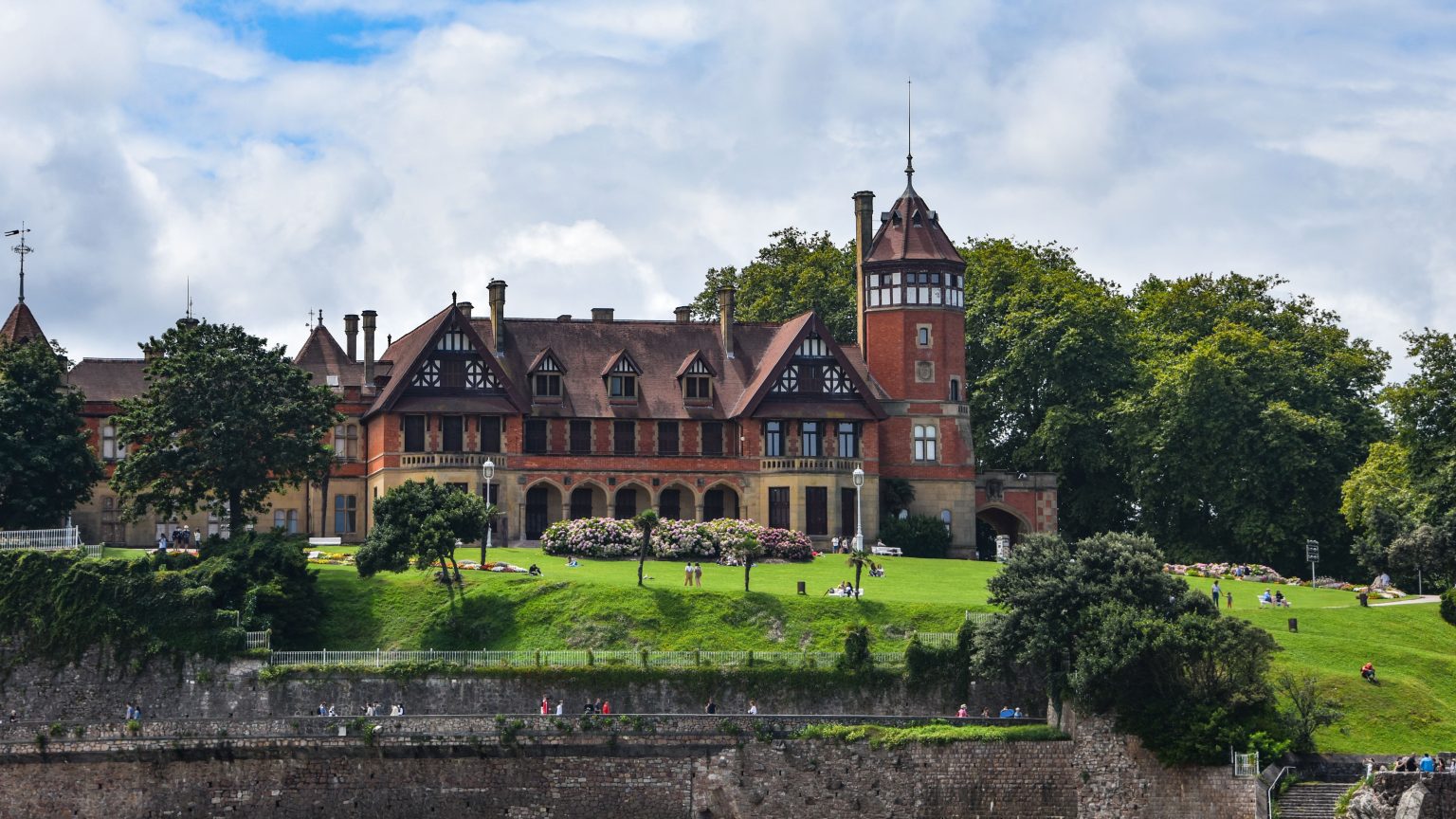
Right between La Concha Beach and Ondarreta is this beautiful palace from the end of the 19th century. It was built at the request of Queen María Cristina of Austria with that aura so characteristic of the country houses of the nobility.
Did you know that King Juan Carlos I de Borbón studied in this beautiful palace? For years, it served as the summer residence of Spanish royalty and also as an exclusive school for the children of the aristocracy.
Since its acquisition by the City Council in 1973, it has been the venue for the Summer University Courses of the University of the Basque Country, as well as the setting for concerts and numerous public events.
Its perfectly maintained gardens offer some of the best views of the city and the stunning bay of La Concha. And the little path that surrounds the palace allows you to enjoy a truly pleasant walk in a marvellous setting.
Peine del Viento
The famous sculptor Eduardo Chillida used to say that the winds coming from the sea should enter San Sebastián with their hair combed, explaining in a humorous way the background of his famous sculpture.
Just at the end of Ondarreta beach, where one of the edges of La Concha Bay starts, you will find the well-known Peine del Viento.
Apart from the original beauty of these iron sculptures, rusted by humidity, it is the general panoramic view, with the rocks jutting out into the sea and the strong waves pounding on their bases, that really makes the place worth seeing.
You will come across it at the end of the Concha promenade, as the finishing touch to a magical tour.
A sculpture in tribute to the sea, the wind, and nature itself.
Balneario de la Perla
Without leaving the surroundings of La Concha, this time we bring you a different kind of plan, influenced by the characteristic beauty of San Sebastián, but which also brings with it an extra dose of relaxation and body worship.
The Balneario de la Perla, located opposite La Concha Beach, is one of the most classic stately buildings on the seafront. Its particular beauty, together with the white colour of its façade, makes it popularly known as ‘The Pearl of the Ocean’.
Like other stops on our list, it owes its origins to the presence of the Spanish nobility in the city during the late 19th century. Within its walls, Queen María Cristina, among many other aristocrats, enjoyed the benefits of hydrotherapy with privileged views.
Fortunately, this marvellous spa is still open today and it is possible to enjoy a massage and a bath in a jacuzzi while you enjoy the incomparable beauty of La Concha Beach through its large windows.
Ondarreta Beach
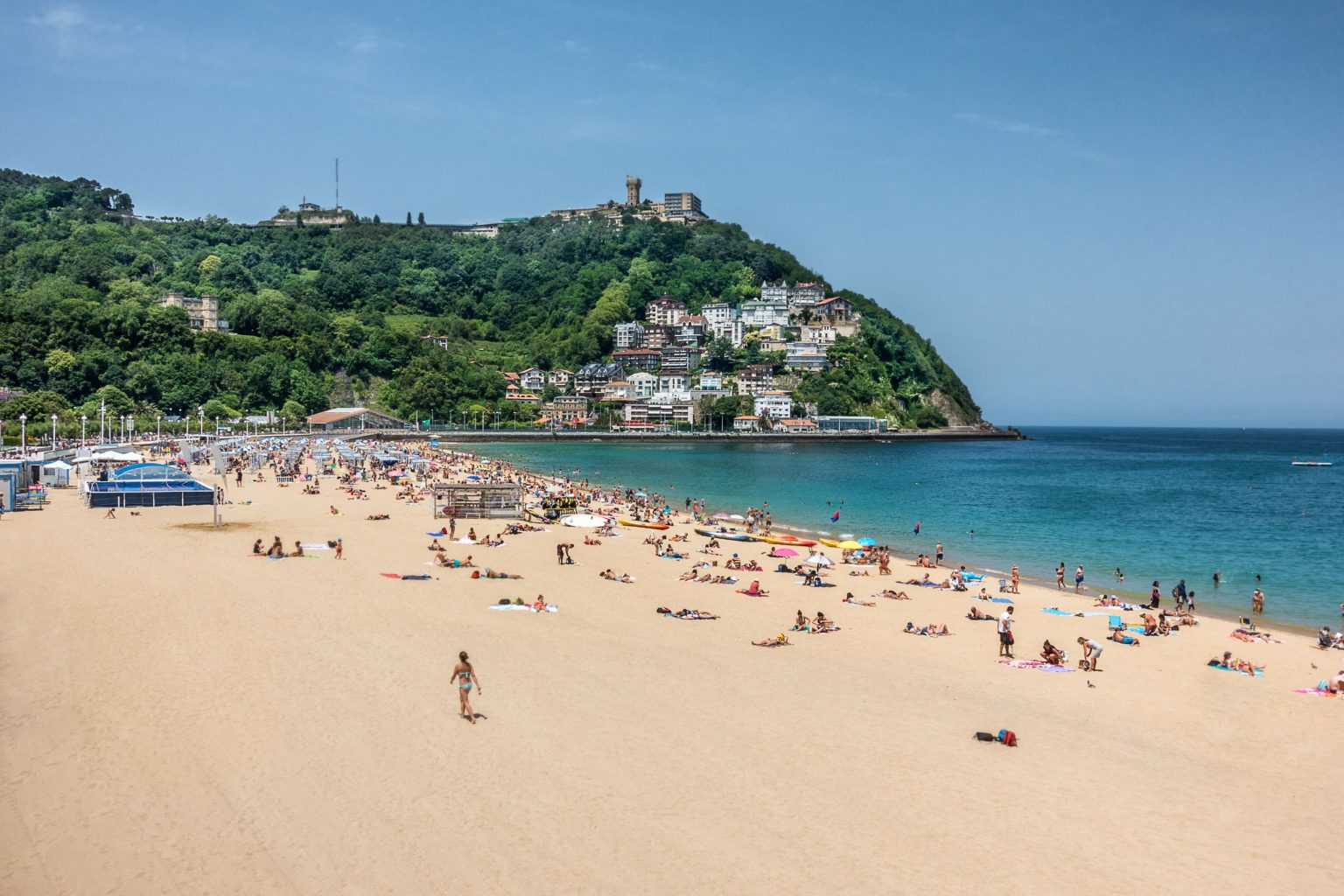
Although La Concha is undoubtedly the most famous beach in San Sebastián, its neighbour, Ondarreta beach, has little to envy it in terms of beauty.
This small urban beach is located under the slopes of Monte Igueldo and stands out for being a quiet beach with a family atmosphere, perfect for enjoying the Donostia sunshine.
The fact that La Concha concentrates much of the fame means that Ondarreta beach is generally less crowded, making it a particularly recommendable choice during the summer months.
It is a beach with all kinds of services, which connects directly with the old quarter of the city.
At the end of its promenade, you will find the aforementioned Peine de los Vientos, another of the great symbols of San Sebastián.
Monte Igueldo
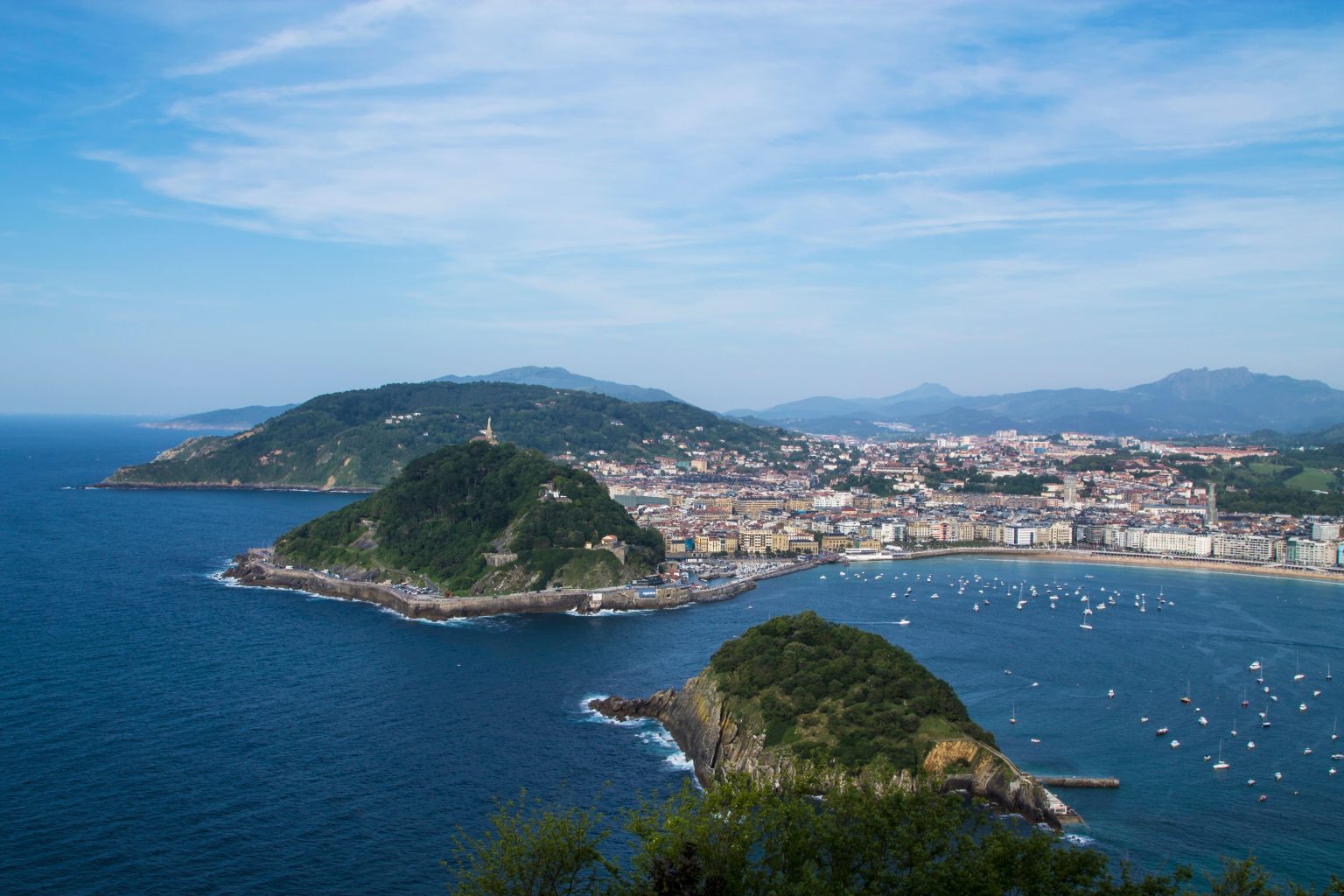
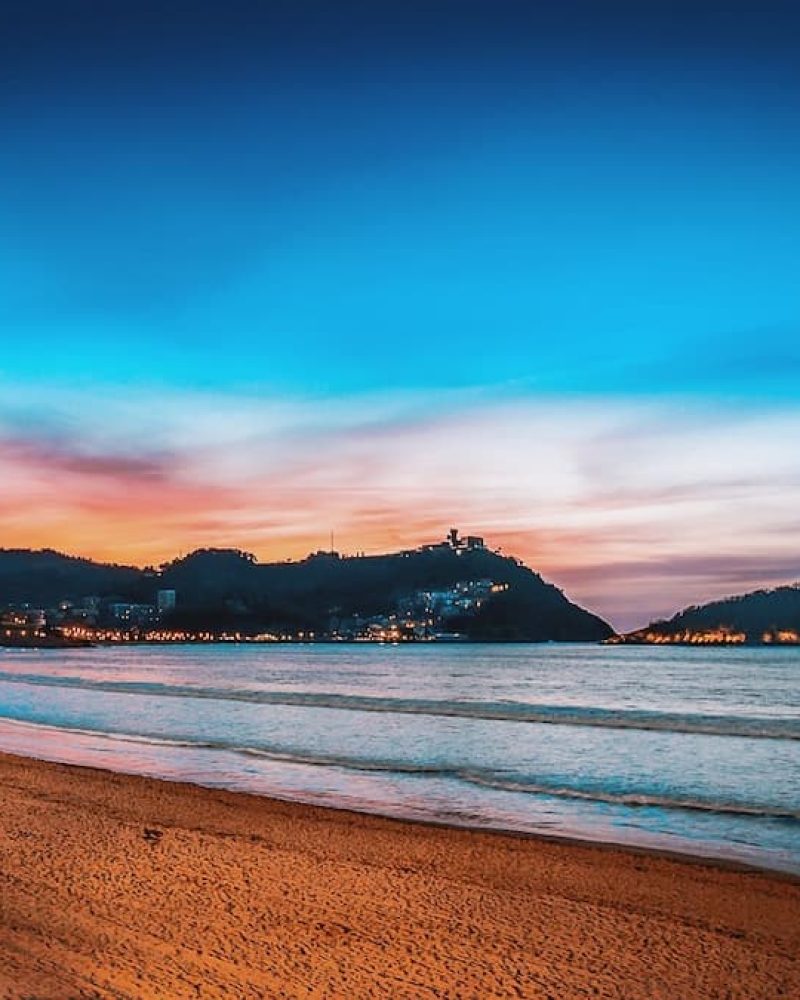
Standing tall over Ondarreta Beach, like a giant that watches over it day and night, the ascent of Monte Igueldo will allow you to enjoy one of the best panoramic views of the city.
Taking the funicular up to the top is one of the best things to do in San Sebastián. We are talking about the third oldest in Spain, whose journey ends at the foot of the Hotel Mercure, a tower built in the 18th century and next to a small old amusement park.
Our recommendation is that you make the ascent just before sunset to enjoy the spectacle of colours as the sun sets over the bay.
If you love photography and want to leave a good memory of your holiday in Donosti on your Instagram wall, the views from Monte Igueldo offer you the ideal opportunity.
San Sebastián City Hall
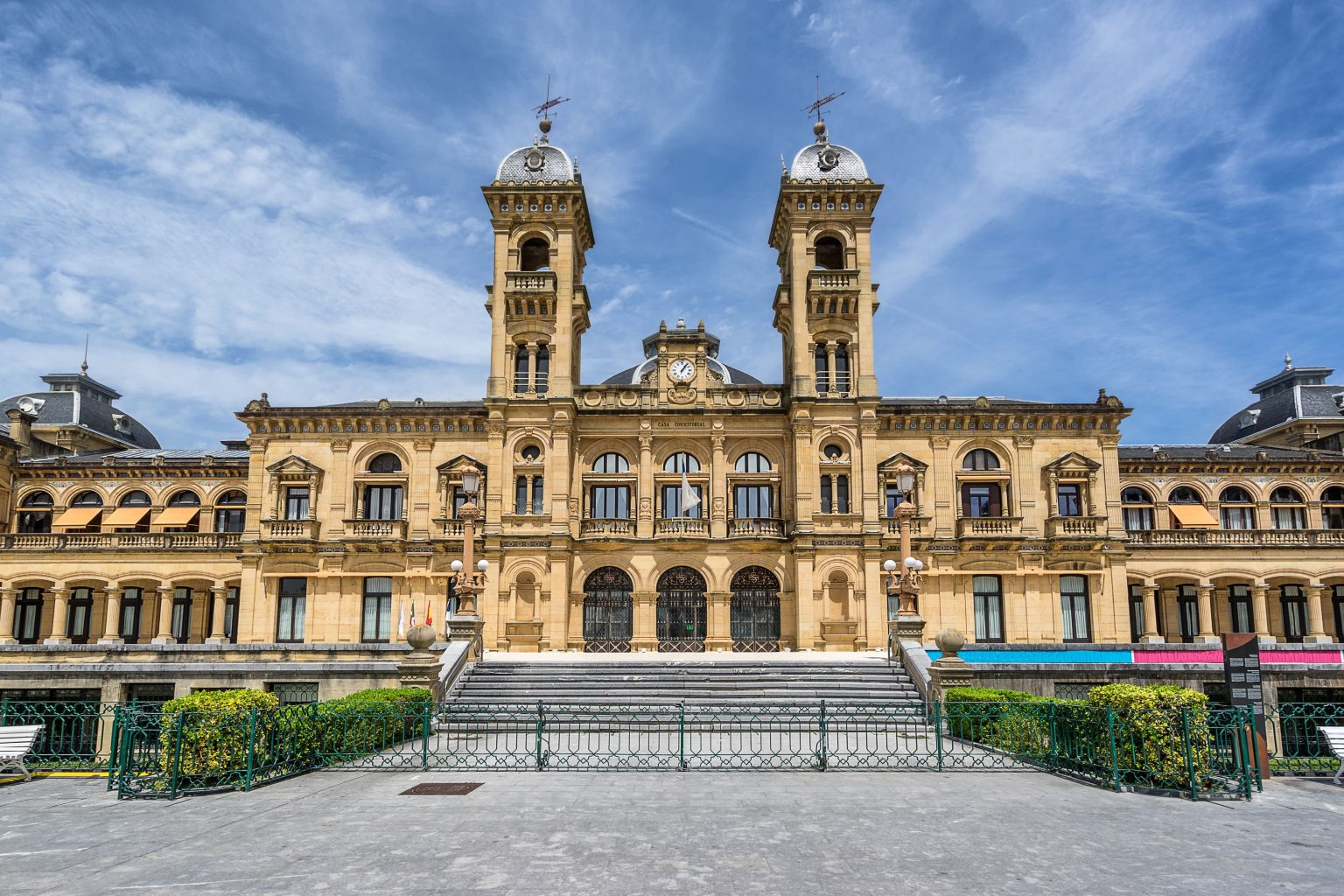
As you can see, we continue to flutter around the surroundings of La Concha Beach. Next to the beginning of the promenade and located right in front of the beautiful Alberti Eder Gardens, an imposing building awaits you, again in the stately style so characteristic of the late 19th century. But on this occasion, we are not talking about a palace or an old mansion, but the city’s town hall. San Sebastián is so beautiful that even its City Hall stands out for its beauty.
Originally, this majestic building was conceived as the Casino of Donosti, but after the prohibition of gambling in 1924, it remained orphaned of its functions for a few years, to end up becoming the city’s town hall in 1947. For example, what was once the Casino Ballroom now serves as the Plenary Hall.
Located in a luxurious enclave, with the bay of La Concha right in front of it and the frenetic Old Town behind it, the City Hall is without doubt one of the best places to see in San Sebastián.
Victoria Eugenia Theatre
We travel back in time once again to the magical Belle Époque, leaving La Concha Beach behind for a moment to head into the heart of San Sebastián.
Built in 1912 under the design of the architect Francisco de Úrsula, the four Doric columns on its façade stand out, symbolising opera, tragedy, comedy and drama.
Surely if we tell you that it is one of the most internationally famous theatres, you will have already realised why. The famous San Sebastián Film Festival is held here every year and the red carpet is walked by the biggest film stars from all over the world.
In addition, the theatre continues to host performances and shows of all kinds every week.
Basílica de Santa María del Coro
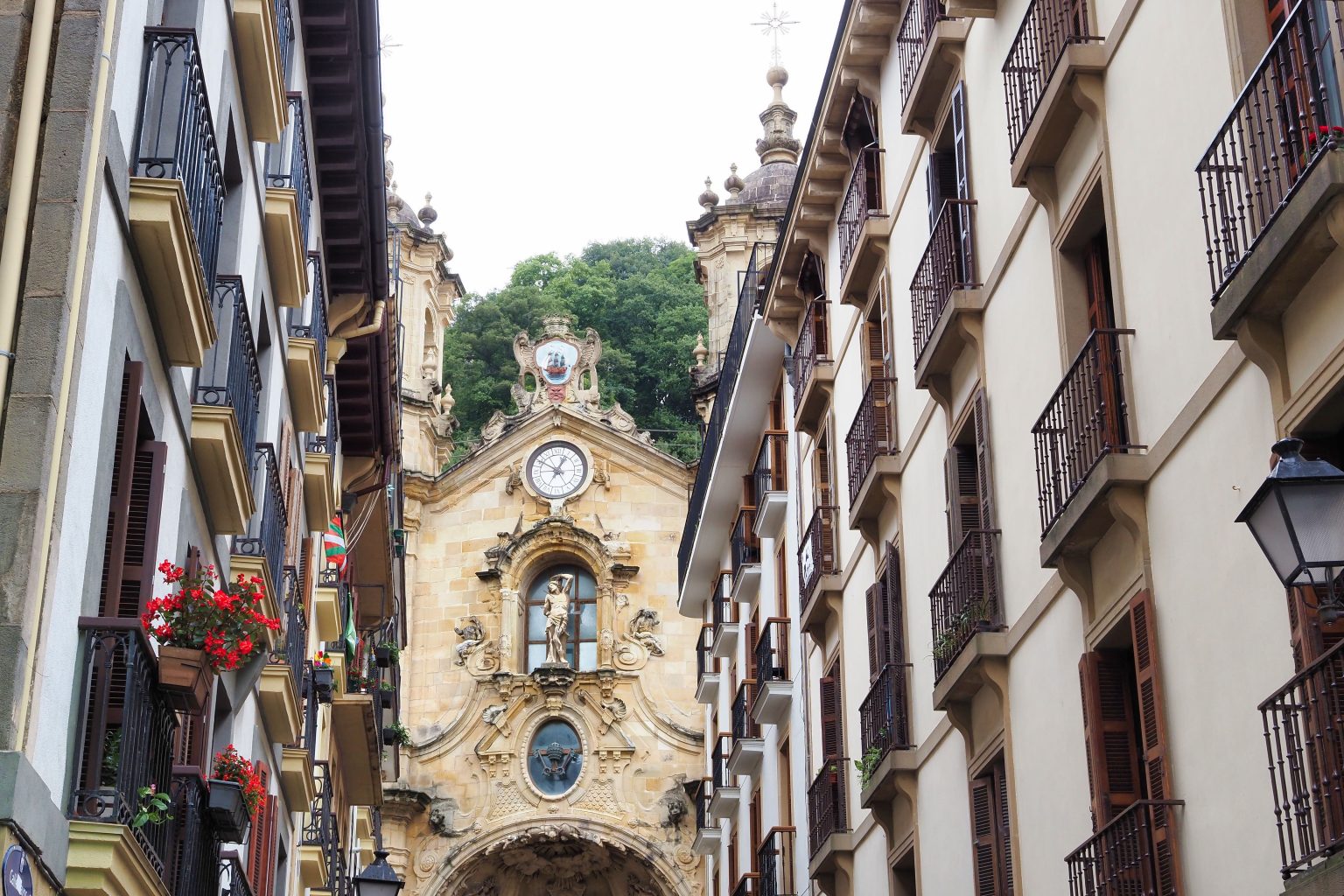
Located next to the southern slope of Monte Urgull, the Basilica de Santa María del Coro is another of the buildings to visit in San Sebastián. Its location is not a matter of chance, as it forms a perfect angle with Mayor and Trinidad streets, two of the most important streets in the city.
This Baroque jewel was erected in the mid-18th century over what was formerly a Romanesque church. It is currently considered the oldest church in the city and one of its main tourist attractions, receiving hundreds of visitors every day.
Its striking Baroque style is combined with Gothic, Neoclassical and Churrigueresque elements. Particularly noteworthy are its beautiful Plateresque portico and its main altar, where the image of the Virgen del Coro, the patron saint of Donosti, awaits. There you will also find a pictorial representation of the saint after whom the city is named.
If you are lucky enough to be in San Sebastián on 14 August, you cannot miss the famous Orfeón Donostiarra, which performs within its walls on the occasion of the Salve a la Virgen.
This beautiful temple is one of the few buildings that remained standing after the devastating fire that struck the city in 1813, so we could say we are doubly fortunate to be able to enjoy it today.
Truly one of those visits not to be missed.
The Old Town of the city
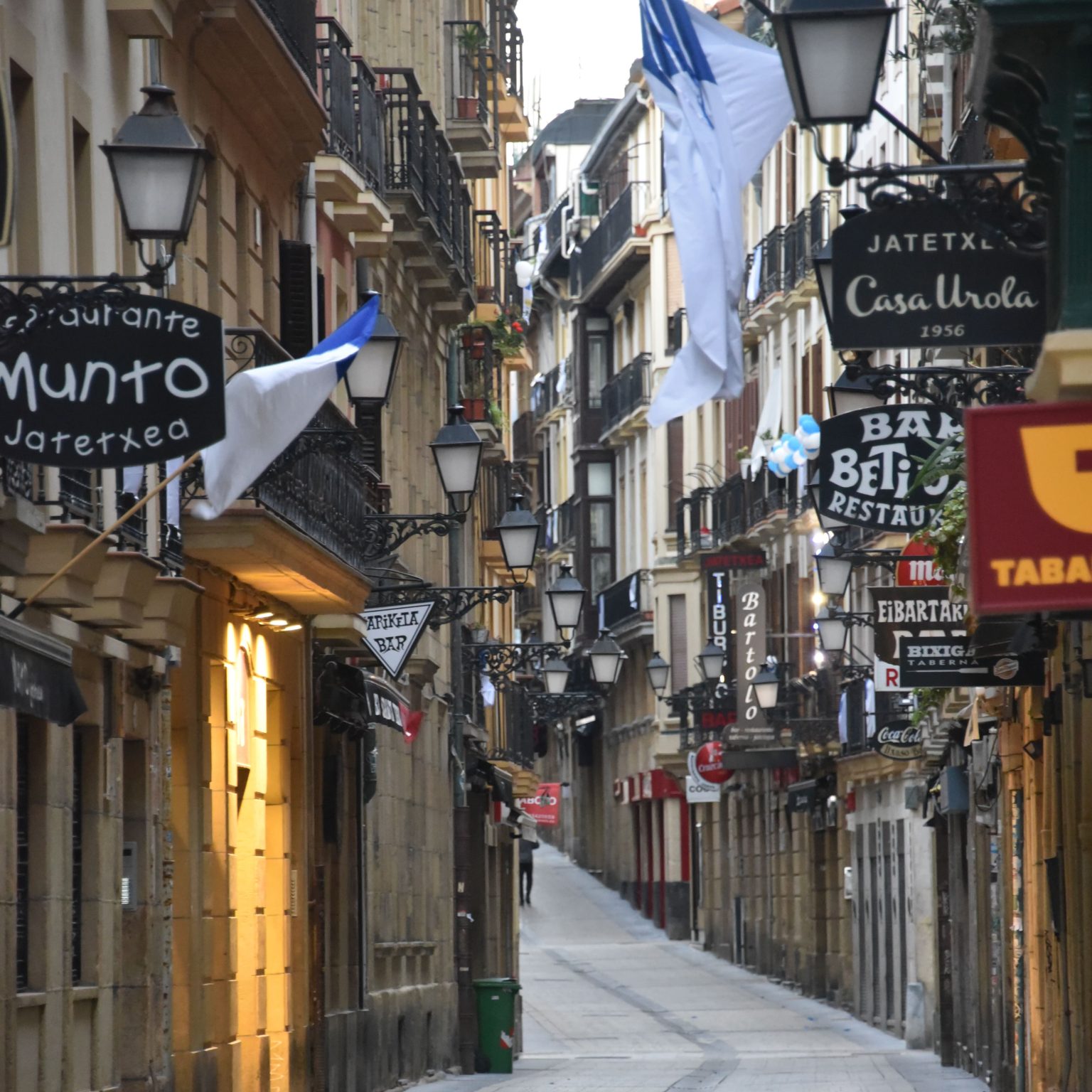
Known as the Old Town of San Sebastián, this is the most picturesque and characteristic area of the city.
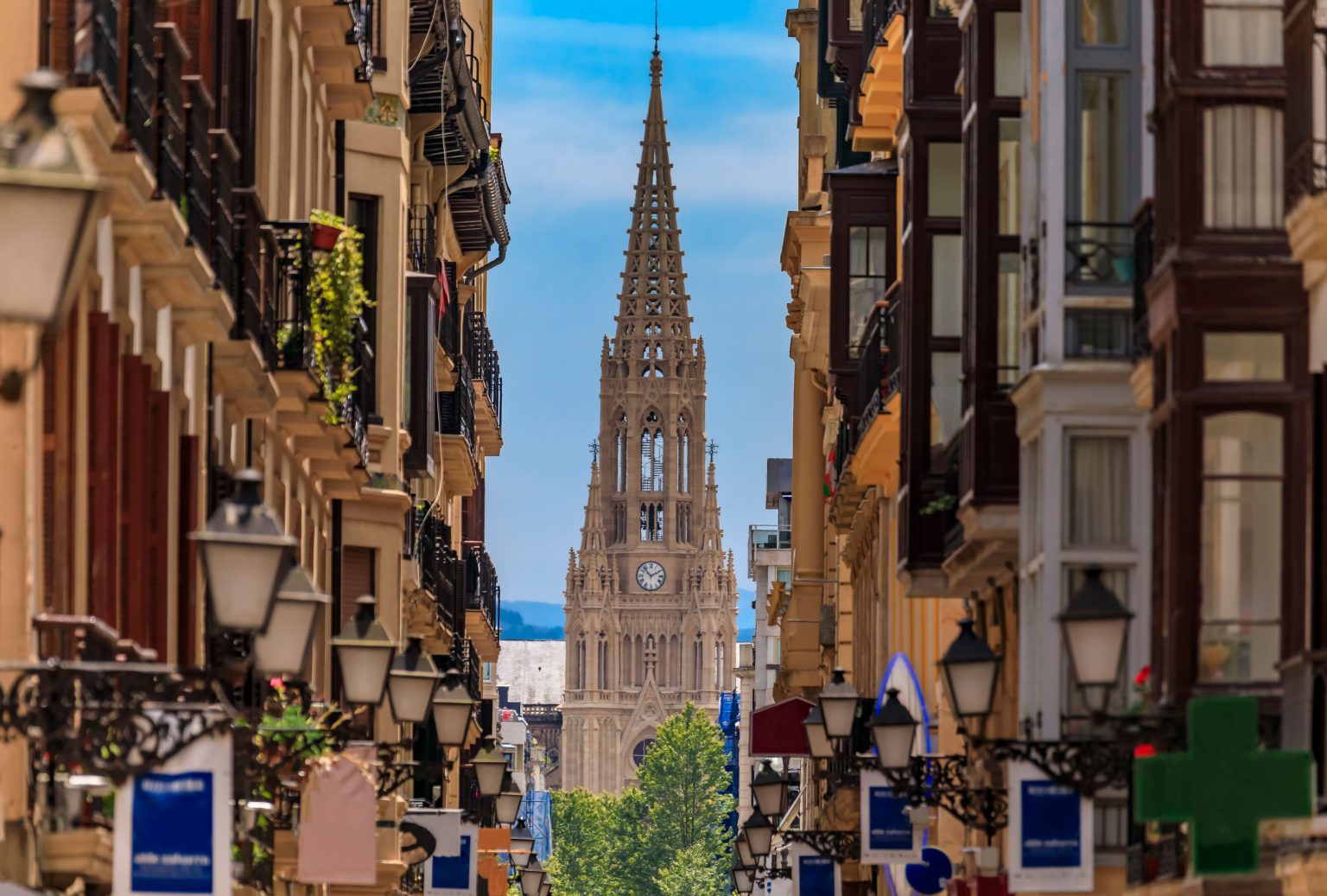
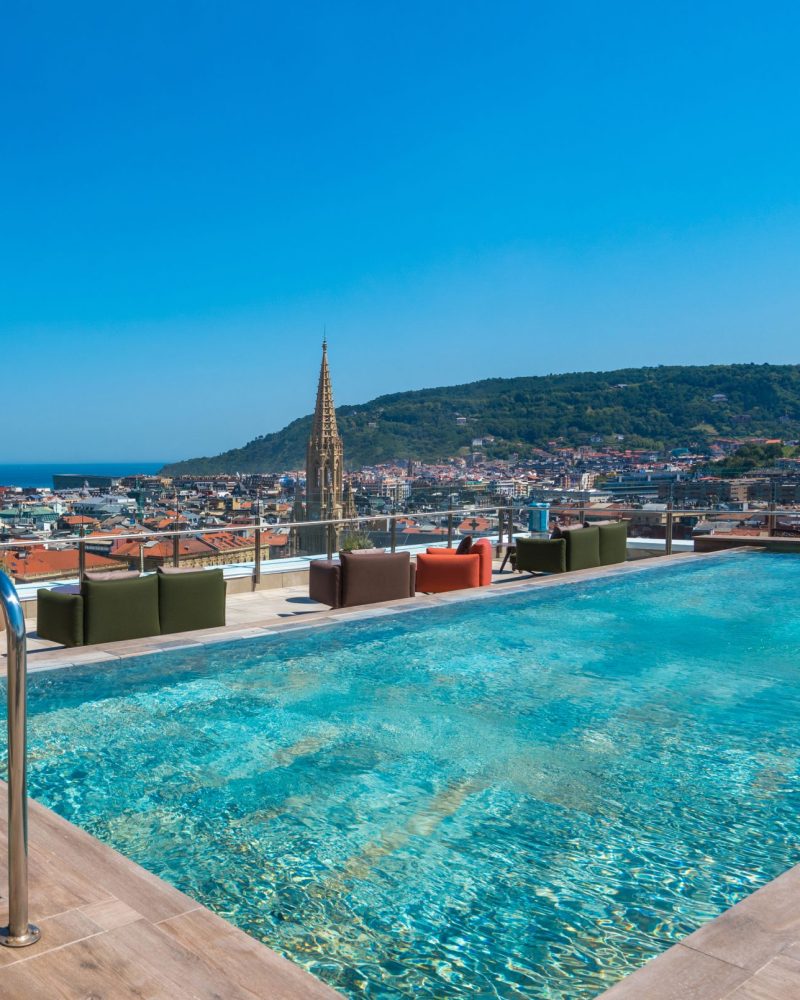
A good way to start your tour of this beautiful neighbourhood is to begin in the Calle Mayor (Kale Nagusia) in the direction of the recently mentioned Basilica of Santa María del Coro. From there, our recommendation is to let yourself get lost in its alleys, where you can discover treasures such as the Plaza de la Constitución, the Church of San Vicente, the San Telmo Museum, the Victoria Eugenia Theatre or the beautiful Buen Pastor Cathedral.
Each and every one of the recommended stops is undoubtedly worth a visit to get to know them in detail.
To make sure you don’t miss a single corner of the Old Town of San Sebastián, we recommend that you opt for a free tour of its streets. In this way, as well as marvelling at its beauty, you will discover the history of its buildings and at the same time, you will get several recommendations related to what is one of the most important traditions of San Sebastián: going out for pintxos in its bars.
Donosti Port
We return to the vicinity of La Concha to discover a fishing port that seems straight out of a fairy tale. Its size is more like a village port than a big city like San Sebastián and the colourful façades of the houses that surround it contrast with the colours of its boats and little boats, creating a very special palette of colours. To this, we must add the blue of the sea and the green of Monte Urgull, right next to it. The postcard is truly magical.
Throughout its long history, this small fishing port has witnessed hundreds of boats depart from their moorings every morning.
Nowadays, there are boats that are still active and it is possible to see old fishermen sewing fishing nets next to their boats on their docks.
In addition, the surrounding restaurants are a highly recommended option for eating fresh fish in the city.
Paseo Nuevo
We began our private guide to Donosti with a special emphasis on the elegance of the city and its quality of life. This stop combines both qualities and the Paseo Nuevo has become one of the most recommended places for a walk if you travel to San Sebastián.
You don’t need to be an expert walker to complete the route, as it takes about an hour and we are sure it will fly by.
Starting from the port, you will head towards the mouth of the Urumea and the famous Zurriola Bridge with its characteristic Art Deco-style lampposts. From there, you will head into the old part of the city towards the Kursaal.
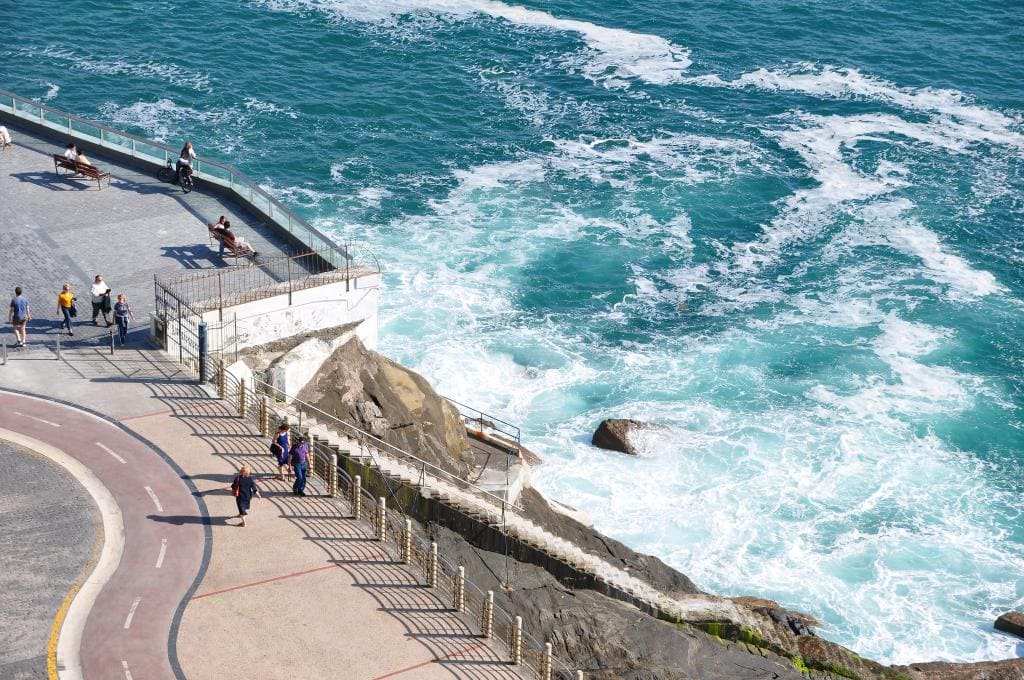
The route is really beautiful, with the Cantabrian Sea accompanying you practically the whole way. But of course, if you have a sea like the Cantabrian by your side during the whole route, it is possible that, especially during the winter months, you could end up soaking wet. You have probably seen more than once on television the images of the waves crashing against the rocks and splashing passers-by in Donosti, right? Well, this is exactly where they are filmed. So, if you see that it’s a stormy day, we recommend you to discard this plan and choose our next proposal, but if not, don’t miss it.
Going out for pintxos in the Old Town
We finish with a must on any visit to Donosti: its restaurants and pintxo bars.
And if the beauty of Donosti is striking from the moment you set foot in the city, we can assure you that its culinary delights will make you fall in love with its palate as much as your heart.
The Old Town of the city is the ideal place to enjoy Donosti’s famous pintxos, and although it is almost impossible to choose the best ones, we are going to list the ones that are, at least, the most famous.
Meat lovers can’t miss the delicious cheeks in Atari wine. For those who are more into fish and seafood, there are options such as Ganbara’s txangurro (spider crab), Martíneza’s battered prawns, Txepetxa’s anchovies or Kapadokia’s octopus.
Other great classics are the potato omelette from Bar Antonio, the jacket potato from Zazpi, the foie pintxo from Sport or the risotto from Borda Berri.
And finally, you can’t leave San Sebastián without trying the famous La Viña cheesecake, considered by many to be the best in the world.
Going out for pintxos in the city is undoubtedly one of the best things to do in San Sebastián.
Frequently Asked Questions San Sebastian
What places are not to be missed in San Sebastian?
There are two main centres where you will find the places you should not miss in San Sebastián. The first of these is La Concha Beach, the undisputed symbol of the city. The second is the Old Town of the city, where you will find the rest of the important monuments.
From there, all you have to do is plan the right itineraries to make sure you don’t miss a single one of the recommendations on our list.
Where to eat in San Sebastian?
Depending on what you fancy, there are different places to eat in San Sebastián. If you just want to sit down to a leisurely meal, the list of restaurants to choose from includes some of the best in the world, many of them Michelin-starred. But we recommend that while you’re travelling to the city, you should try one of its most typical traditions: going out for pintxos in the Old Town of the city. We assure you that in terms of gastronomic experience, it has nothing to envy to the best restaurants in the world.
How many days do you need in San Sebastian?
Donosti is not a particularly large city and its main tourist attractions are also quite concentrated. Therefore, a weekend is the time needed to see San Sebastián to discover all its charms. However, bearing in mind that you are sure to spend a good amount of time enjoying its gastronomic delicacies from tavern to tavern, our advice is to take advantage of a long weekend and enjoy its streets for at least 3 days.
When is the best time to visit San Sebastian?
The best time to visit San Sebastián is between June and October. The summers in the north of Spain, and specifically in San Sebastián, are fairly mild in terms of temperatures and you can avoid the rain on most days. What’s more, you can take a dip in the beautiful La Concha Beach.
How to go to San Sebastian?
San Sebastián has an airport located 20 kilometres from the city centre, with connections to the main Spanish cities. It is also possible to travel to the city by train, bus and of course by car, although parking in the streets is not particularly easy.