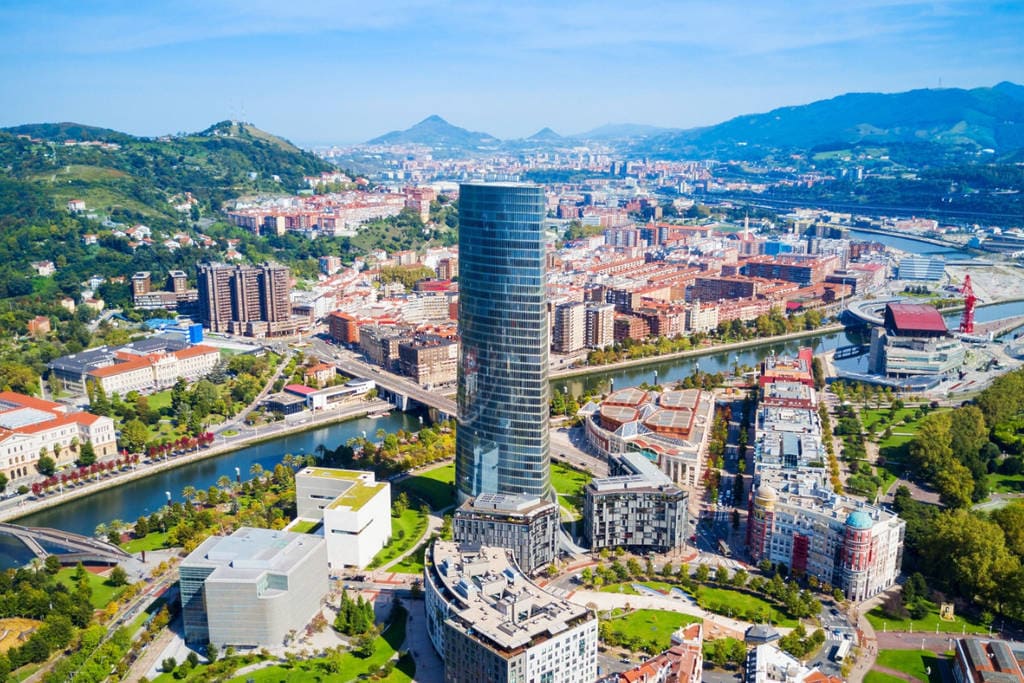
Bilbao is one of the cities in Spain that has best known how to adapt to modern times, both in appearance and in services.
Its former sober, industrial appearance has given way to a modern, European city, the cradle of avant-garde art and haute cuisine.
In its streets, you can visit some of the best restaurants on the planet or enjoy the healthy Basque custom of ‘going out for pintxos’.
Furthermore, its numerous monuments bring together avant-garde gems of the caliber of the Guggenheim, which coexist with historic buildings and ancestral traditions.
On both banks of its famous estuary, you will find proposals by famous architects such as Norman Foster and Frank O. Gehry, contrasting with the narrow alleys of its old town and the sophistication and elegance of its famous Arriaga Theatre.
Bilbao is a cosmopolitan city that seduces visitors through all five senses and has everything you need to make your next holiday an unforgettable experience.
Table of Contents
Guggenheim Museum
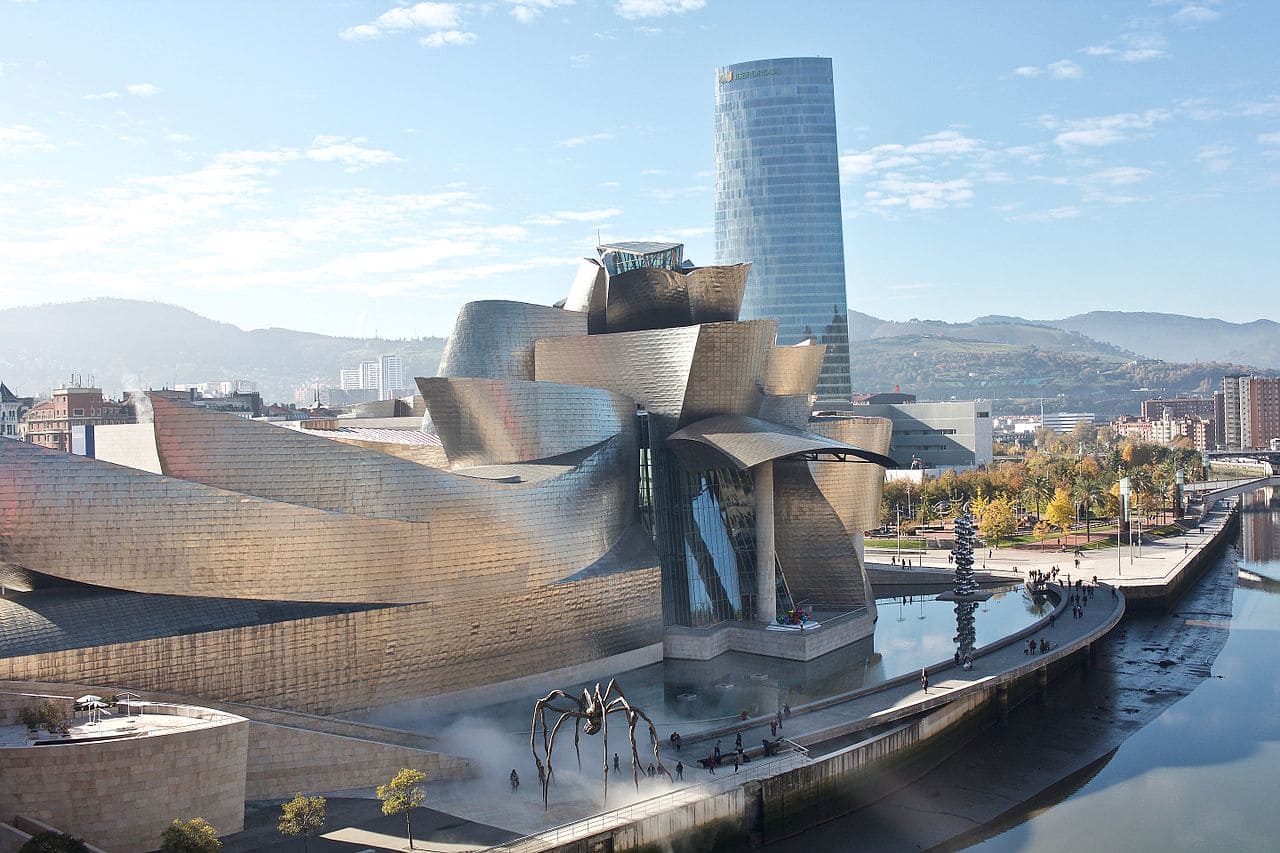
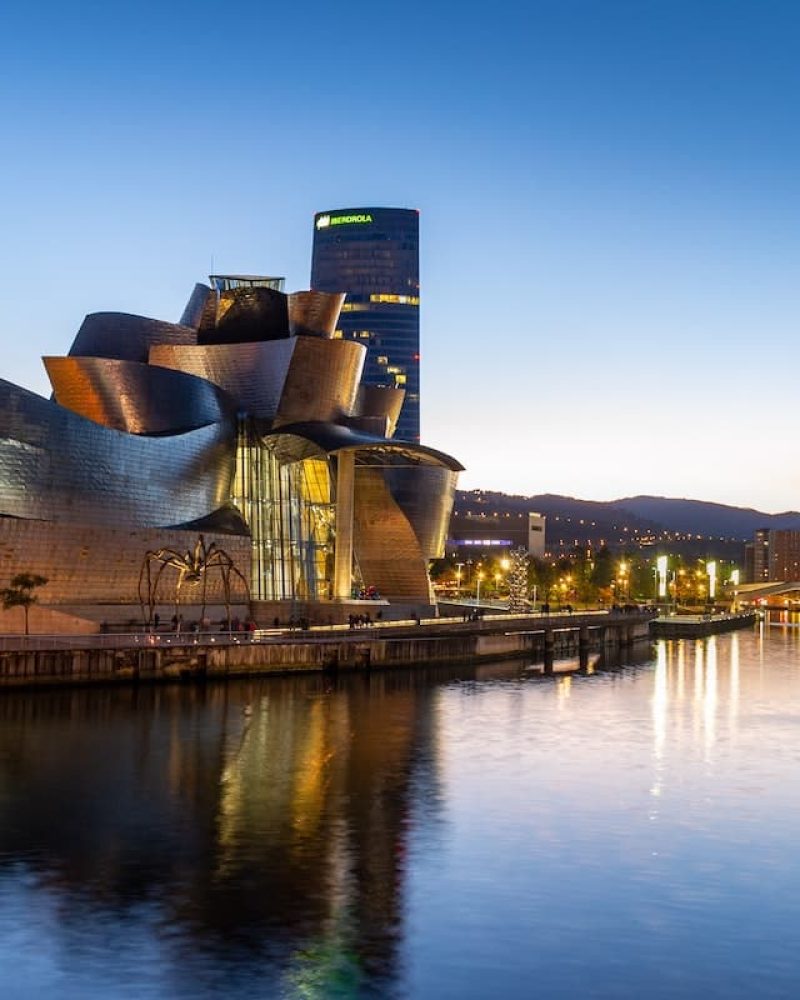
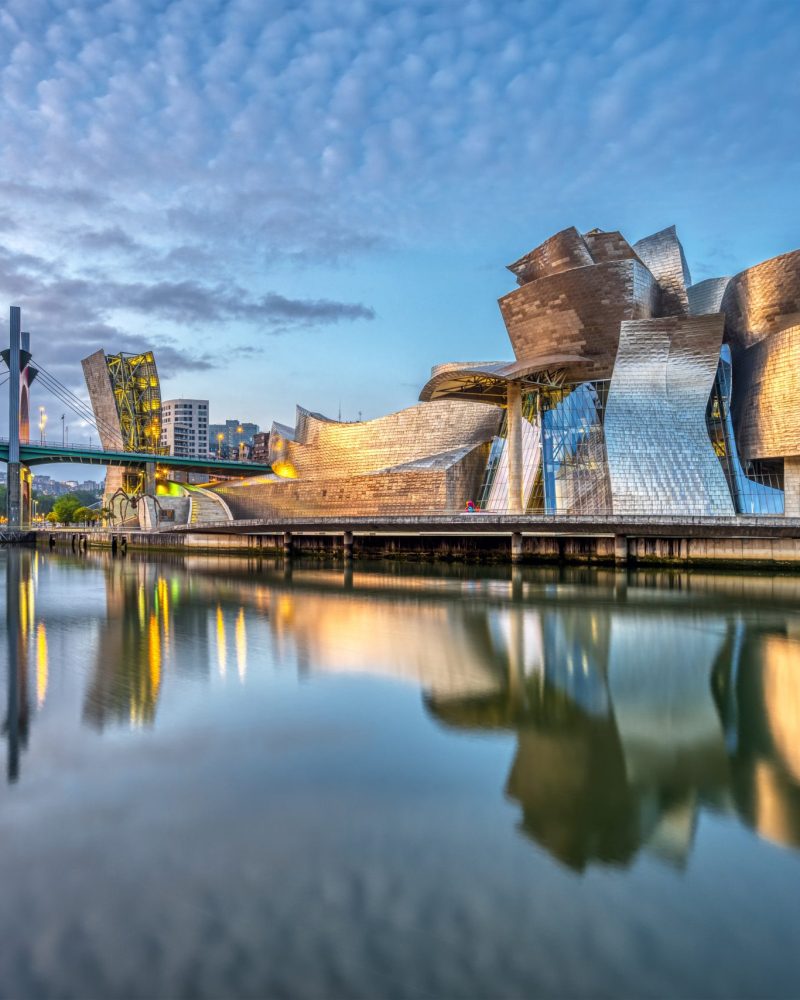
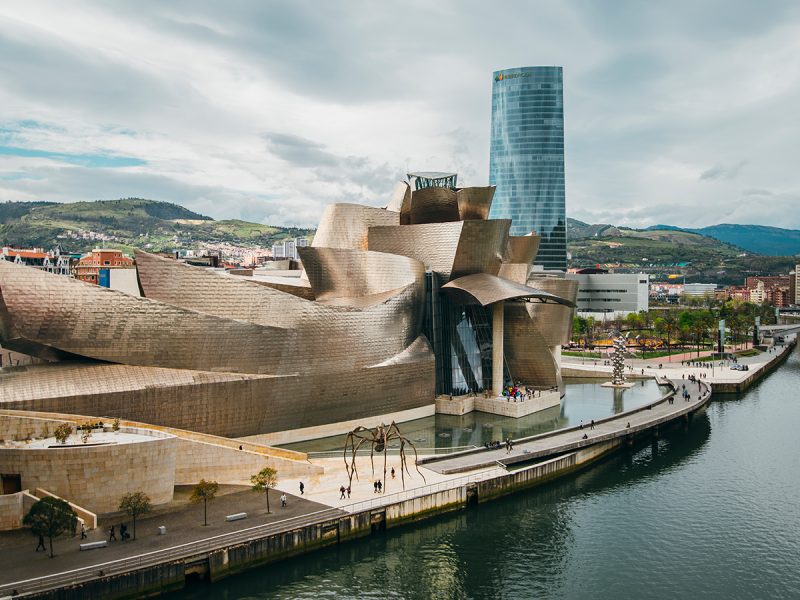
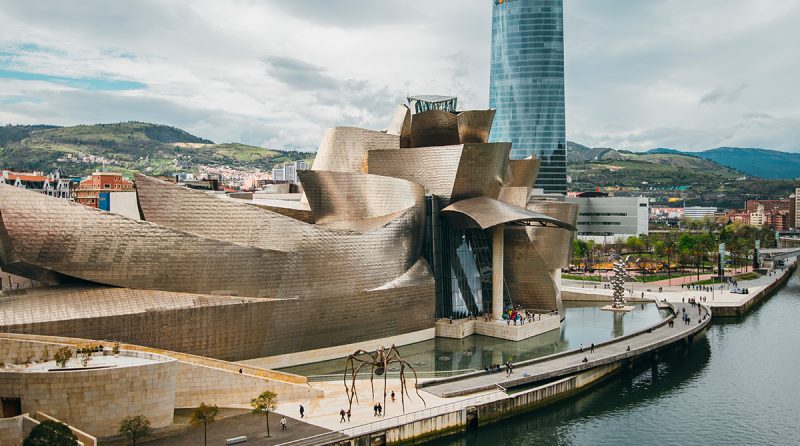
The Guggenheim Museum is the most important example of the transformation we mentioned at the beginning of this article, which has transformed Bilbao’s old industrial character into one of the great urban jewels of contemporary art.
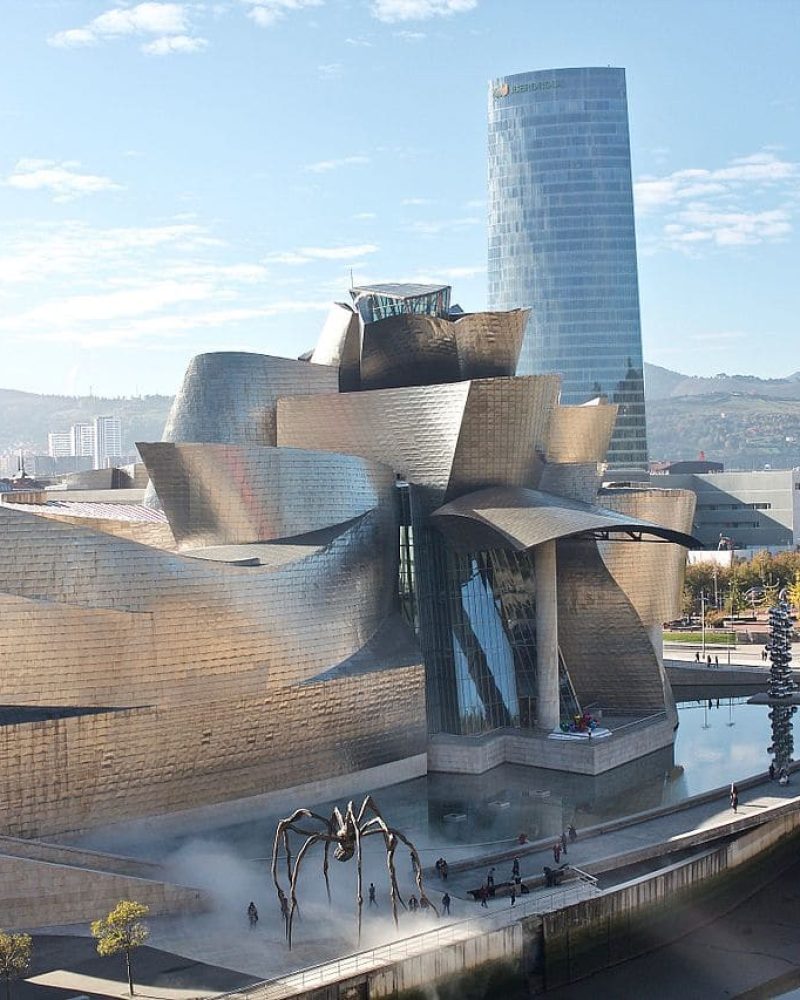
Inaugurated in 1997, this spectacular building, designed by the famous architect Frank O. Gehry, houses one of Europe’s most important collections of avant-garde art.
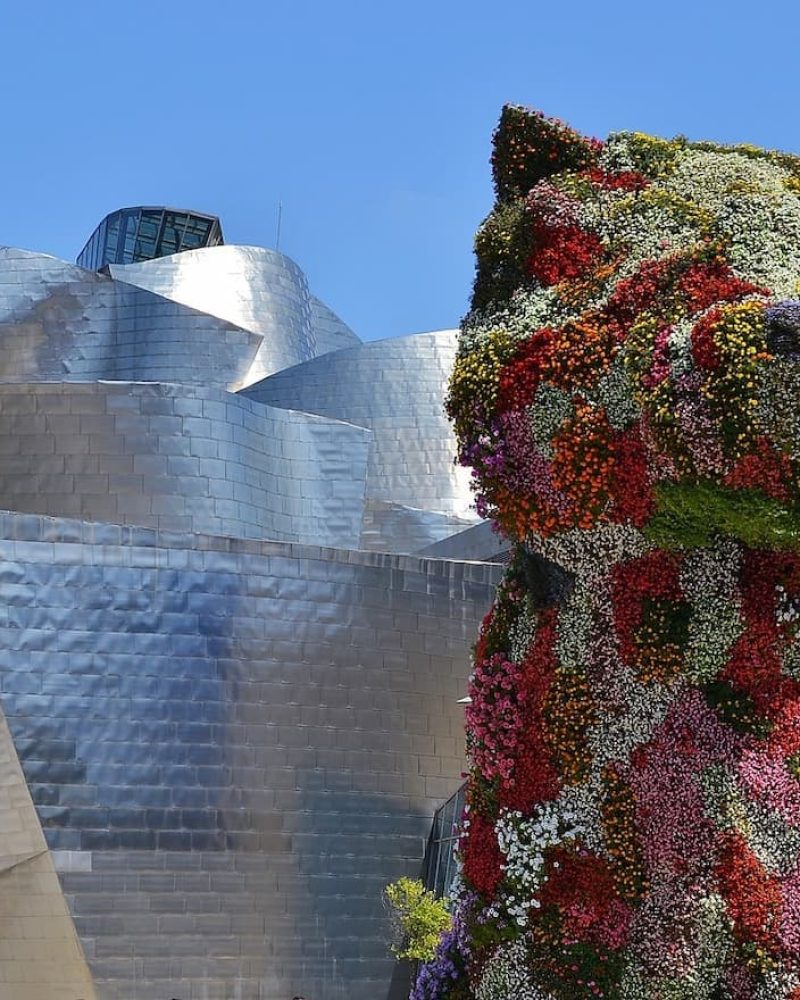
But if this famous museum stands out for one thing, it is for its amazing roof, composed of more than 30,000 overlapping titanium sheets that unfold in fascinating rounded shapes.
Among its most famous and important works, it is worth highlighting the sculpture known as The Matter of Time, by artist Richard Serra.
Moreover, right next to the museum you will find what has already become another of the city’s symbols, its famous Mamá spider. Sculpted in bronze, marble and stainless steel, its nine metres rise above the left bank of the estuary, welcoming visitors to the museum with its elegant yet sinister appearance.
Just a few metres from it, another of Bilbao’s new emblems awaits you – its flower mascot, the little dog Puppy, which is a true magnet for photos.
Plaza Nueva
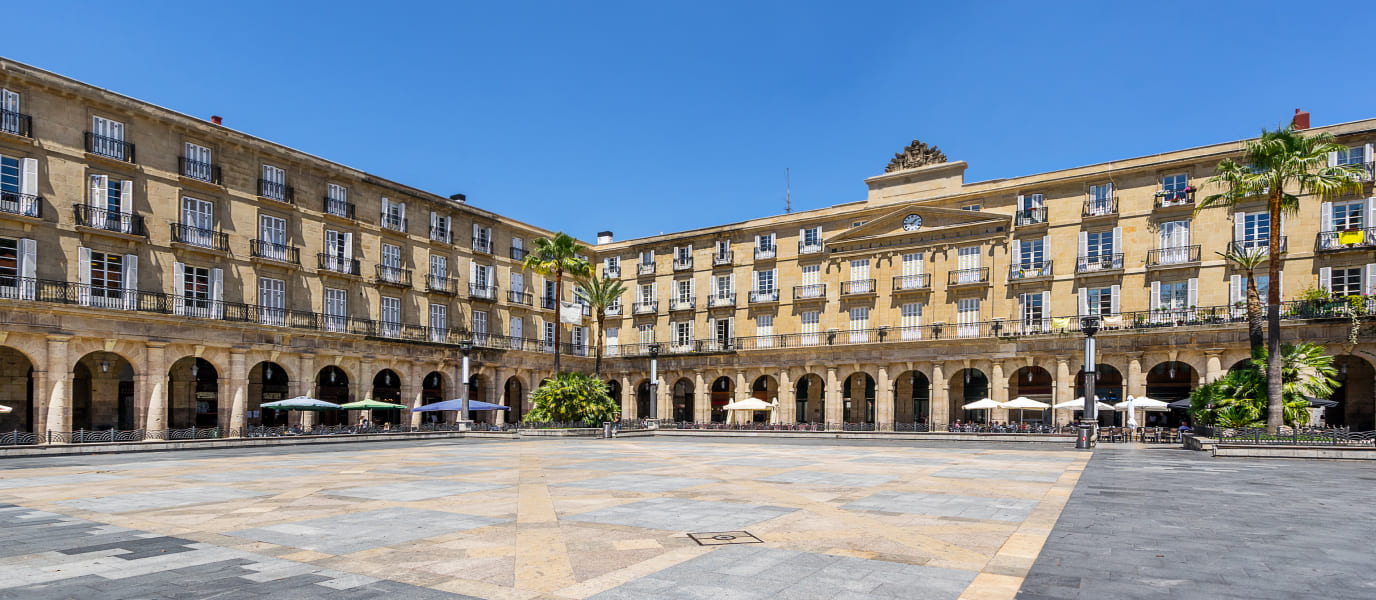
We move from one of the most representative modern buildings of avant-garde art to a 19th-century square, which today is one of the liveliest areas in Bilbao.
We already warned you at the beginning of our guide, Bilbao has become a city of contrasts, with examples from different periods and artistic styles that blend harmoniously.
Bilbao’s Plaza Nueva has a total of 64 porticoed arches, which house several of the city’s best pintxo bars. At their counters, you can sample spectacular small-sized gastronomic offerings that combine the best of traditional Basque cuisine with the latest culinary techniques. All of this, of course, washed down with a good txakoli, the typical wine of the Basque Country.
On Sundays, there is also an antique market in the square, where you can find coins from other eras, books of all kinds and a multitude of collectibles.
Zubizuri Bridge
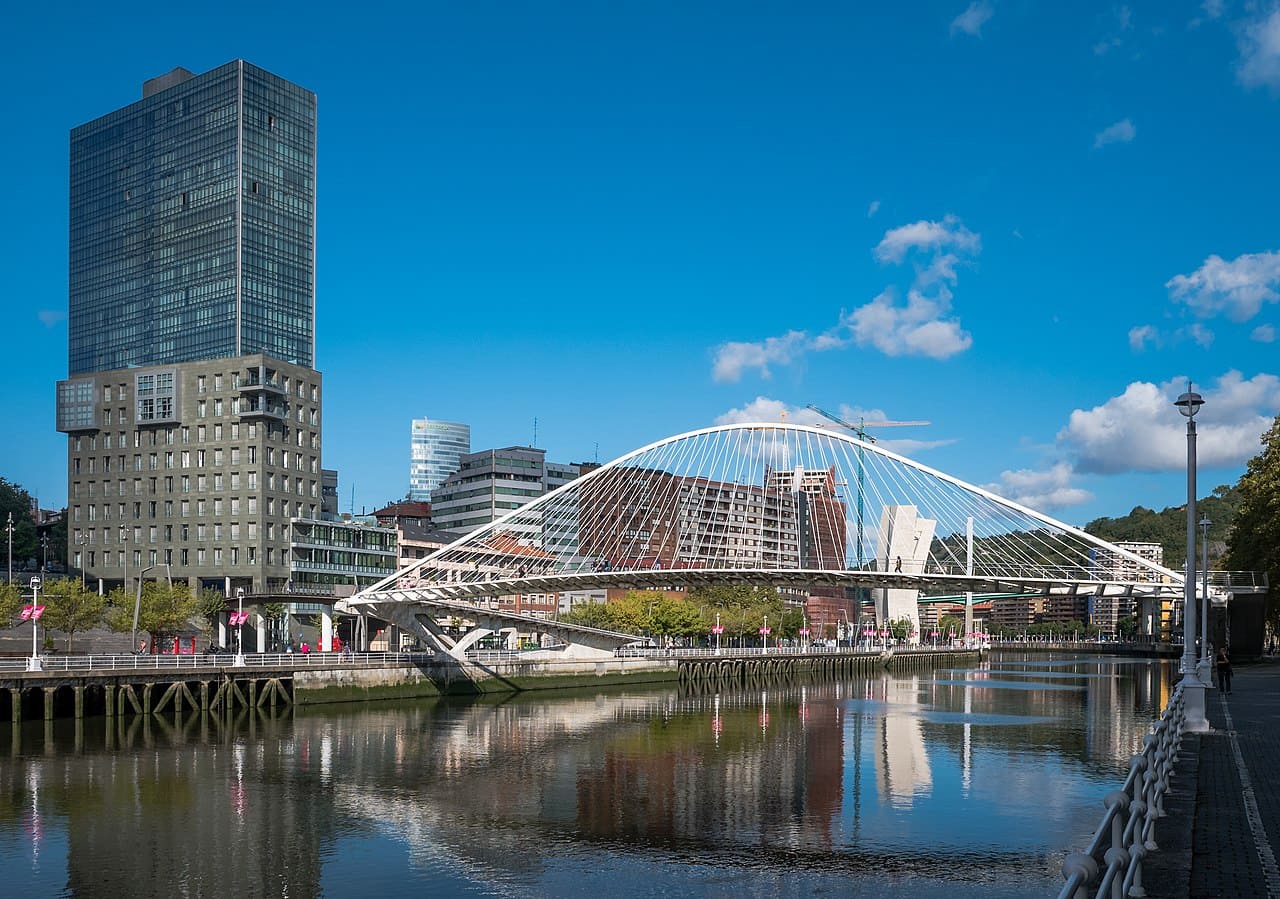
Despite its modernity, its fame has made it the most celebrated bridge of the entire Nervión Estuary.
Designed by the architect Santiago Calatrava, it is a bridge that, since its construction in the year 1997, has been almost continuously surrounded by controversy.
In its early days, it was the artistic contrast that its presence created in relation to the rest of the architectural elements along the estuary that made more than one local cry out in protest.
But in truth, it was when the citizens began to use it that the more serious complaints about its design started. The reason was its flooring, made of glass—a material that does not get along at all with the rainwater so frequent in Bilbao, especially in a place of constant pedestrian traffic. There were so many slips and falls that the City Council was forced to cover the floors with a non-slip material to solve the problem.
Today, its curious silhouette has become familiar to the inhabitants of Bilbao, and for those visiting the city for the first time, it is one of the most important tourist stops.
Ribera Market
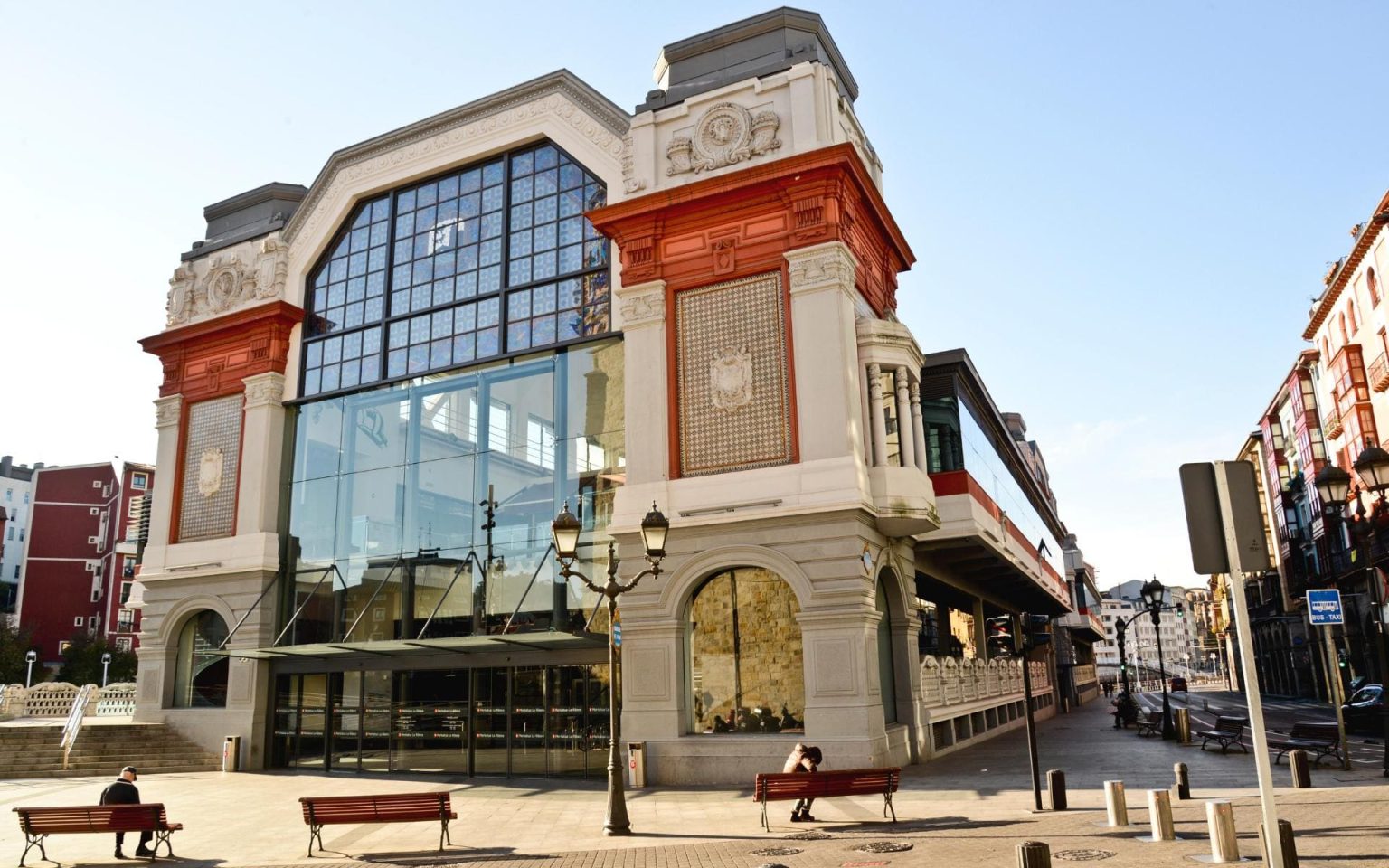
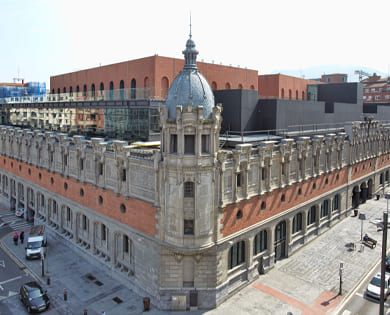
On the opposite bank from the Guggenheim Museum, closer to Bilbao’s old town, is the famous Ribera Market.
As with the city as a whole, this emblematic shopping centre, built in 1929, has also managed to reinvent itself and adapt to the times.
Without neglecting its traditional stalls, where you can find the best raw materials and foods of all kinds, the Market has included a Gastrobar area on its upper floor with different culinary offerings. There, for example, it is possible to listen to a live jazz performance while tasting a haute cuisine pincho or a dish made with one of the best hams in the world.
As for its façade, in a rationalist and Art Deco style, the hand of its architect, Pedro Ispizua, stands out.
Beyond its historic centre and the neighbourhood surrounding the New San Mamés stadium, the Ribera Market is one of the best places to eat in Bilbao.
Teatro Arriaga
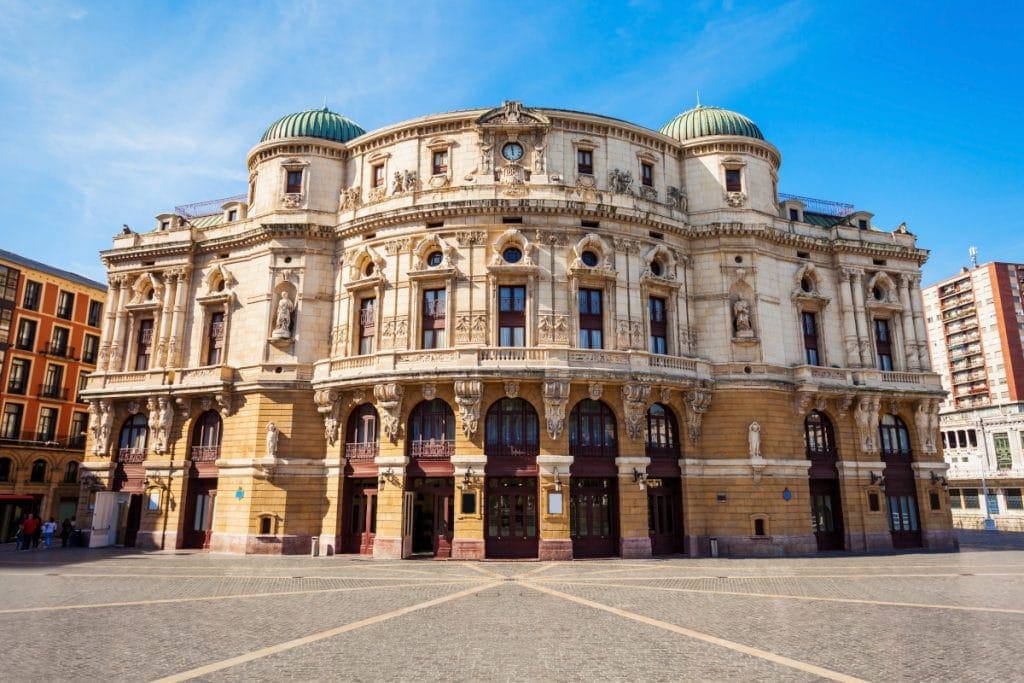
This time we travel back to the past to discover one of Bilbao’s most beautiful and emblematic classical buildings. We are referring to the century-old Teatro Arriaga, built in 1890 under the name of Nuevo Teatro de Bilbao (New Theatre of Bilbao) and clearly influenced by the neo-baroque architectural style used in the Paris Opera.
The name change was a tribute to the Bilbao composer Juan Crisóstomo Arriaga, who also gives his name to the square where the theatre is located.
In 1914, the building suffered a serious fire that forced it to be almost completely rebuilt under the orders of Federico de Ugalde, who, in addition to renovating it, expanded it and improved its safety in order to prevent further problems.
However, in 1983, the theatre was once again affected by misfortune, this time in the form of flooding, which led to further restoration work. It finally reopened to the public in 1986.
Currently, the Teatro Arriaga has a capacity for 1,200 people and is the official venue for the main theatrical performances and other shows held in the city of Bilbao.
New San Mamés
From a place where shows are held, we jump to another where shows also take place every Sunday, but of a sporting nature.
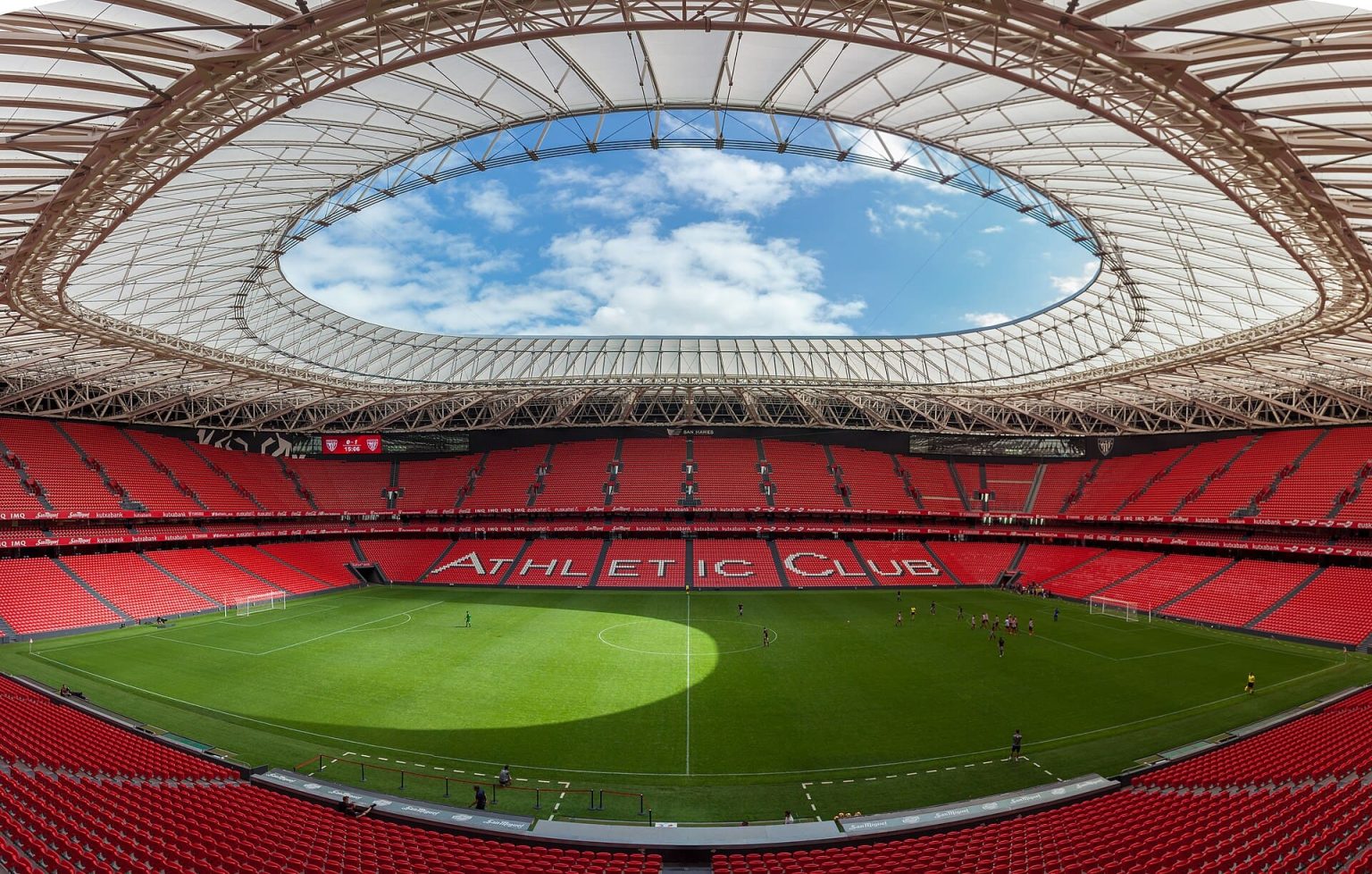
We are talking about the Athletic Bilbao stadium, which was christened Nuevo San Mamés, as it is the worthy successor to the old Athletic stadium, called San Mamés and nicknamed La Catedral (The Cathedral) in the world of football.
The New San Mamés is one of the most beautiful stadiums on the planet, and we’re not just talking about its architecture. Athletic Bilbao fans are known for their passion and respect for football, and going to see the team play at their stadium is an incredible experience, whether you like football or not.
Its exterior lit up on match nights, the area around the stadium filled with people, the murmur inside echoing through the Bilbao night…
The city of Bilbao is a place traditionally very closely tied to football, and the New San Mamés is the cathedral of the beautiful game. If you’re on holiday in Bilbao and are lucky enough to catch Athletic playing, we recommend that you at least stop by to check out the atmosphere outside the stadium. We promise you’ll be surprised.
Doña Casilda Park
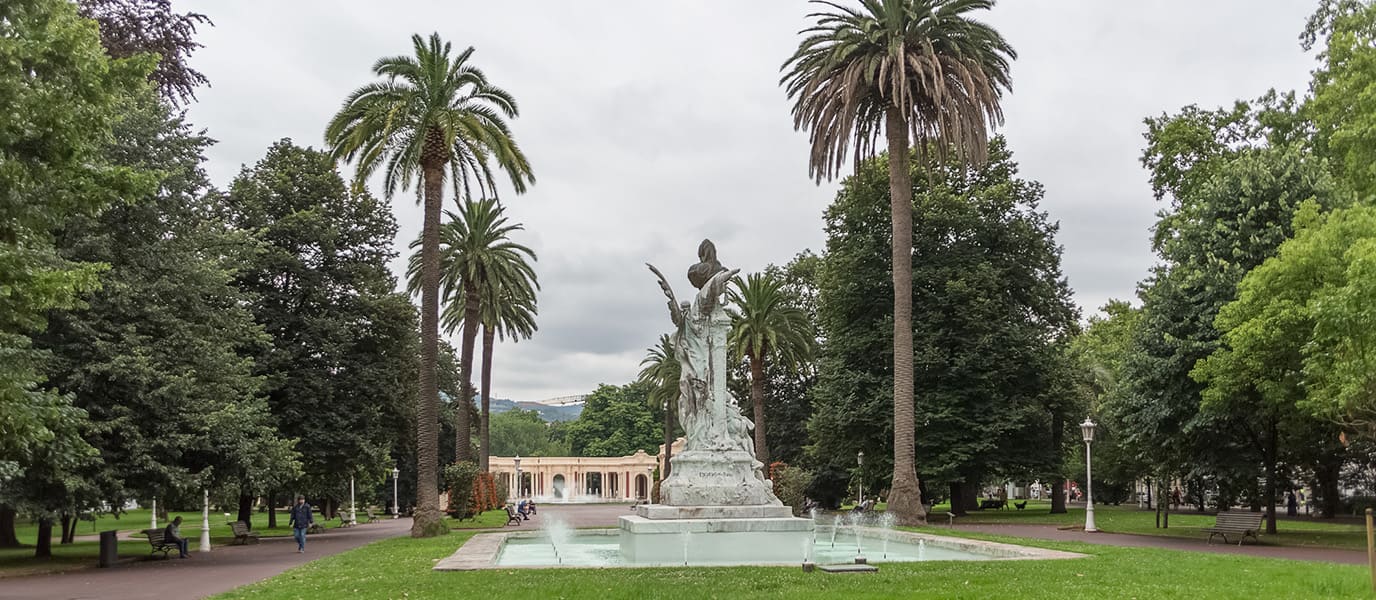
Opened at the beginning of the 20th century, Doña Casilda Park is one of the city’s main green lungs.
It is the ideal setting to take a break and relax for a while, enjoying the sound of birds and water from its fountains.
It can also be the perfect place for an afternoon picnic or to do some sport during your holidays.
Covering more than eight hectares, it is ideal for strolling and unwinding, walking among beautiful gardens and ponds full of ducks and swans.
Of its small lakes, the most famous is the one in the La Pérgola area, known for its spectacular fountains.
Within the park, you can also visit the Bilbao Fine Arts Museum, a must-see for art lovers.
Old Town of Bilbao
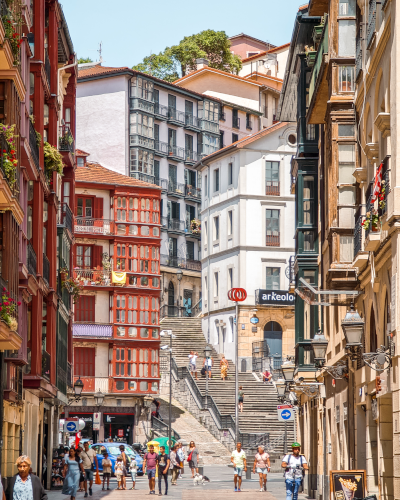
Without a doubt, a walk through the old town is the best way to discover the life, customs, and history of the city.
Its medieval alleyways are full of taverns and shops of different themes. As you lose yourself in them, you will find treasures such as the Cathedral of Santiago or the Arriaga Theatre, among many others.
Of its most important streets, we especially recommend strolling along Tendería, Belosticalle, Barrencalle, Artecalle, Carnicería Vieja, Barrencalle Barrena and Somera.
In them, besides enjoying the beauty and the most authentic atmosphere of the city, you’ll have the chance to take part in one of its most delicious traditions: going out for pinchos.
The display cases of its bars and taverns are a culinary spectacle, with something for everyone, where good craftsmanship and respect for the product are usually the common denominator.
If you don’t want to miss any of the many attractions of Bilbao’s old town, we recommend taking a guided tour of the area. It’s the best way to learn about its history, its most interesting sights and, of course, its best pinchos bars.
Santiago Cathedral
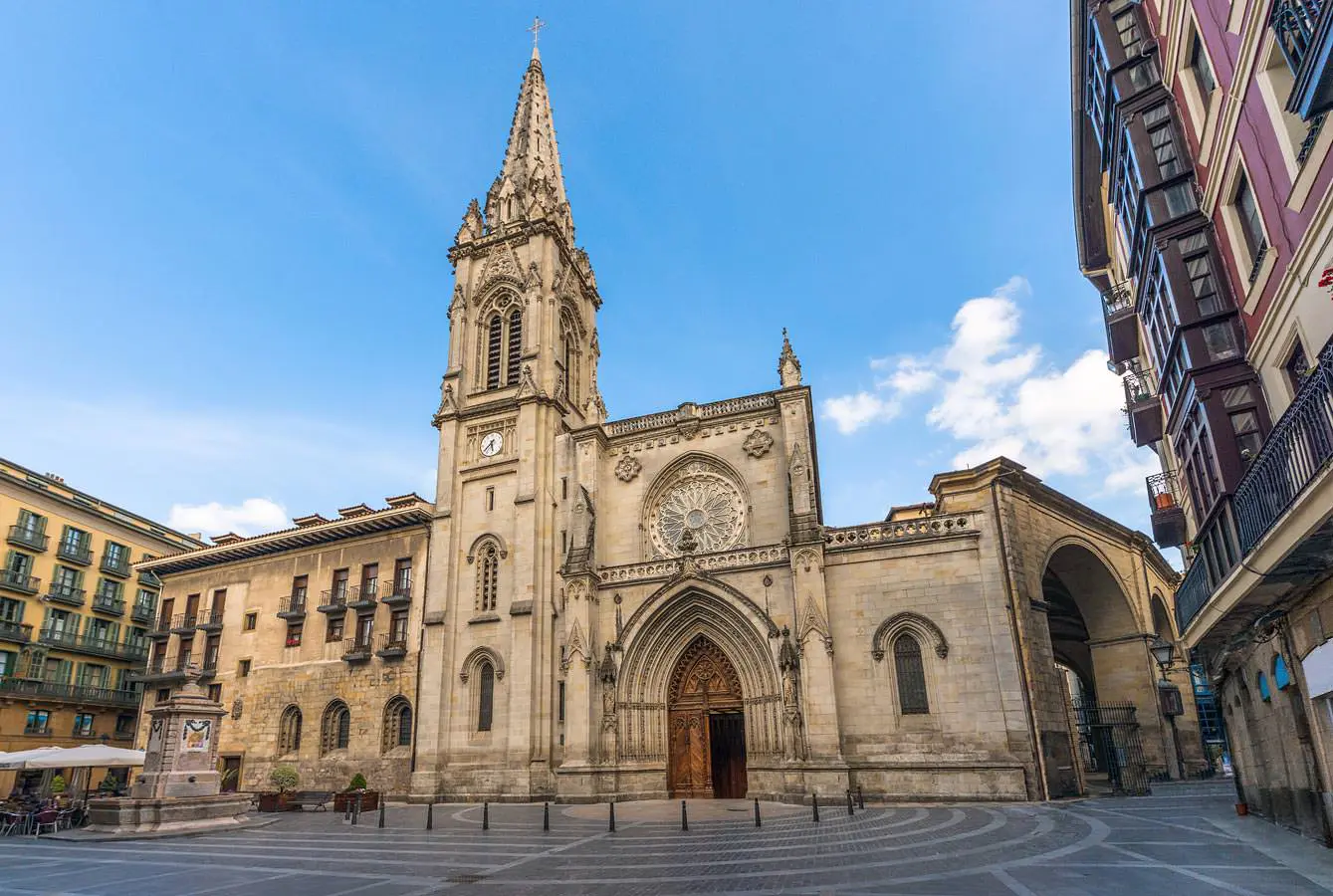
Without leaving the old town, we will now focus on what is surely its most emblematic and important building: Santiago Cathedral.
This beautiful Gothic-style temple, built over six hundred years ago, is located in the square of the same name.
Among its many architectural attractions, its tower stands out among the small houses of Bilbao’s historic centre, as does its enormous gate, known as La Puerta del Ángel (The Angel’s Gate) or La Puerta de los Peregrinos (The Pilgrims’ Gate). Remember that the city of Bilbao, and this church in particular, is a mandatory stop for pilgrims travelling the Northern Way.
Inside, we recommend that you pay special attention to the Main Chapel, the Crypt, the Ambulatory and the small Gothic-style cloister.
Bilbao Cathedral is open every day of the week in the morning and afternoon, so it is always easy to find time in your itinerary to spend a few minutes admiring its interior and exterior beauty.
La Alhóndiga
Once again, there is a contrast between the new and the old, the historic and the avant-garde. Bilbao is one of the cities in Europe that best combines both aspects.
La Alhóndiga is a modernist-style cultural centre whose renovation bears the signature of designer Philippe Starck.
It consists of a total of eight cinemas, a library, an exhibition hall, several restaurants, shops and even a rooftop swimming pool.
But if this unique space stands out for something, it is for its kind of interior square, where it is possible to admire a total of 43 columns, each with different artistic styles and colours.
It is no surprise that this is one of the most photographed places in Bilbao, and we are sure that when you visit, its columns will also become an important part of your Instagram feed.
The Church and the Bridge of San Antón
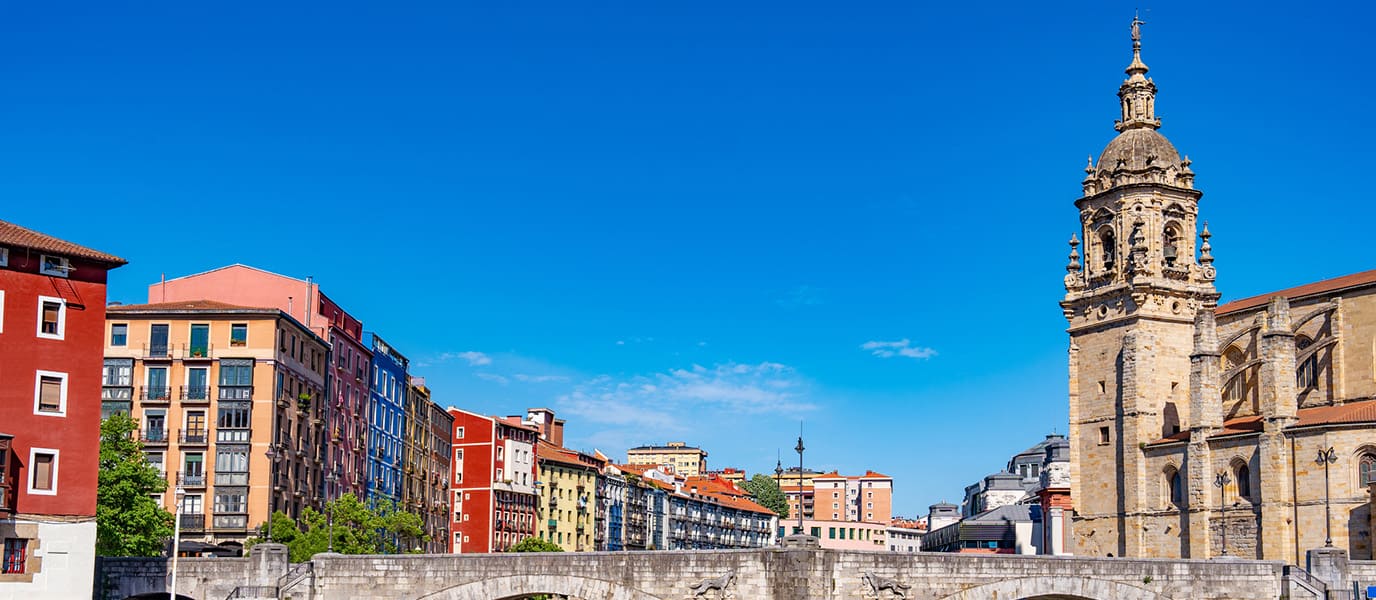
The architectural ensemble formed by the Church of San Antón and the bridge of the same name, with the estuary flowing beneath the arches of the bridge, is truly a picture-postcard scene.
Once again, we travel back in time, in this case many years ago to 1530, to discover this beautiful Gothic temple whose bell tower and Renaissance portico dazzle locals and visitors alike with their beauty.
The interior of the church is also particularly noteworthy, with a wonderful main altarpiece and several chapels in honour of San Roque, Santa Lucía and Nuestra Señora de la Piedad.
Both the church and the bridge are two of the main features of Bilbao’s history, and it is their combination that makes them one of the best places to visit in Bilbao.
Vizcaya Bridge
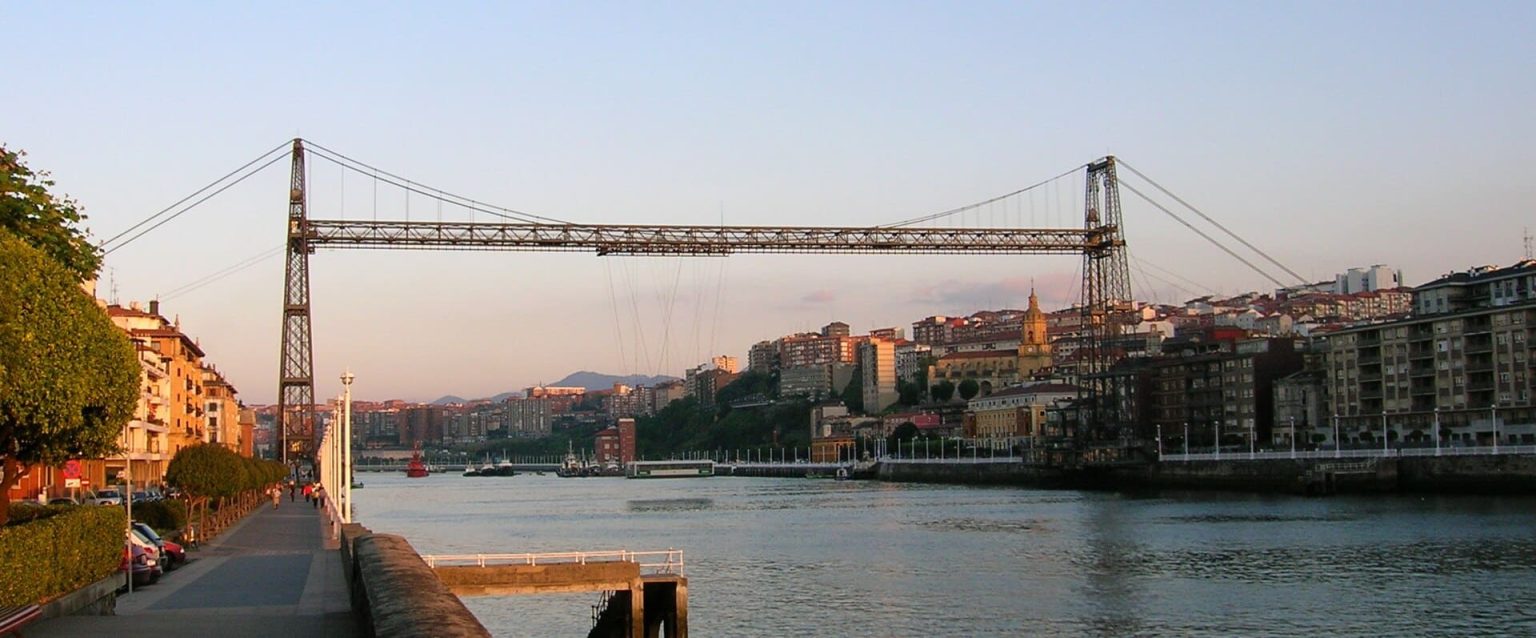
Located in the Portugalete neighbourhood, the Vizcaya Suspension Bridge is one of the main attractions to see near Bilbao.
The bridge connects the Arenas neighbourhood with Portugalete and has been in operation since the 19th century.
Its structure is unique in the world, making it the first monument in the Basque Country to be declared a UNESCO World Heritage Site in 2006.
Its technology has influenced the construction of numerous subsequent bridges, making it a benchmark in the sector.
In addition, its lift allows you to ascend to its upper walkway, located fifty metres above the ground, from where you can enjoy a breathtaking panoramic view, with the mouth of the Nervión estuary on one side and the outskirts of the city of Bilbao on the other.
It is also possible to cross the estuary using its gondola. In fact, the bridge is still in use today, transporting hundreds of people and vehicles from one bank of the estuary to the other every day.
Bilbao Viewpoints
Each of the stops on our list is worthy of admiration. But what if we told you that you could enjoy them all at once?
That’s not exactly true, but it is true that the viewpoints in Bilbao stand out for their spectacular views, showing the different contrasts of the city, which in this case are also reflected in its colours, with the green of its parks and gardens, the red of the bricks and the blue of the estuary.
The good thing is that there are plenty of options, so depending on your situation in each case, you can choose one or the other.
The most recommended viewpoints in Bilbao are the Etxebarria Park viewpoint, the Cobetas viewpoint, the Artxanda viewpoint, the La Salve Bridge viewpoint, the Bilbao Green Beach viewpoint, the Miribilla viewpoint and the Iberdrola Tower viewpoint.
If you only have time to choose one of them, we recommend that you climb Mount Artxanda at sunset to enjoy the view of the sun setting over the city. Don’t worry, because you can avoid the walk and climb to the top of the mountain using its funicular, which has been in operation since 1915.
Frequently Asked Questions Bilbao
What not to miss in Bilbao?
If you are visiting the city for a weekend and need to choose the essential places you cannot miss in Bilbao, we recommend visiting the Guggenheim Museum, the old town, Plaza Nueva and the Monte Artxanda viewpoint.
Where to eat in Bilbao?
Bilbao is one of the cities with the highest quality cuisine in the world. It is easy to find a bar or restaurant with a culinary offering that is worth trying on practically any street. But if we had to choose between the best areas to eat in Bilbao, we would opt for the old town, the area around the New San Mamés stadium and the Ribera Market.
How long should I spend in Bilbao?
Considering that the Guggenheim Museum alone is worth spending a whole morning enjoying its famous collection, and that you should spend at least one afternoon going out for pintxos around the city, we recommend spending two or three days exploring Bilbao.
When to travel to Bilbao?
As you know, cities in the Basque Country are not particularly known for being rain-free. However, during the summer, it rains much less, and September is the best month to travel to Bilbao. You will also avoid any heat waves, making it the ideal time to visit this beautiful city.