Barcelona is one of the most visited tourist destinations in the world. In addition to its incredible artistic and cultural offer, it has a unique gastronomic offer and one of the most varied and lively nightlife in Europe.
Barcelona is undoubtedly the most cosmopolitan city in Spain and offers all kinds of services and plans to make any stay in its streets an unforgettable experience. From its genuine modernist art to its Mediterranean character, it is a metropolis that has forged a very unique identity, capable of seducing any type of visitor from the very first day.
If you’re fortunate enough to be traveling to Barcelona soon, here is a guide to the must-see attractions that you absolutely cannot miss.
Table of Contents
Basilica of the Sagrada Familia
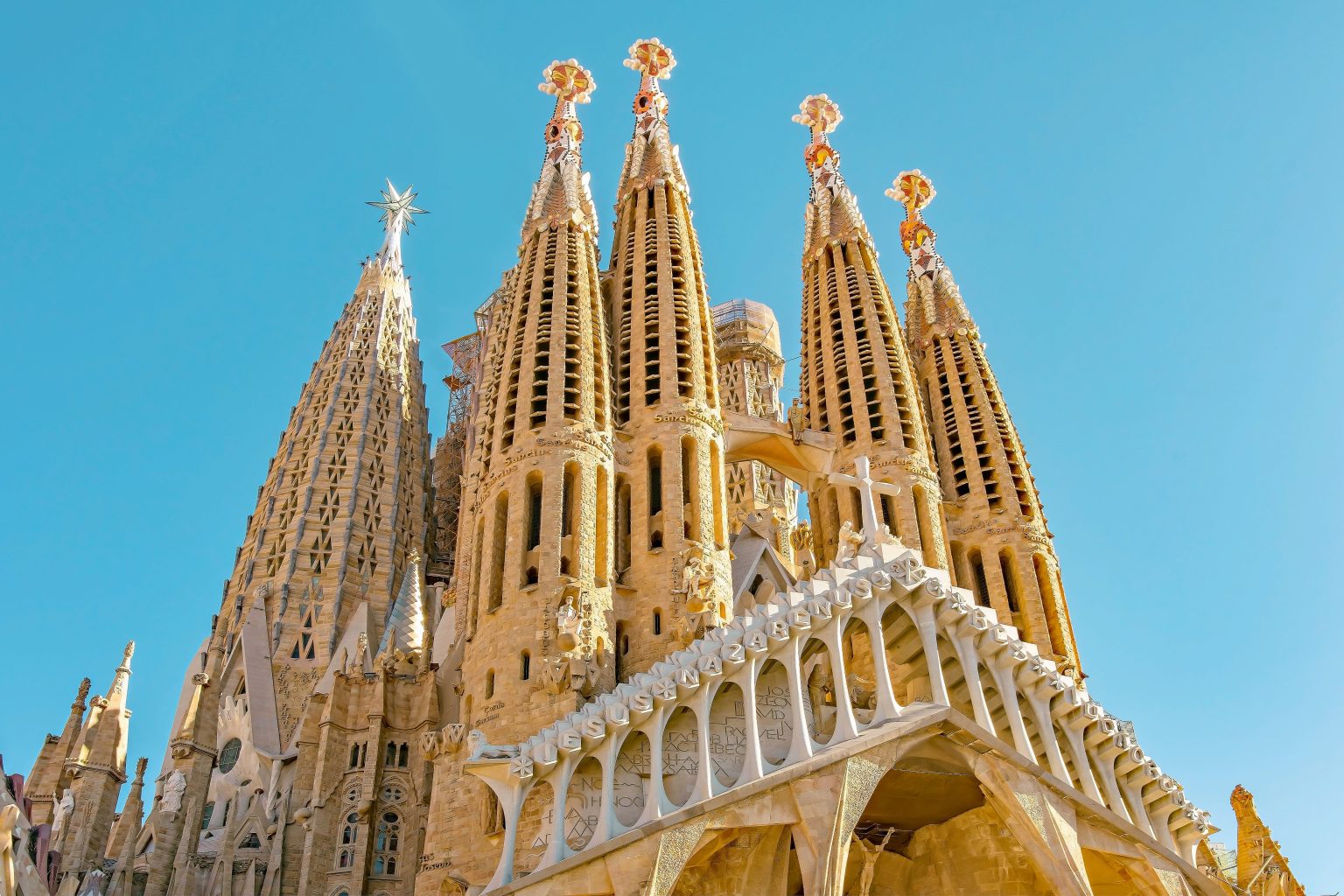
The Basilica of the Sagrada Familia is an expiatory temple and is one of the few monuments under construction in the world and one of the great modernist jewels of the 19th and 20th centuries. Considered one of the essential places to visit in Barcelona, its first stone was laid in 1882 under the command of the architect Antoni Gaudí. After his death in 1926, only about 20% of the church’s construction had been completed, so the work was taken over by his disciple Domènec Sugrañes i Gras until the Spanish Civil War. With the destruction of the original plans during the conflict, the work was continued by the architects Isidre Puig Boada, Francesc Cardoner and Lluís Bonet i Garí.
The best forecasts predict that the church will be completed in 2026, the centenary of the death of its creator.
Gaudí’s inspiration for the creation of his crowning work came from nature, which is very present in the ornamentation of his façades. These include the Nativity Façade, which faces the sunrise, symbolising life and hope, and the Passion Façade, which faces the sunset, representing and reinforcing the message of death and suffering.
But he was also inspired by music. It is not for nothing that the sound of the wind passing between its towers can be heard for up to three kilometres around.
The stone used for the monumental work, of up to 50 different types, was exported from up to 228 different quarries in countries such as Scotland, France and England, as well as, of course, Spain. Inside, special mention should be made of the spectacular forest of columns that will attract your attention from the very first moment you see it.
It is one of the symbols of Barcelona’s identity, one of the most important and peculiar buildings in Spain and, as if all this were not enough, once it is completed, it will become the tallest church in the world.
Park Güell
Once again an obligatory stop with Antonio Gaudí as an exceptional protagonist. It is no exaggeration to say that Park Güell may well be considered the most picturesque, disruptive, peculiar and one of the most beautiful parks on the planet.
Park Güell was initially conceived as a high-end residential development. It was commissioned by Eusebio Güell, one of the great patrons of Antonio Gaudí, who eventually gave the park its name.
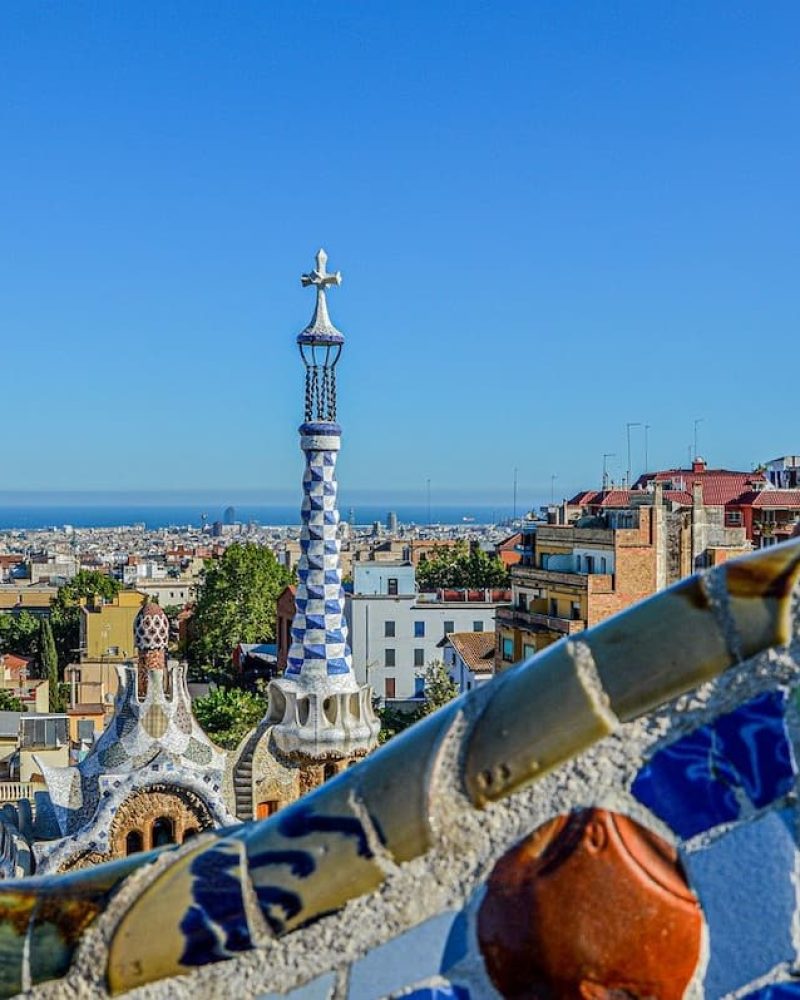
Its privileged location, in the upper part of the city, enhances its beauty by adding to its own attractions one of the most spectacular panoramic views of Barcelona.
It is the ideal place for a stroll, with a surface area of over 17 hectares in which nature is combined with colourful mosaics and different works of modernist art, creating a truly magical ensemble.
Its iconic staircase with its coloured lizard, designed to channel rainwater and release it through its mouth, turning it into a fountain on rainy days, is particularly noteworthy.
To enjoy the best views, we recommend you climb the Turó de les Tres Creus, the viewpoint located in the highest part of the park.
Another viewpoint that is well worth a visit, both for its views and its intrinsic beauty, is the famous colourful undulating bench, another of Park Güell’s most characteristic works of art.
La Rambla
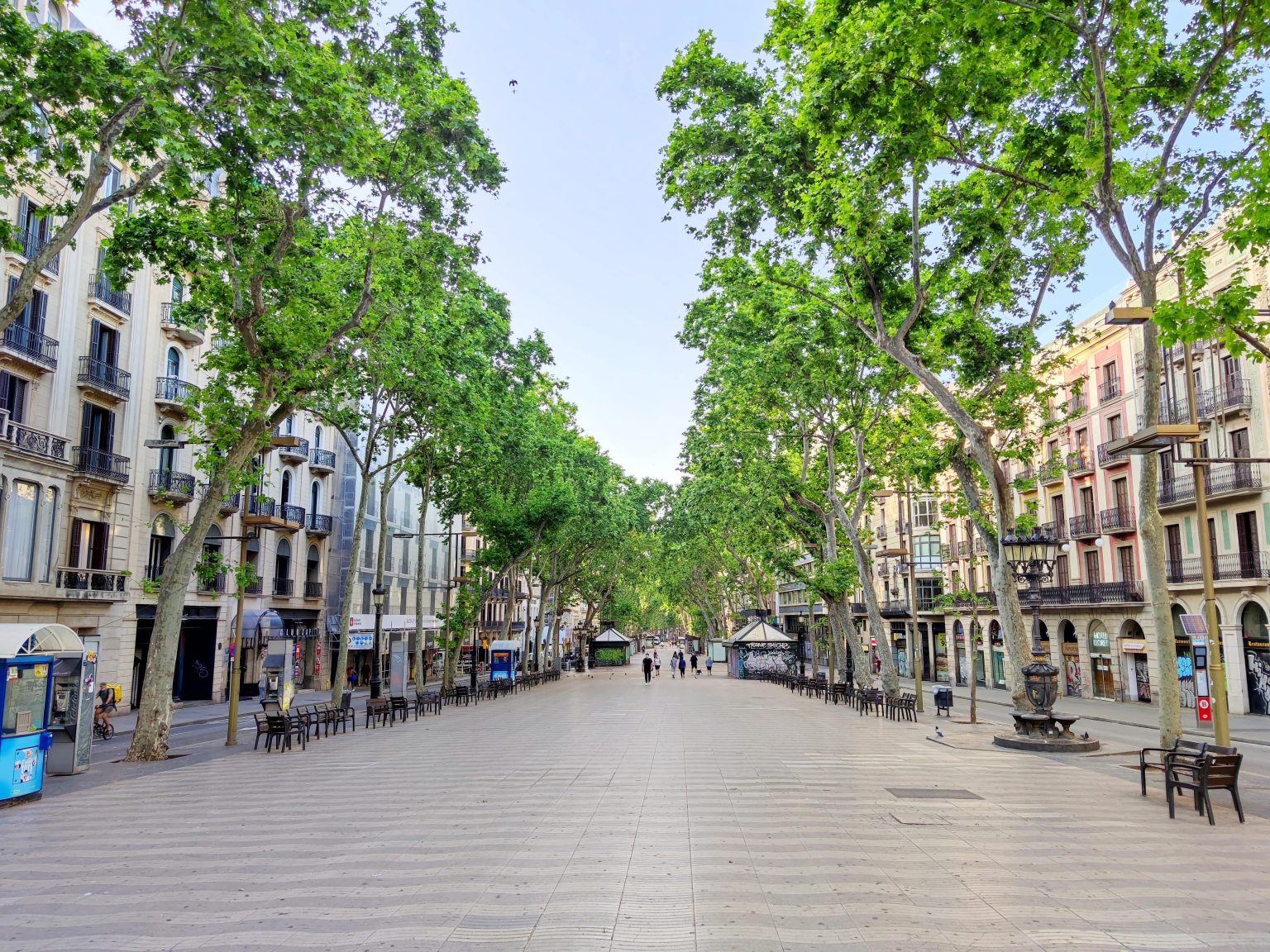
The most famous street in the city of Barcelona and probably the busiest. Moreover to its location, connecting the emblematic Plazas de Catalunya and Colón, La Rambla owes its popularity to the shops that abound both in the buildings that shape it and on its pavements.
Additionally to the popular Boqueria Market, which we will talk about later, La Rambla is home, for example, to the oldest hotel in the city, the Hotel Oriente, whose walls date back to no less than 1652. You can also visit the Canaletes Fountain, famous for being the meeting place for the fans of the Barcelona Football Club, the Liceu and the Palau de la Virreina.
Along its 1.2 km length, La Rambla connects Plaza Catalunya with the Gothic Atarazanas and serves as a separation between two of Barcelona’s most emblematic neighbourhoods: the Gotic and the Raval.
La Rambla is the heart of Barcelona, an important part of its history and life today, and at the same time, one of the busiest streets on the face of the earth.
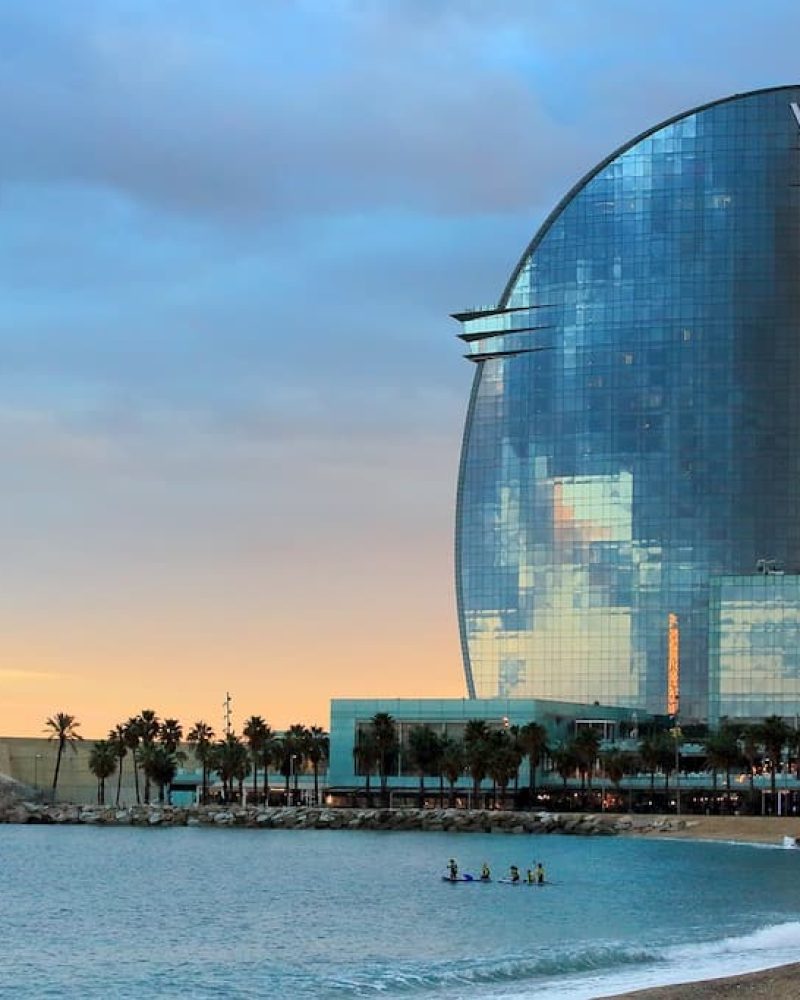
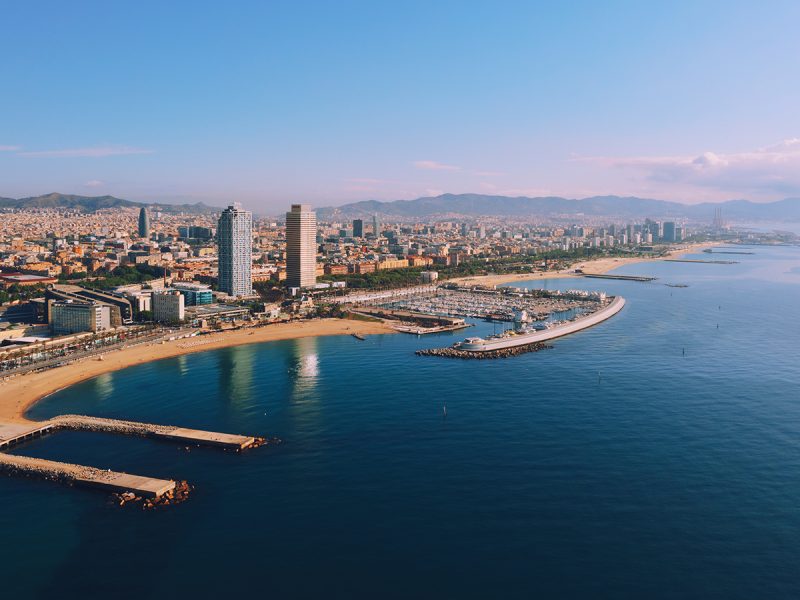
Barceloneta beach
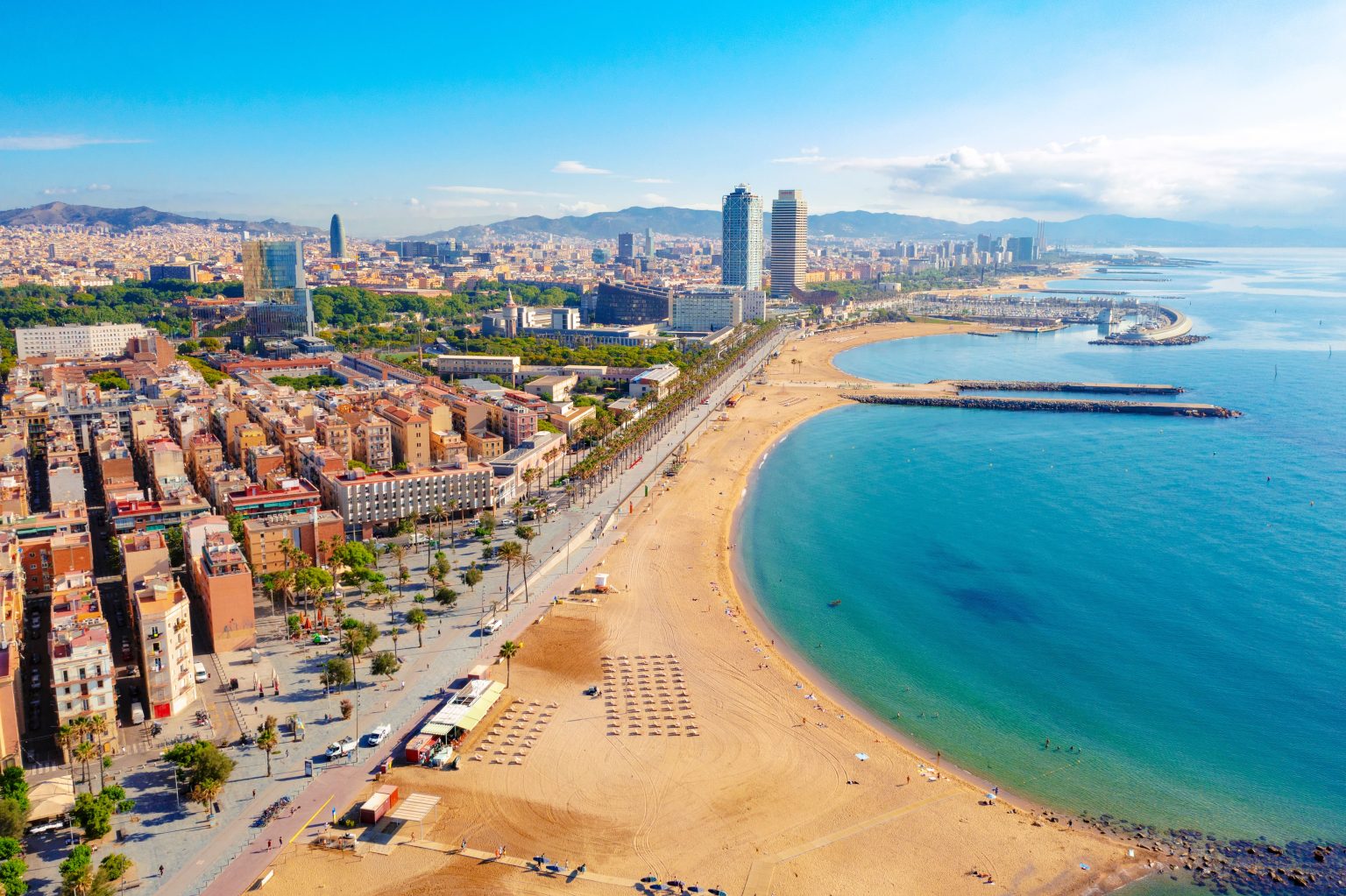
It stands out for its atmosphere at any time of day and for the gastronomic offer in the surrounding area. Some of Barcelona’s best restaurants can be found along the Paseo Marítimo, and this is also one of the best areas in the city for enjoying all kinds of urban sports.
It is more than a kilometre long, more than enough to enjoy a pleasant stroll along its banks.
Located in the old sailors’ quarter of the city, it owes its current appearance to the numerous remodelling works carried out in Barcelona to prepare for the 1992 Olympic Games.
If you are lucky enough to visit it, you can’t leave without having your photo taken with Rebecca Horn’s ‘The Wounded Star’, a sculpture more than 10 metres high, made up of four iron and glass cubes.
Plaza de Catalunya
The most famous meeting point, the starting point for numerous free tours and the gateway to Barcelona’s legendary Rambla. As well as being the heart centre of the city, Plaza Catalunya hides some secrets worth discovering that escape the attention of most of the numerous tourists who pass through it every day.
The first of these is its wall, one of the remains of the city’s origins, which you can discover by taking the lift to the metro station between Pelai and Rambla streets.
Much easier to find, another of its main attractions is the imposing stature of Francesc Macià, the Catalan politician and military man who proclaimed the Catalan State within the Federal Republic of Spain in 1931. It is the largest sculpture in the square and stands out from our next recommendation, the sculpture of La Moreneta. The Virgin of Montserrat, so characteristic of Catalonia, is also represented in the Plaza de Catalunya, next to the image of a half-naked old man, said to be that of Fra Joan Garí.
Last but not least, we will stop on what is probably the detail that goes unnoticed by the general public. On several of the walls of the statues and sculptures in the square, you will find small rounded indentations. These are bullet holes, remnants of the bloody Spanish Civil War.
Casa Batlló
Of Gaudí’s three houses scattered around the city centre, Casa Batlló is our favourite. Firstly, because of the combination of colours on its façade, which makes it a truly unique building. And secondly, for its rounded shapes, its picturesque balconies and its characteristic roof.
There is a theory concerning one of the characteristic figures on the façade. It is said that the rounded shape on the left, which ends in the turret and the cross at the top, represents the lance of Saint George, the patron saint of Catalonia, which has been thrust into the dragon’s back. Continuing along the same lines, the upper balcony would represent the rose that sprang from the dragon’s blood and which, according to legend, Saint George would later give to his beloved princess.
As with the rest of Gaudí’s architectural works, its interior is just as curious and striking. To design it, the Catalan artist worked with the best craftsmen in the city, creating different details in wood, ceramics and wrought iron to create dream rooms and chambers.
Finally, it is also worth mentioning its spectacular stained-glass windows, which turn its halls into a feast of light and colour on sunny days, which, given that we are talking about Barcelona, are almost all of them.
Casa Milà
Also known as La Pedrera, this is another of Antoni Gaudí’s most representative works and, therefore, of the city of Barcelona. The shapes of its façade make it a truly unique building. It is no wonder that since it was opened to the public in 1987, more than 20 million people have visited its interior and it was declared a UNESCO World Heritage Site in 1984.
Did you know that this amazing building was the first in the city of Barcelona to use reinforced concrete for its construction? It was originally conceived as a family home for the married couple Roser Segimon and Pere Milà, after whom it was named. For this reason, it has a beautiful rooftop terrace with a swimming pool and even a stable to keep the horses.
As impressive on the inside as it is on the outside, we recommend that you pay attention to the beautiful stone engravings on the façade and visit the museum, where you will find different exhibitions on the life and work of its creator.
Casa Vicens
The third Casa Gaudí on our list, but the first in historical terms, as it is the first building he built in Barcelona. Built between 1883 and 1885, it owes its name to its first owner, the businessman Manuel Vicens Montaner.
In addition to the peculiarity of its towers and façade, the beauty of its garden stands out, inspired by Mediterranean flora and fauna, which is also very present in the decorative elements that populate the interior of the house.
After more than a century as a private residence, the house opened its doors to the public in 2017, so despite its age, we could say that of all the tourist attractions on our list, paradoxically, it is the one that has not really been there for the longest time.
Boqueria Market
We have already mentioned it as one of the most important places of interest on La Rambla and we are not exaggerating when we say that it is possibly the most famous market in the whole of Spain and another of the main signs of identity of the city of Barcelona.
Also known as the Sant Josep Market, it owes its name to its spectacular façade. From the moment it opened, it attracted the attention of passers-by, who stood there like fools admiring its beauty. It was from this foolishness (badoquería in Catalan) that it ended up adopting the name of Boqueria Market. Let’s not forget that as well as being the entrance to the market, its façade is one of the most representative examples of Catalan modernist architecture of the mid-19th century.
Nowadays it is a world reference, being one of the oldest active markets on the planet. It has more than 2,500 square metres with more than 300 stalls, where you can find all kinds of fresh food.
Hospital de la Santa Creu i Sant Pau
The hospital has been closed since 2009 and currently only opens its doors for tourist visits.
Its interior houses different types of exhibitions that make the visit even more interesting if possible.
This building was built between 1902 and 1930 and has been declared a World Heritage Site. It is located just a few metres from the Sagrada Família and stands out for being the largest modernist-style building in the world.
Within its walls you will have the opportunity to discover part of the history of medicine, architecture and Barcelona art in the same space.
Passeig de Gràcia
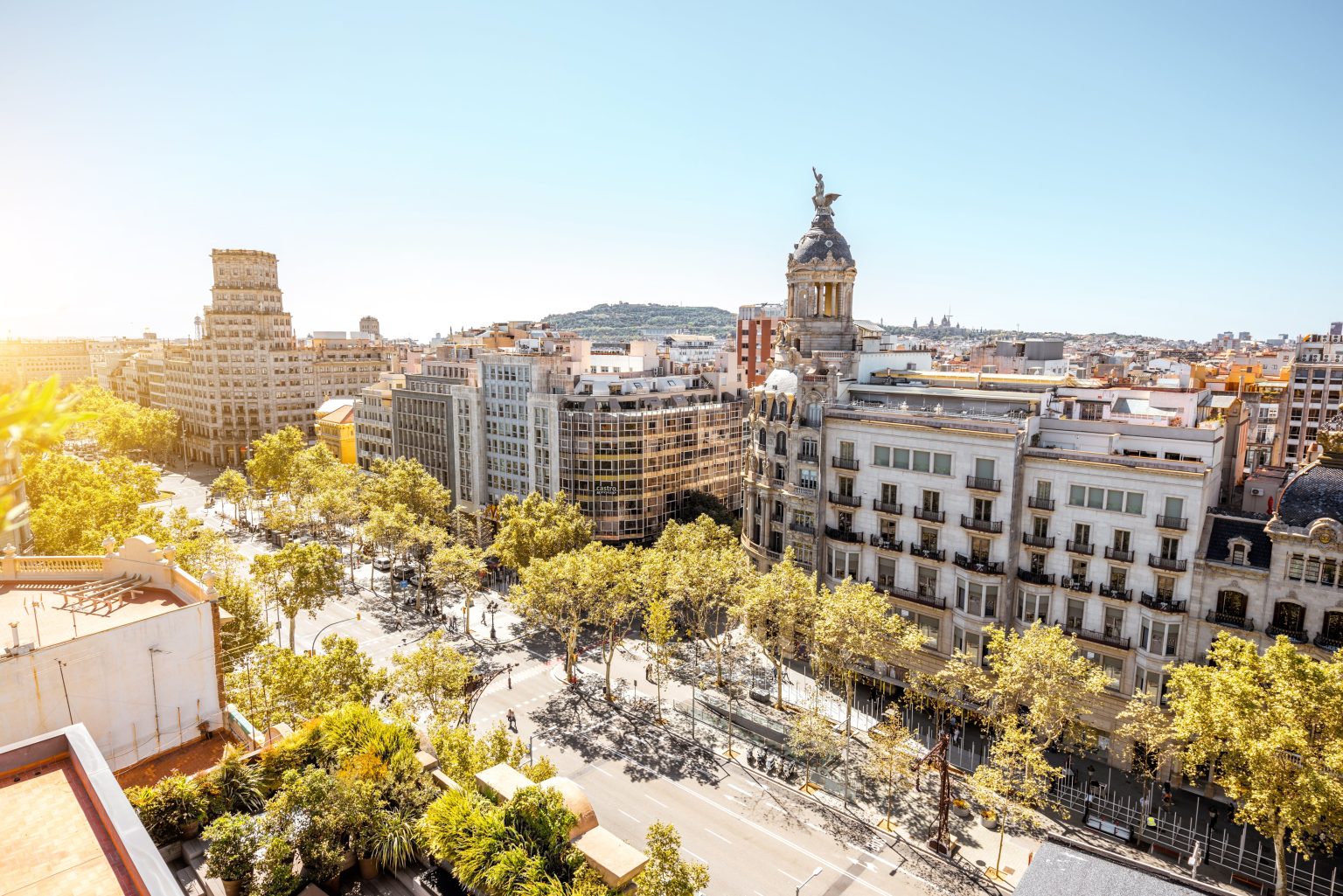
Passeig de Gràcia is the golden mile of Barcelona. This beautiful shopping avenue links Plaza de Catalunya and the Gràcia neighbourhood, and among its façades you’ll find several of the recommended stops on our list.
As well to Casa Milà (La Pedrera) and Casa Batlló, Passeig de Gràcia has other beautiful treasures that are well worth discovering. And we are not referring precisely to the luxury products that abound in the shop windows, but rather to architectural gems such as the Casa Amatller or the Casa Lleó i Morera, among others.
Passeig de Gràcia is the best reflection of the power and lifestyle of Barcelona’s bourgeoisie at the end of the 19th century, characterised by its stately façades and elegant restaurants and shops.
Gothic Quarter
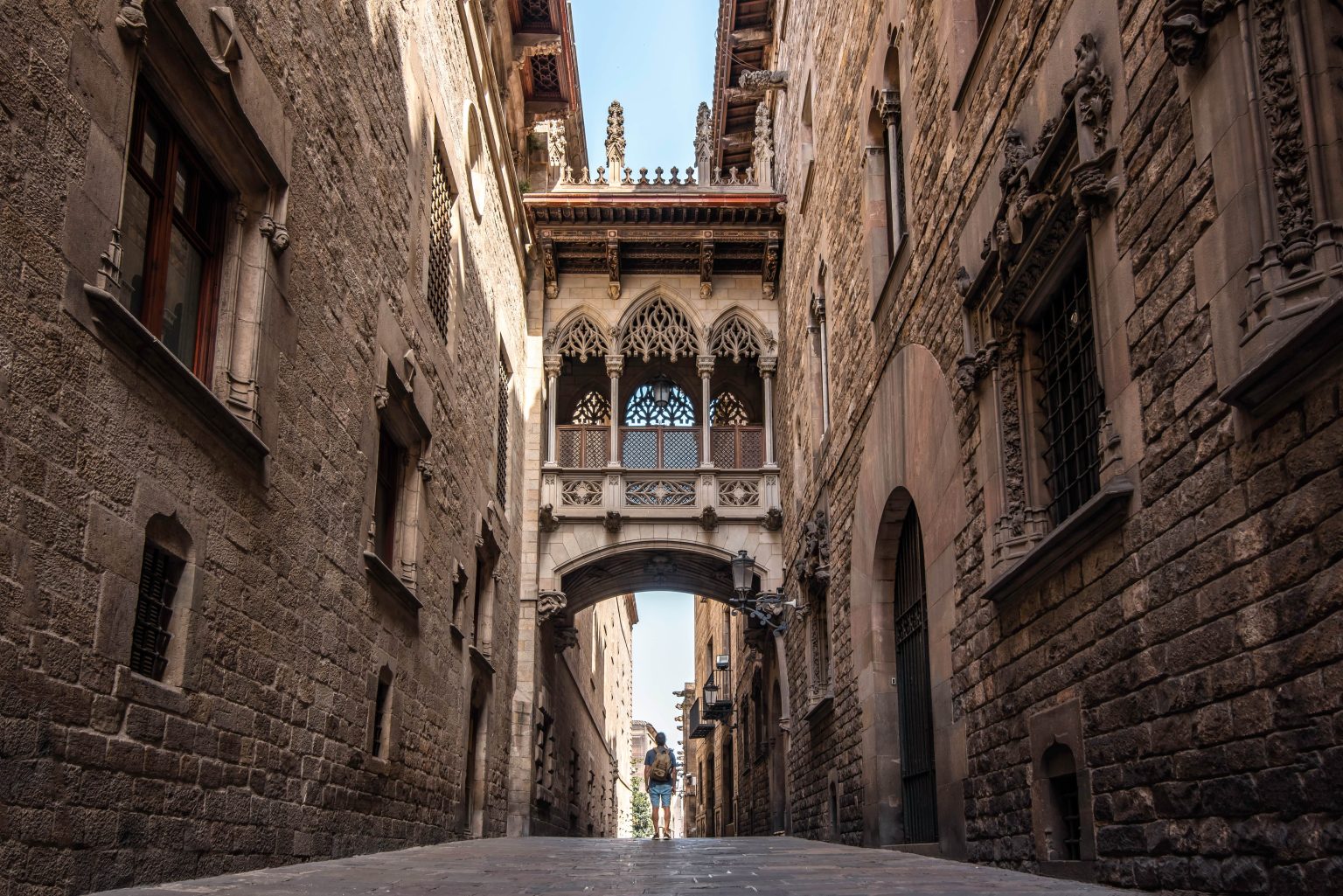
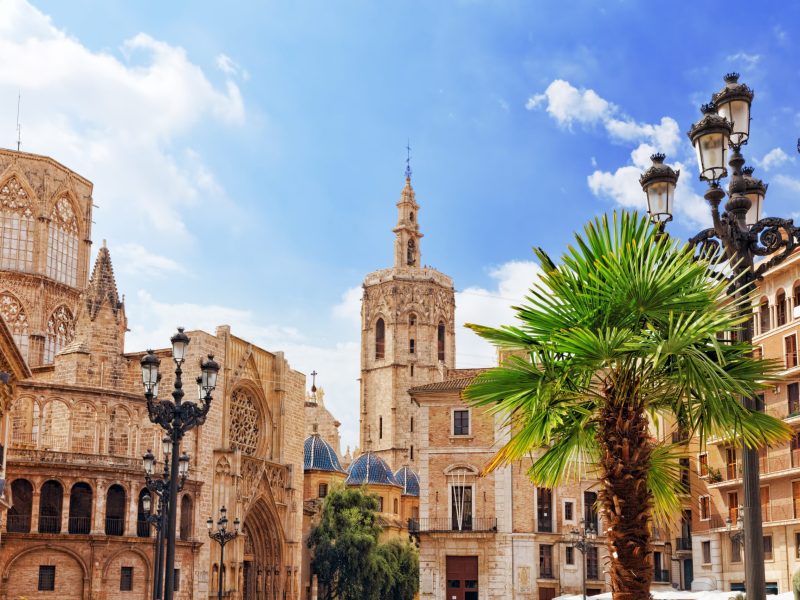
Very close to the Rambla, a journey into the past awaits you through labyrinthine alleys, picturesque squares, different types of temples and, above all, a unique atmosphere and ambience. Barcelona’s Gothic Quarter is one of the most beautiful and attractive places to enjoy a stroll through the city.
Among its many recommended stops are, of course, the Cathedral of Barcelona, the Plaza de Sant Felipe Neri, the Temple of Augustus, the Plaza de Sant Jaume, the Church of Santa Ana and the Plaza Real, among many others.
We recommend you climb the stairs of the Basilica of Santa Maria del Pi to go up to the bell tower, where you will enjoy one of the most beautiful views of Barcelona’s old town.
In addition to its beauty, the Gothic Quarter also stands out as one of the city’s most active leisure areas, with an endless number of tapas bars where you can enjoy a beer and a varied selection of the best of Catalan cuisine.
Basílica de Santa María del Mar
Before Ildefonso Falcones’ bestseller, the Basilica de Santa Maria del Mar was already popularly known as the Cathedral of the Sea. It is one of the oldest buildings in Barcelona, built in Gothic style in the 14th century.
Beyond its age, this spectacular temple stands out for its imposing columns and especially for the spectacular rose window in the centre of its façade.
If you are lucky enough to visit it, we recommend that you go up to its terrace, where you can enjoy another of the best panoramic views of Barcelona’s historic centre.
Cathedral of Barcelona
Yes, you’re reading correctly, this is the third cathedral on our list. We warned you at the beginning of this article that Barcelona has many things to see, and its beautiful religious temples undoubtedly include several of them.
The Cathedral of Santa Cruz and Santa Eulalia, popularly known as La Seu, shares the same level of antiquity as the Basilica de Santa Maria del Mar, as well as its marked Gothic style. But the main difference between the two is that while the Cathedral of Barcelona was associated from its origins with the monarchy, the nobility and the high clergy, due to the financing of its construction, the Basilica belongs to the parishioners of the Ribera and Port area, as it was they who paid for it through financial contributions or directly by working.
Picasso Museum
Although there are other museums in Barcelona that are worth visiting, such as the Museu Nacional d’Art de Catalunya or the Fundació Joan Miró, we have selected the Picasso Museum because of the link that the painter had with the city of Barcelona for much of his life. Picasso lived there from the age of 13 until he was 22, when he moved to Paris. And some of the works you will find in the museum were painted during his time in the city.
The Picasso Museum in Barcelona has the world’s largest collection of works from the youngest period of the Malaga-born artist. We are talking about more than 3,500 works by Picasso, ranging from paintings and sculptures to engravings and various drawings.
If you plan to attend, we recommend that you buy your ticket online to avoid queues.
Frequently asked questions about Barcelona
What places are not to be missed in Barcelona?
Places not to miss in Barcelona are the Basilica of the Sagrada Familia, Park Güell, Passeig de Gràcia and all the modernist houses on its façades, Plaza Catalunya, La Rambla and the Gothic Quarter.
What to see in Barcelona's Gothic Quarter?
The Gothic Quarter is one of the most beautiful districts not only of Barcelona, but of the entire European continent. Among its many hidden gems are the Cathedral of Barcelona, the Plaza de Sant Felip Neri, the Temple of Augustus, the Plaza de Sant Jaume, the Parish Church of Santa Ana, the Plaza Real, the Basilica of Santa Maria Pi and the Palau del Bisbe.
What to see today in Barcelona for free?
The best places to visit for free are:
The Basilica of the Sagrada Familia: you can see the outside for free but you will have to pay to see inside.
The Basilica de Santa Maria del Mar: depending on the time you visit the Basilica, you can enter for free or for a small contribution.
La Rambla.
Plaza Catalunya.
The Boqueria Market.
The Picasso Museum: you can visit the museum free of charge on certain days during specific opening hours, so we recommend that you take a look at the official website.
Barceloneta beach.
Where to eat in Barcelona?
Although we are talking about one of the cities with the best food in the world, there are three areas in which there is an abundance of excellent gastronomic options, offering visitors a wide variety of choices. Specifically, we are talking about Barcelona’s beautiful Gothic Quarter, the Barceloneta and Marina area and the Gràcia neighbourhood.
How to get to Barcelona?
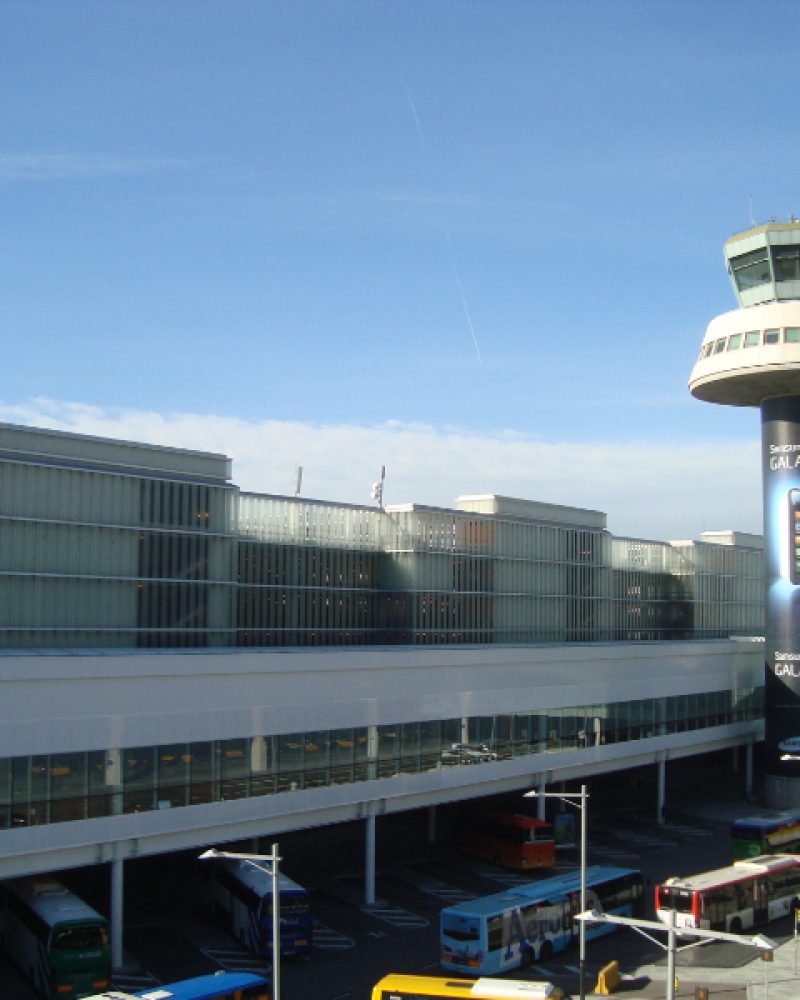
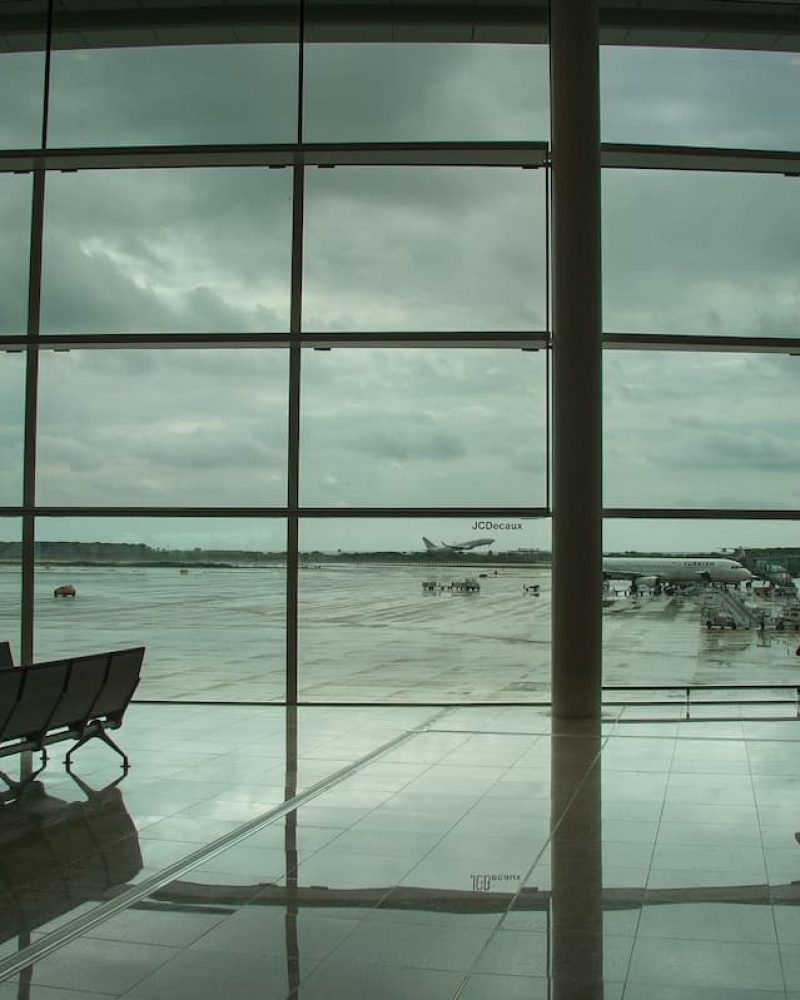
There are different options for getting to Barcelona: on the one hand, Barcelona-El Prat Josep Tarradellas Airport, which is the airport with the most international connections in Spain, and Barcelona also has its own high-speed train station. On the other hand, one of the advantages in terms of transport is that it is also possible to visit the city by boat, as Barcelona has the most important port in the Mediterranean. Not surprisingly, it is a regular stop for cruise ships from many different countries.