Have you ever heard the expression “from Madrid to heaven”? The capital of Spain is a city that stands out for its beauty, its gastronomic, artistic and cultural offer, its nightlife, its atmosphere, its infinite variety of attractive plans and for a thousand other reasons.
Among the streets of Madrid are some of the most important museums in Europe as well as some of the most famous restaurants worldwide. Madrid also has historic buildings of incalculable beauty, beautiful green areas from which to escape the hustle and bustle of the city with a magical walk, or narrow streets full of people at any time of the day, with hundreds of different bars at their ends.
If you still don’t know what to see in Madrid, don’t waste a second and start planning your next vacation in the city. You will fall in love with Madrid.
Table of Contents
Puerta del Sol
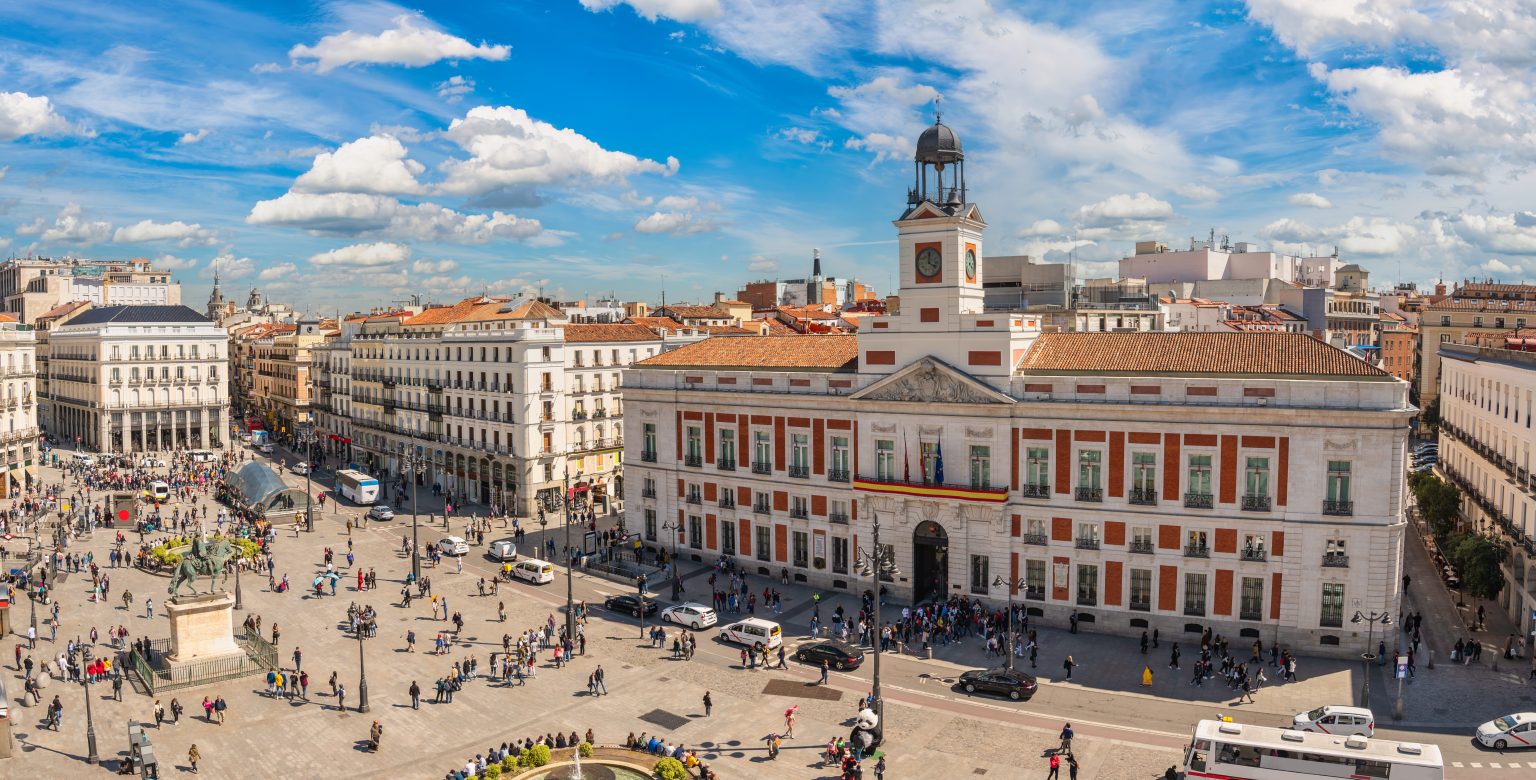
We begin our particular list of recommendations with the Puerta del Sol, located at the so-called Kilometre Zero, the point from which all the roads in the country begin and is the nerve centre in terms of traffic.
Its statues, of Carlos III and the characteristic Bear and the Strawberry Tree, emblems of the city, are two of the most important symbols and two of the most famous sculptures in Madrid; almost as much as the Tío Pepe poster, which watches over her from one of the rooftops of her buildings.
In addition, it is a place that is in continuous metamorphosis. You only have to observe the peculiar shapes of the glass structure that serves as its metro entrance and how they contrast with the buildings around it.
This square, every December 31, sneaks into the home of all Spaniards in one way or another. The clock of the Real Casa de Correos de la Puerta del Sol has been marking the end of each year since 1962, through the famous chimes.
Plaza Mayor
This square has been a luxury witness to the history of the city and is the most famous in all of Madrid together with Puerta del Sol. The façades that give it shape bring together a total of 377 balconies and its arcades draw exactly 140 arches. The most famous of them, Cuchilleros, which is located in its southwest corner.
Inside you will find everything from different street artists to street vendors and a large number of bars in its vicinity that are characterized by serving one of the capital’s signature dishes, the famous squid sandwich.
Its terraces are the ideal place to have a beer outdoors, as well as its benches from where you can enjoy the hustle and bustle of the square.
During the month of December you will find dozens of stalls with different products ideal for celebrating Christmas, making it the most popular Christmas market in Madrid.
Gran vía
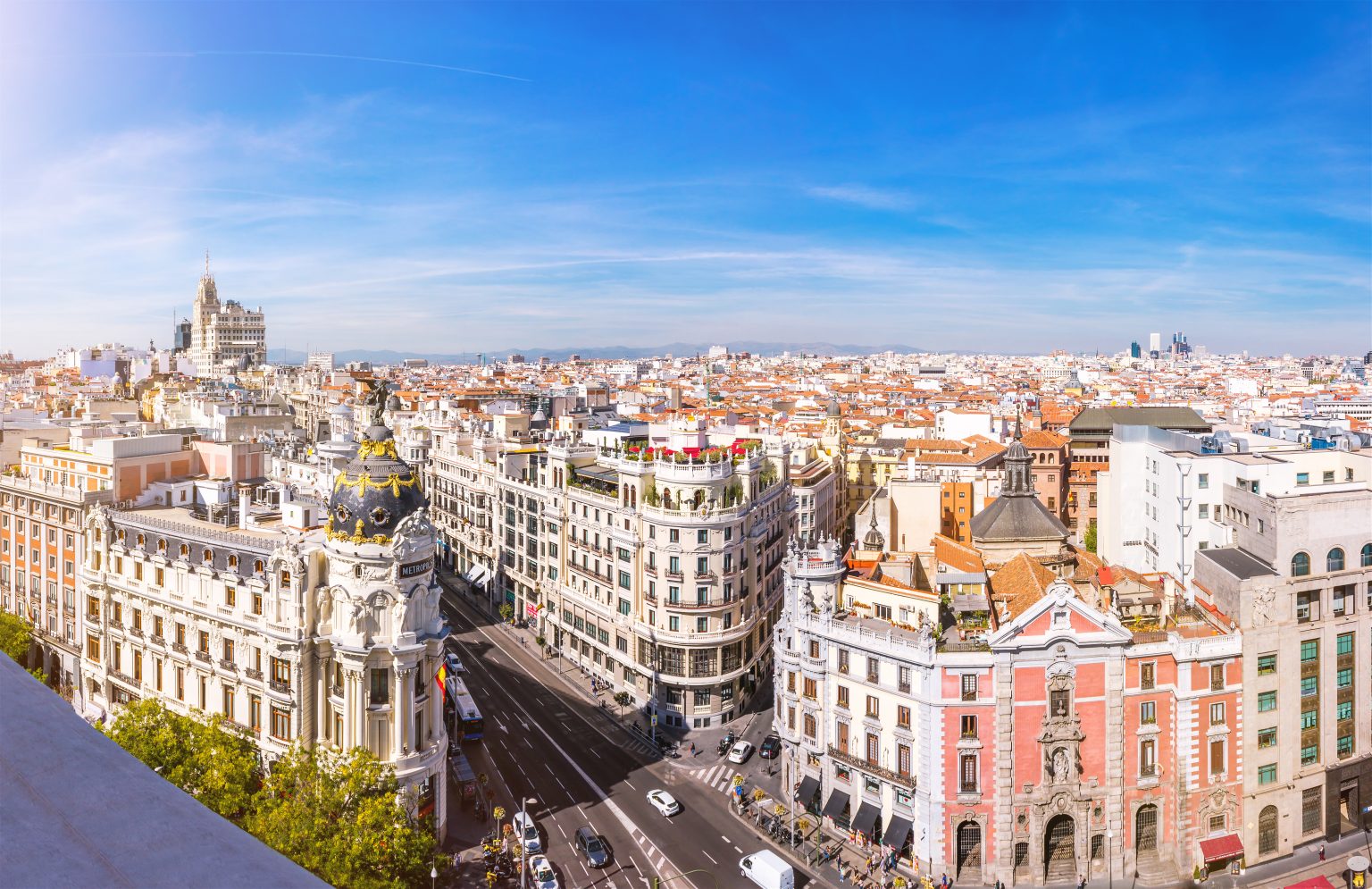
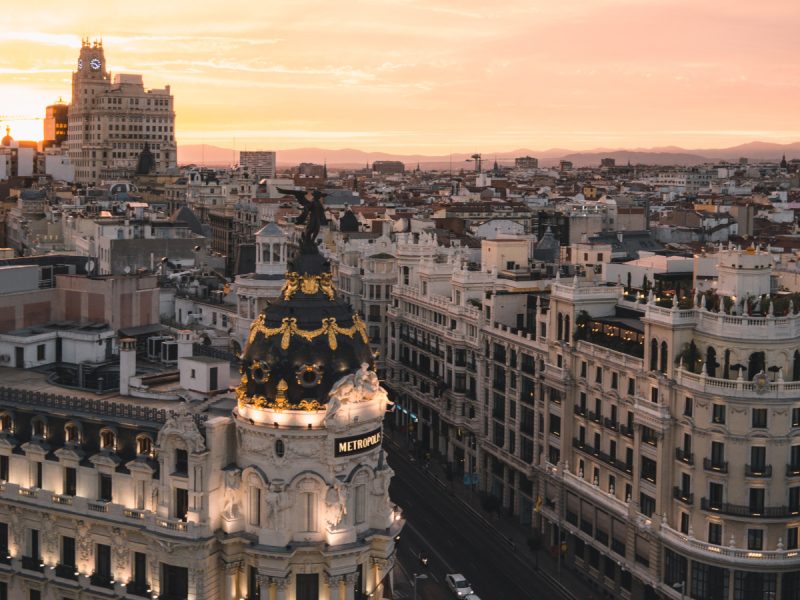
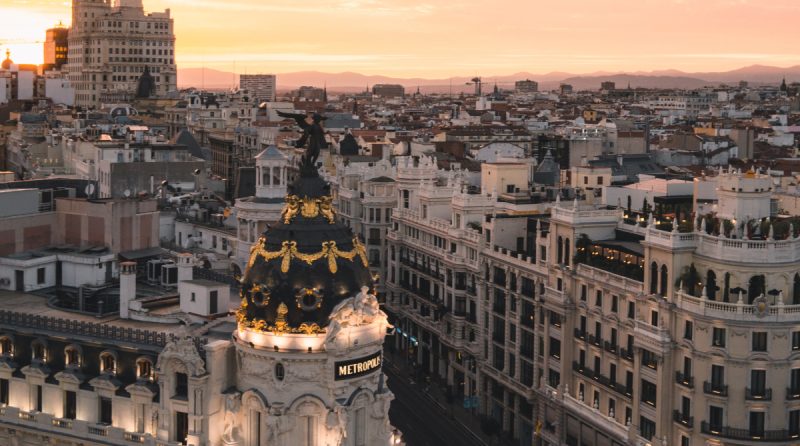
When we talk about Madrid, it is really difficult to choose, but from our point of view, Gran Vía is the most important and emblematic street of the city. In addition to numerous shops of all kinds, bars and restaurants, this beautiful artery of the centre of Madrid is home to some of its most important theatres and cinemas, where its possible to enjoy different types of shows in it practically any day of the year.
Additionally, it is one of those streets that never sleep, with open premises and a continuous flow of passers-by 24 hours a day.
Some of its flagships are its famous Schweppes sign, which is preserved more for its historical and identity value than for advertising, or the beautiful Metropolis building, in an eclectic style and inspired by France.
One of the details that usually escape the eye of the regular tourist are the numerous sculptures that populate its roofs and rooftops. Gran Vía is well worth several hours of walking, stopping at each façade, every shop window and also raising your eyes to discover works of art in its highest parts.
Templo de Debod
The first green area on our list and a must on any self-respecting visit to the capital. The reasons? Fundamentally three:
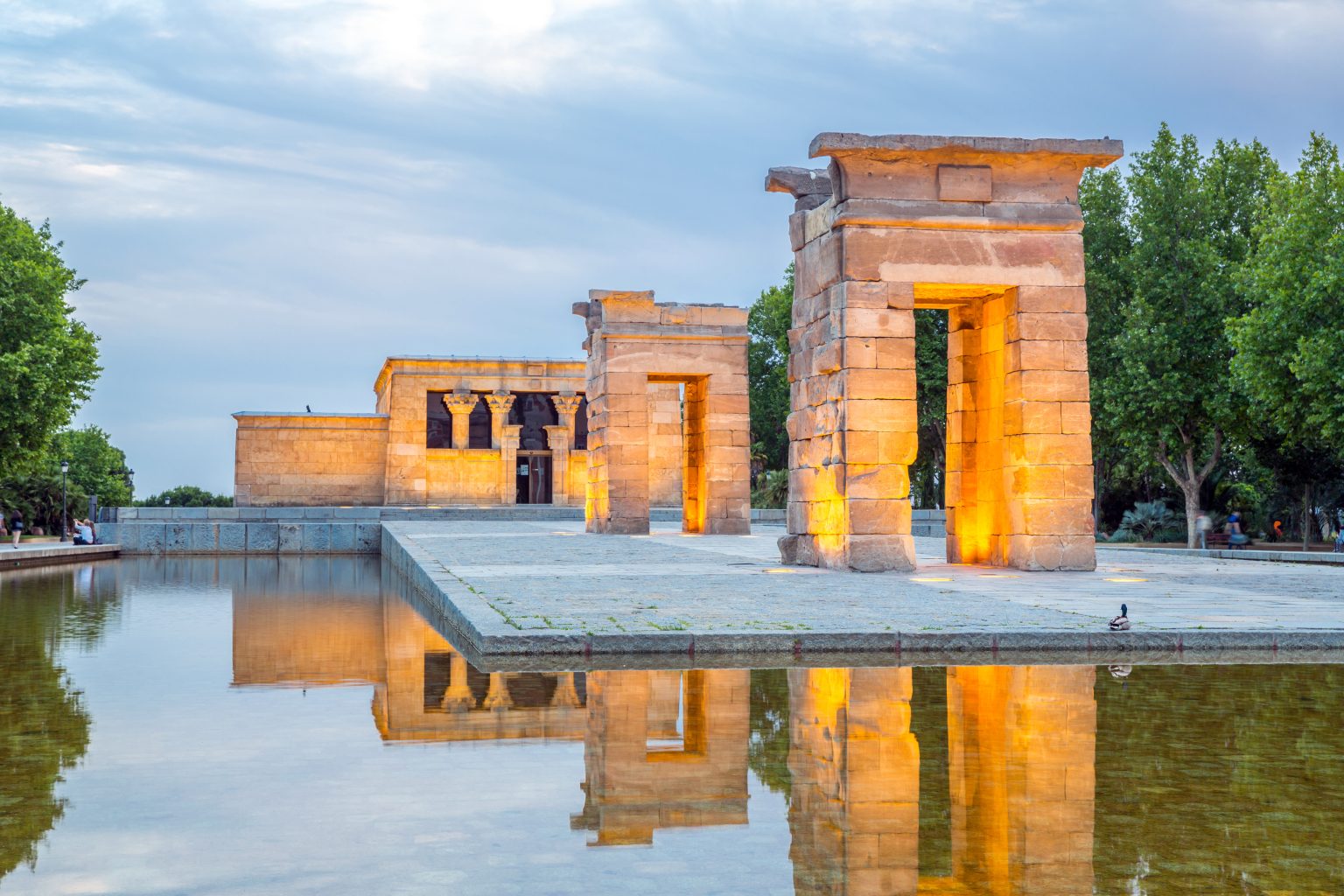
Among its gardens you’ll find an Egyptian temple from the second century BC, which rises through the water of several fountains and is illuminated at night creating a truly magical ensemble.
From its natural balcony, you will enjoy one of the most spectacular panoramic views of the city, with privileged views of the Casa de Campo and its Parque de Atracciones.
It is a natural lung and the perfect place to enjoy outdoor sports, disconnect from the stress of the city or walk your pet if you travel with it.
Museo Nacional del Pardo
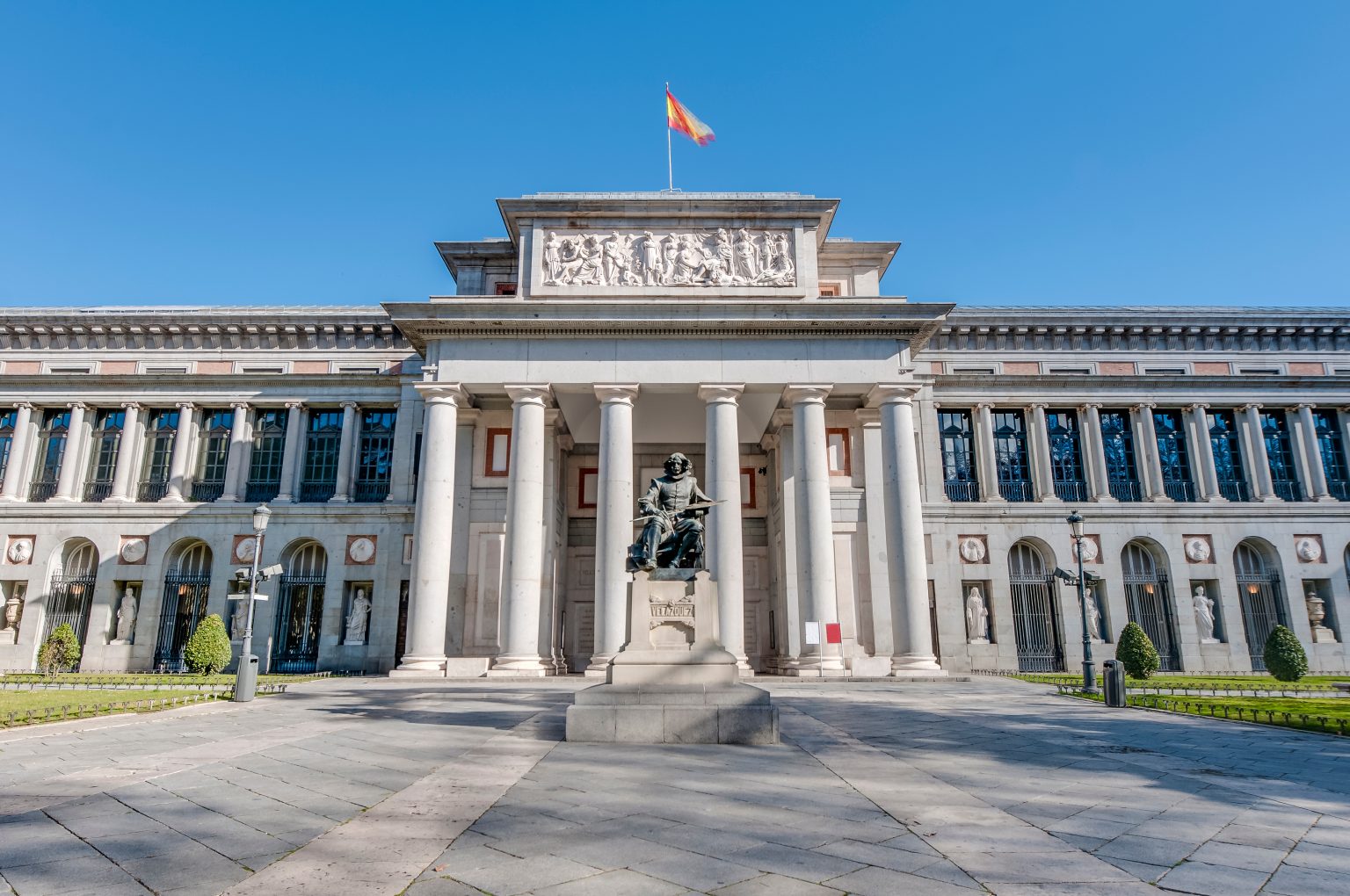
The Museo Nacional del Prado is the most important art gallery in Spain and one of the most visited art museums in the world. Its vast collection brings together more than 8,000 pictorial works, as well as some sculptures, engravings, drawings and other works of art. Among its paintings, you will find paintings by masters such as Velázquez, Goya, El Greco, Titian, Raphael, Caravaggio, Bosch and many other artists.
In addition, the Prado holds temporary exhibitions to complement its spectacular permanent collection.
A must-see for any self-respecting art lover. It only has one small drawback and that is that, if you want to enjoy its collection in detail, you will need more than one day of visiting.
Royal Palace
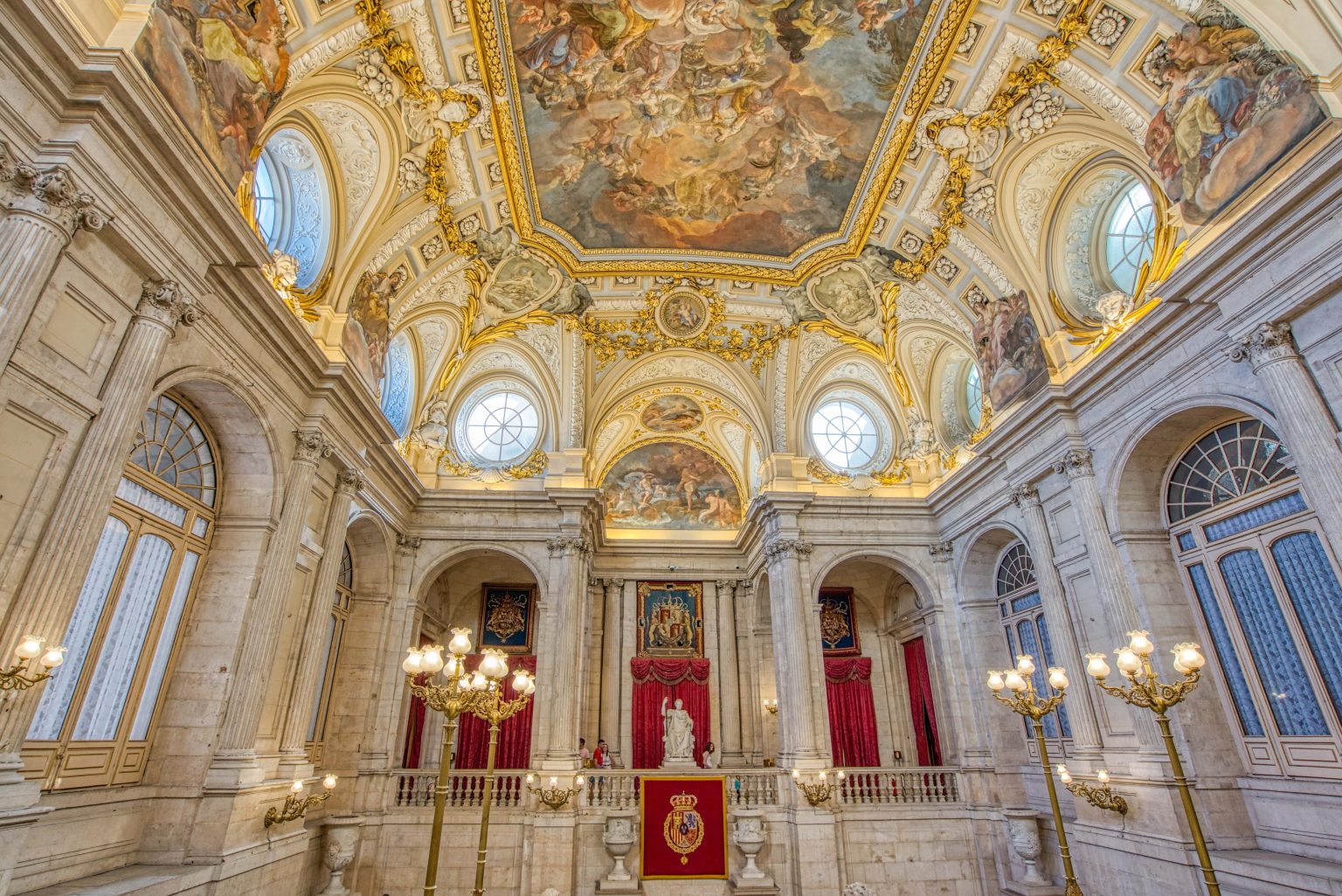
Built under the order of King Philip V in the 18th century to serve as the official royal residence, it is the largest royal palace in all of Western Europe. Its extension practically doubles that of other famous palaces such as Versailles or Buckingham and precisely for this reason, the Spanish royal family does not currently live in it and it is only used for certain state ceremonies.
It is one of the most visited monuments in Spain, exceeding one million visitors year after year. It is well worth visiting its interior, where materials like marble and mahogany abound, as well as works by authors such as Caravaggio, Goya and Velázquez.
As a curious fact, its large main staircase is made from a single piece of St. Augustine marble.
And of course, in addition to its interior, we recommend that you spend at least an hour walking through its French-style gardens, popularly known as the Campo del Moro.
Catedral de la Almudena
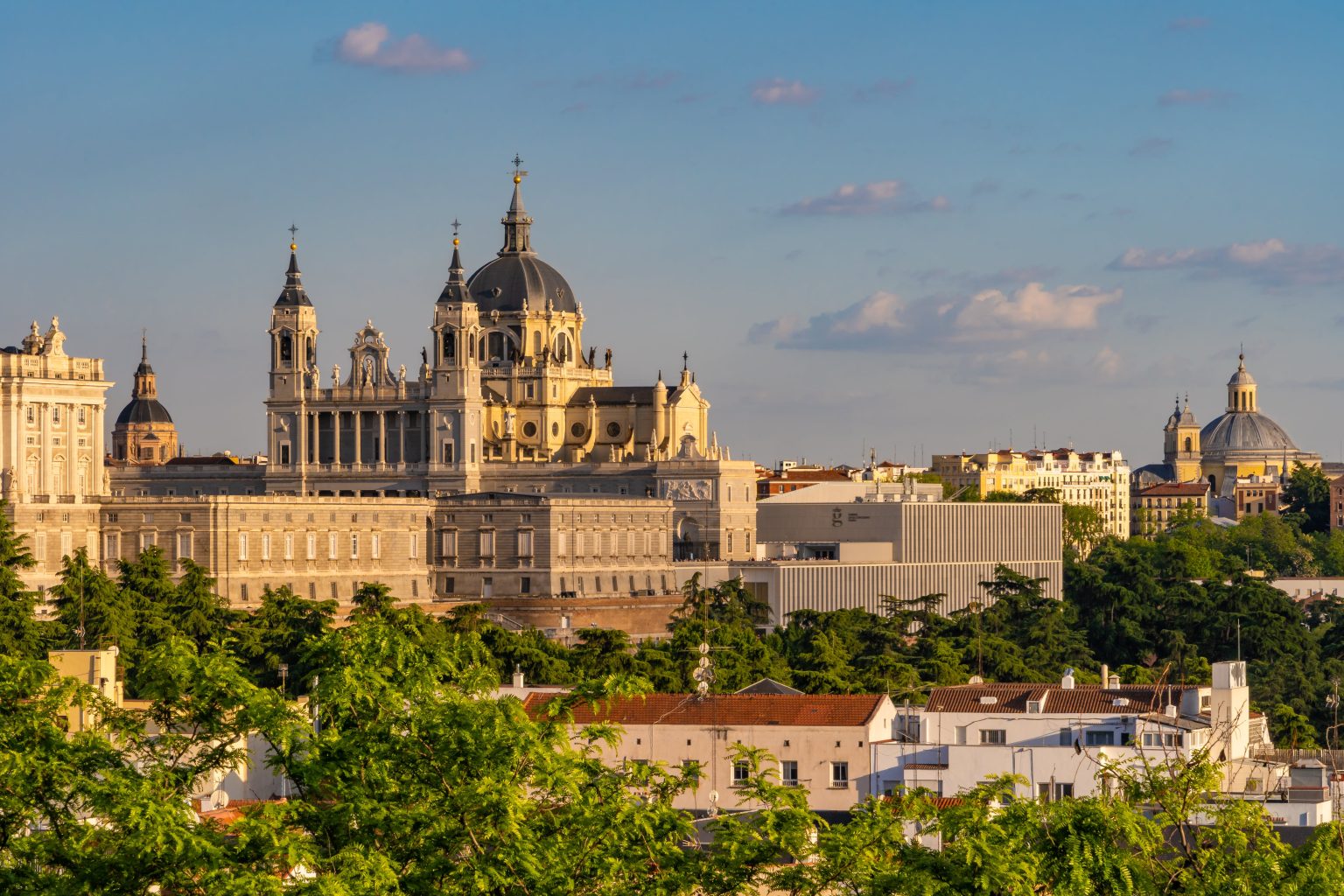
Just a few metres from the Royal Palace, you will find La Almudena, the cathedral of the city, one of the best places to visit in Madrid.
Built at the end of the nineteenth century, it combines three different architectural styles, with a marked neoclassical style on the outside, neo-Romanesque in its crypt and neo-Gothic on the inside.
It was initially conceived as an integral part of the Palace, hence its proximity. The two monuments seem to be linked if you observe them from afar.
It is a temple, whose image raises controversy as it is considered to break quite a bit with the aesthetics of the historic centre of Madrid. Its dome, located 70 metres high, enjoys an enviable panoramic view of the entire historic centre of the city.
Inside, you will find a museum with a permanent exhibition with several objects of high historical value from its predecessor, the old parish church of Santa María de la Almudena.
Parque del Retiro
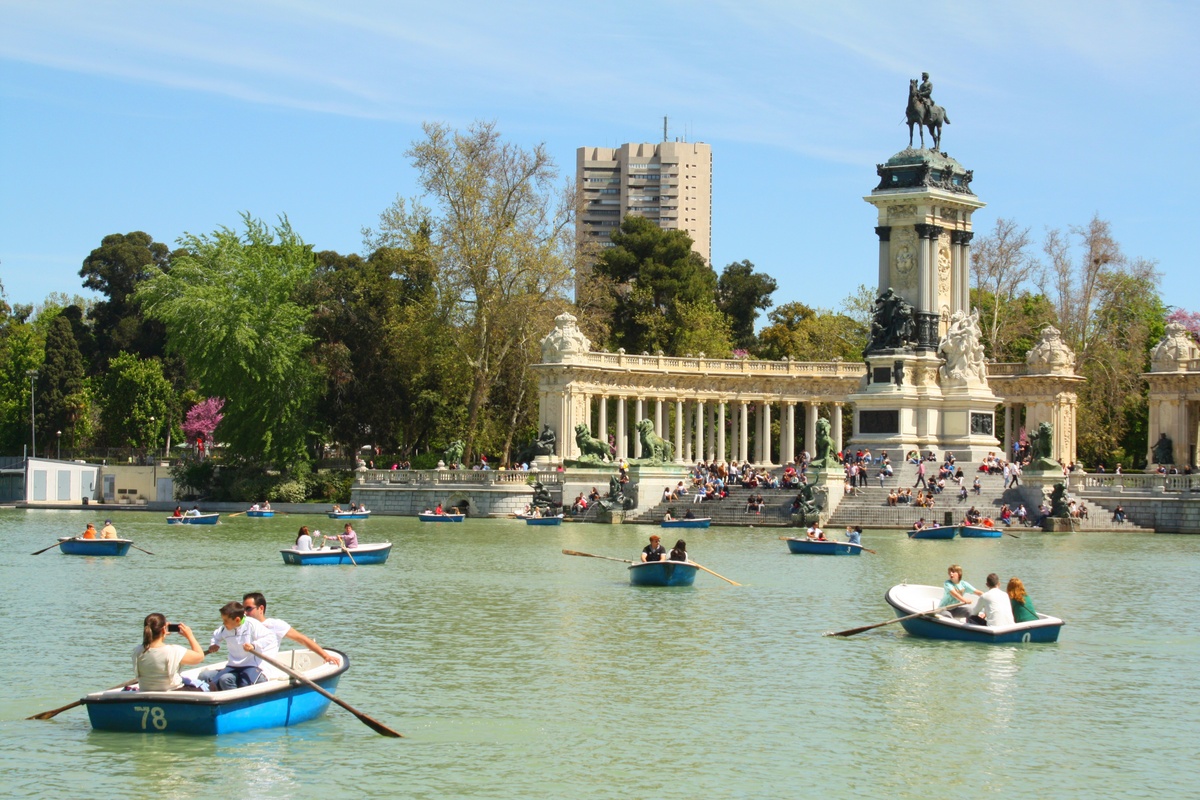
The most famous and important gardens in Madrid and one of the city’s major green lungs. Thousands of locals and tourists gather among its trees every day along its 125 hectares.
In addition to renting a boat on its famous pond, we recommend that you visit the monument to Alfonso XII, the Crystal Palace, the Palace of Velázquez, the statue of the Fallen Angel, the Forest of Remembrance, the Fountain of the Galapagos, the Paseo de las Estatuas, La Rosaleda, the Gardens of Cecilio Rodríguez and the Casa de Fieras, old city zoo.
As you can see, Parque del Retiro has a lot to show you and between stops, you can take the opportunity to connect with nature in this small oasis in the heart of Madrid. Its oldest tree, a Mexican cypress, has been standing since the 17th century, being a privileged witness to the history of the capital of Spain.
Thyssen - Bornemisza National Museum
The second most important art gallery in Madrid after the Prado, but also one of the most important in Europe. Located in the former Palacio de Villahermosa, in the heart of Madrid’s Paseo del Arte, it houses a collection of more than 700 works that will allow you to take a fantastic tour of the best of European painting from the Middle Ages to the end of the 20th century.
Within its complete permanent exhibition you will find works by artists as diverse as Jan Van Eyck, Ghirlandaio, Carpaccio, Duero, Caravaggio, Rubens, Frans Hals, Monet, Degas, Gaugain, Van Gogh, Kandinsky, Dalí and Picasso, among many others.
In addition, one of the aspects that differentiate it from most European art galleries is that, as well as including a huge variety of works from other cultures such as Asian or American art.
The Thyssen-Bornemisza Museum also hosts temporary exhibitions of various kinds.
Puerta de Alcalá
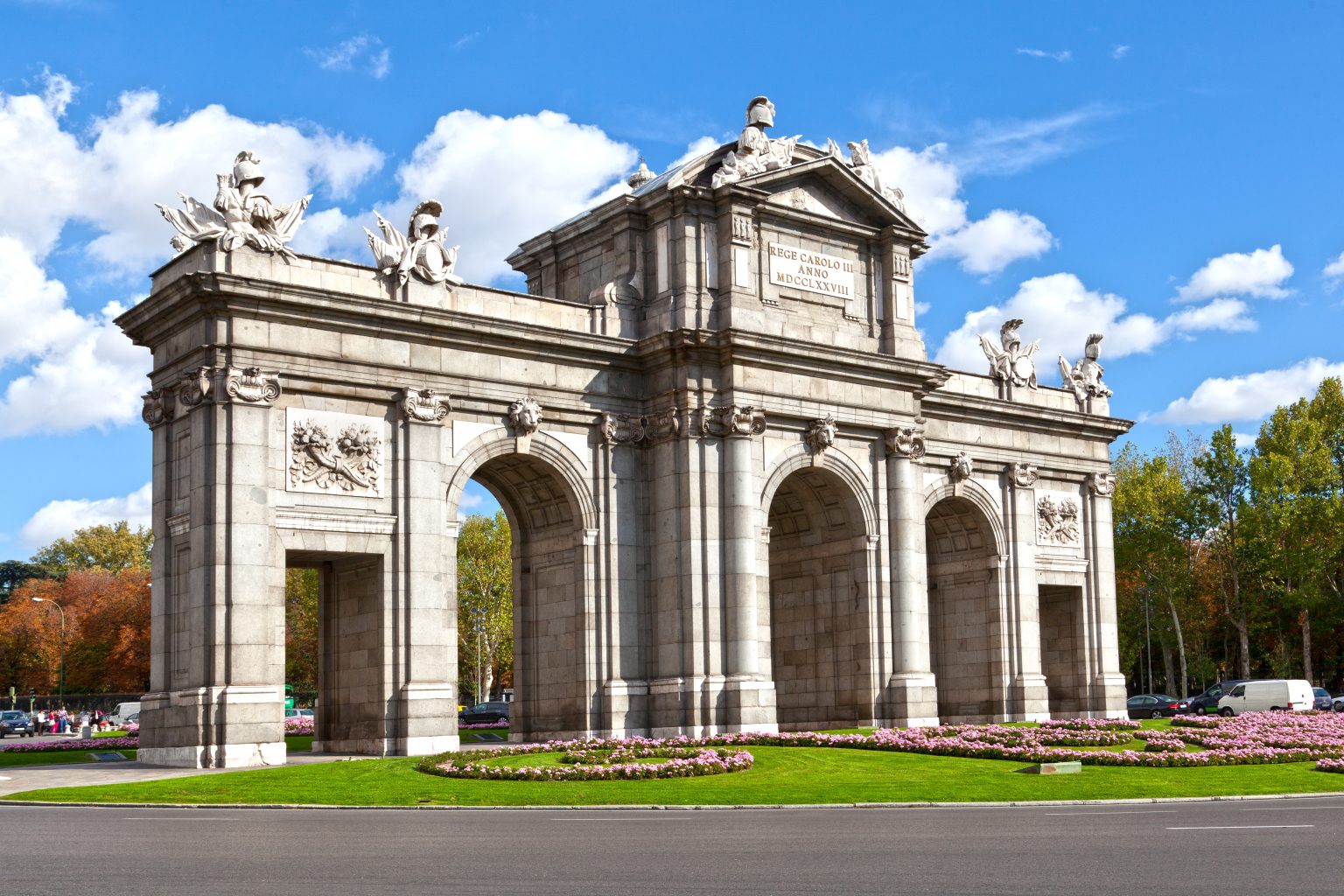
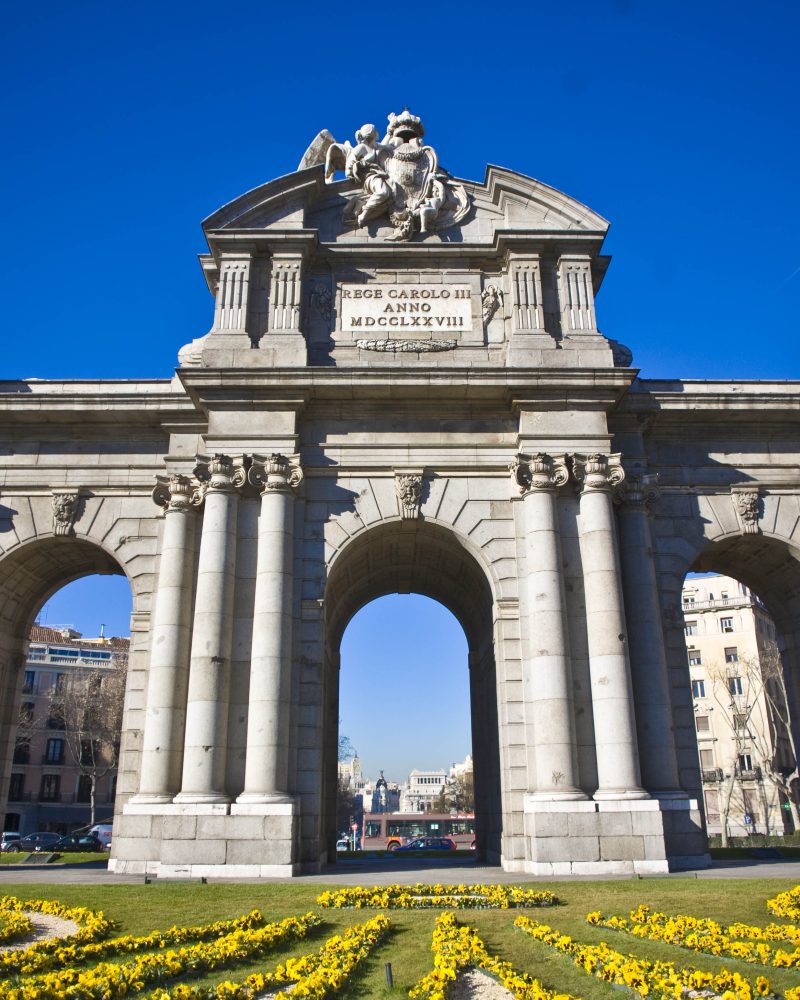
The Puerta de Alcalá is one of the symbols of Madrid and consists of five royal gates that at the time of its construction, served as access to the old city of Madrid.
Located in the centre of the roundabout in the Plaza de la Independencia, when it was erected at the end of the 18th century, it welcomed travellers from the area of Alcalá de Henares.
Designed in neoclassical style by the Italian architect Francisco Sabatini, it has become one of the iconic references of the city of Madrid, appearing in many illustrations of the city for that characteristic identity. As a curious fact, such is the fame of the Puerta de Alcalá that the well-known singer Ana Belén dedicated a beautiful song to it.
Plaza Cibeles
This stop could well be divided into two and due to, in this famous square of the centre of the capital, are located two of the most important tourist attractions of the city.
Let’s start with the fountain dedicated to the goddess Cibeles, which was built in the 18th century by the order of King Charles III, who wanted to give a new neoclassical air to the capital of the kingdom. The fountain, carved in marble from the town of Montesclaros (Toledo), represents the goddess Cibeles, mother of the Olympian gods and symbol of fertility and the earth. This fountain is also famous all over the world for being the centre of celebration for Real Madrid fans celebrating their titles.
In the same square you will also find the Palacio de Cibeles, one of the most beautiful buildings in the entire historic centre of Madrid, which today serves as the headquarters of the City Hall of the capital. Inside, you can visit different types of spaces such as a reading area, an auditorium and an exhibition hall. It is also possible to climb up to the roof terrace, from where you can enjoy one of the most spectacular panoramic views of the Madrid skyline.
Santiago Bernabéu Stadium
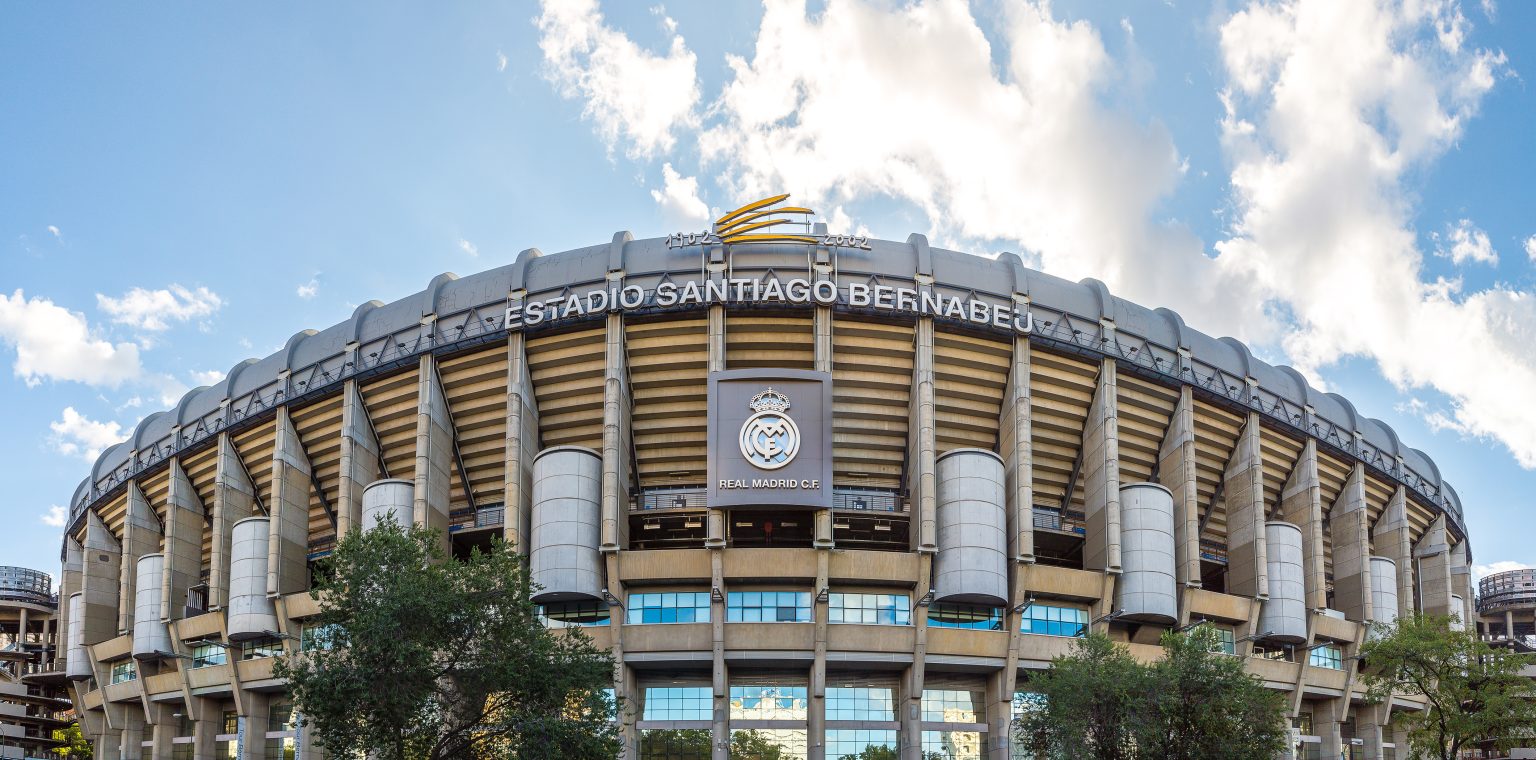
And from the place of celebration of Madrid’s great victories, we went to the stadium of what is, on its own merits, one of the most famous football teams on the planet.
You might be a little annoyed that we recommend a football stadium as one of the tourist stops that shouldn’t be missed in a city as wonderful as Madrid, right? What if we told you that the Santiago Bernabéu Museum is one of the most visited not only in Madrid, but in all of Spain?
If you are a football lover, the Bernabéu tour is one of the best things to do in Madrid. During the tour you’ll have the opportunity to admire the huge trophy case of the white team, as well as its press room or the stadium’s changing rooms. They even allow you to look out onto the pitch to enjoy the imposing perspective that the players have when they take the field every Sunday.
Museo Reina Sofía
Its amazing art collection has made it for several years the most visited museum in all of Spain and one of the most visited in Europe.
Its works will allow you to enjoy first-hand the best of 20th century contemporary art, including painters of the stature of Picasso, Salvador Dalí and Joan Miró.
If we had to choose one of its paintings as the most representative work of the museum, it would undoubtedly be Picasso’s Guernica, a work that surprises both for its communicative power and its size, and a must for any art lover.
Malasaña neighbourhood
We leave aside the artistic and cultural recommendations to focus on another of the most characteristic aspects of the city of Madrid, its bars and nightlife.
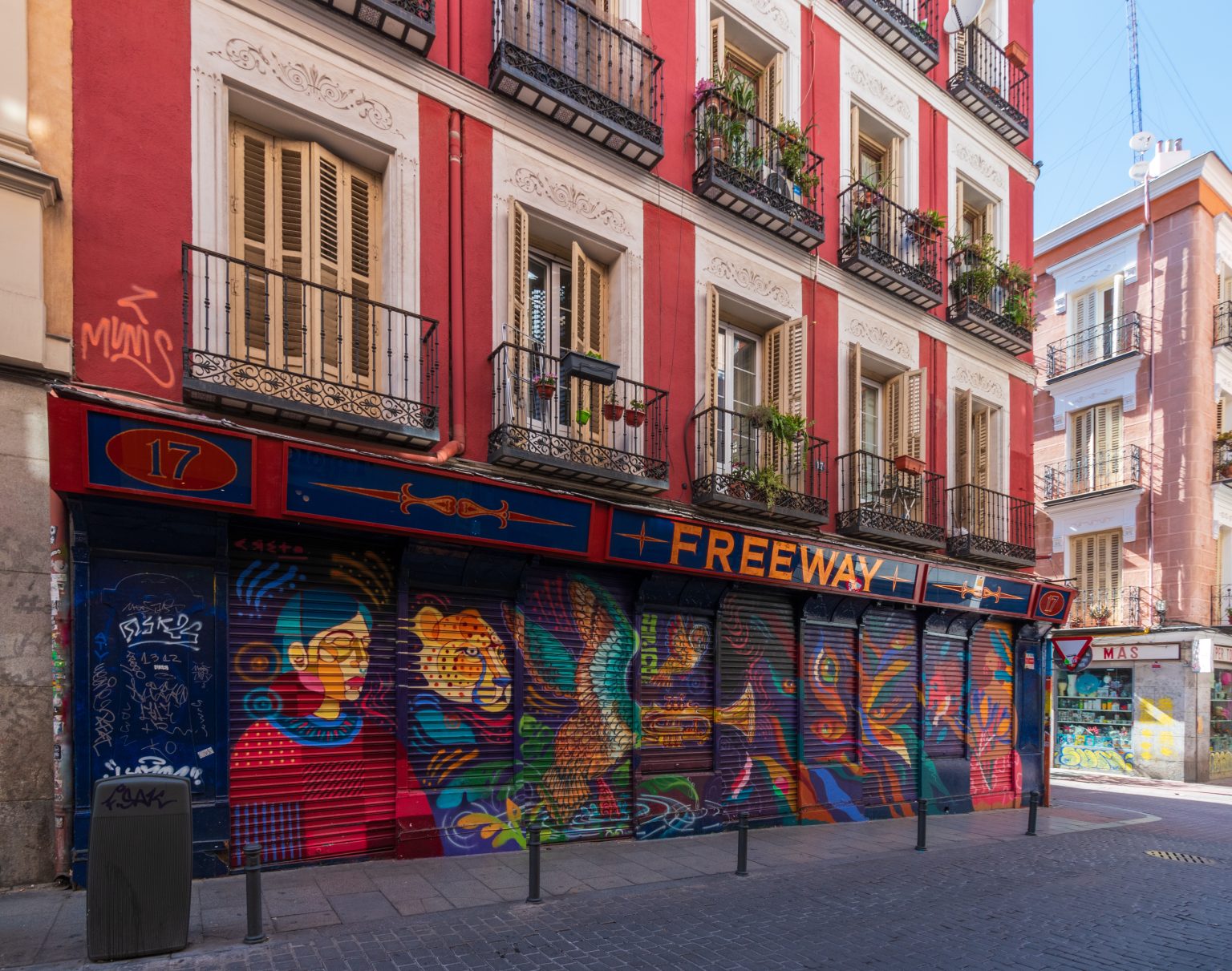
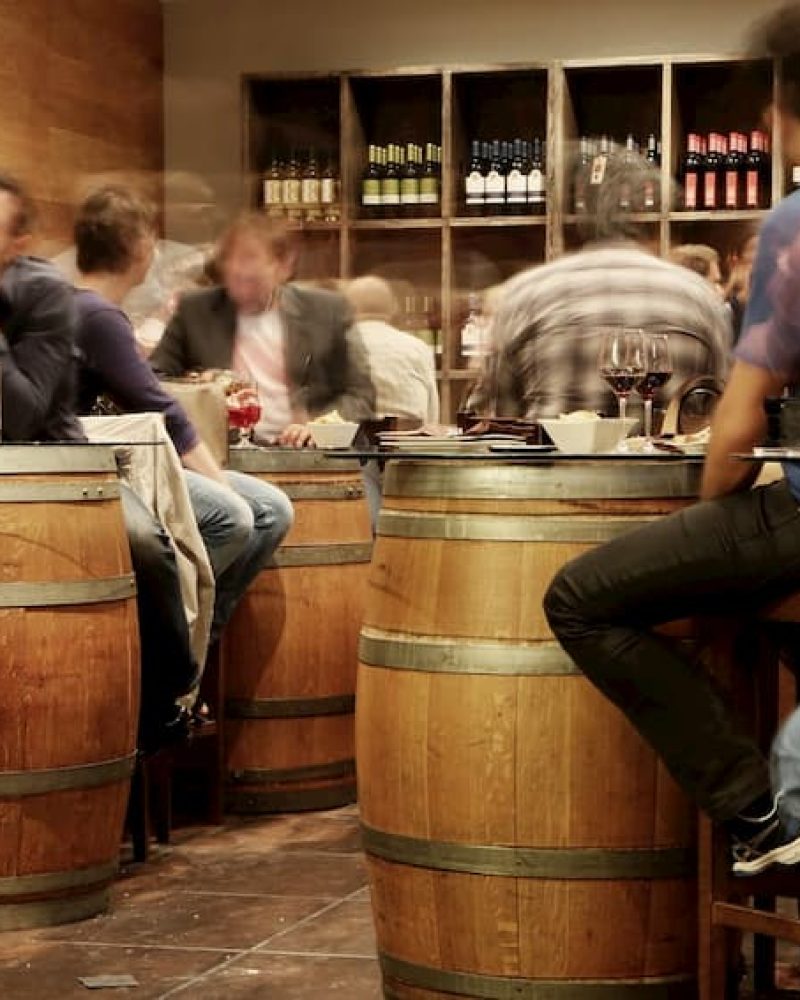
The Malasaña area, just a few metres from Gran Vía, is one of the districts where the most pubs, bars, restaurants and nightclubs are concentrated per square metre. Many of them have been luxury witnesses of the boom of the movida madrileña and even today, they continue to welcome locals and visitors eager to enjoy its lively nightlife.
Malasaña is the most important alternative neighbourhood in Madrid. Among its streets, in addition to partying and endless places to have a beer, you’ll find shops of all kinds, art exhibitions, theatres, and any type of commerce you can imagine.
Whether you feel like partying or simply want to soak up the atmosphere of one of the most fun neighbourhoods in Madrid, we recommend you spend some time strolling through its streets.
El Rastro
Even at the risk of leaving hundreds of stops unmentioned, we couldn’t finish our list of recommendations without mentioning what is the most important street market in the city and probably in all of Spain.
The flea market has a peculiarity to take into account and that is that it is only set up on Sunday mornings. But if you are lucky enough to be in Madrid on a Sunday, it is, without a doubt, an obligatory stop.
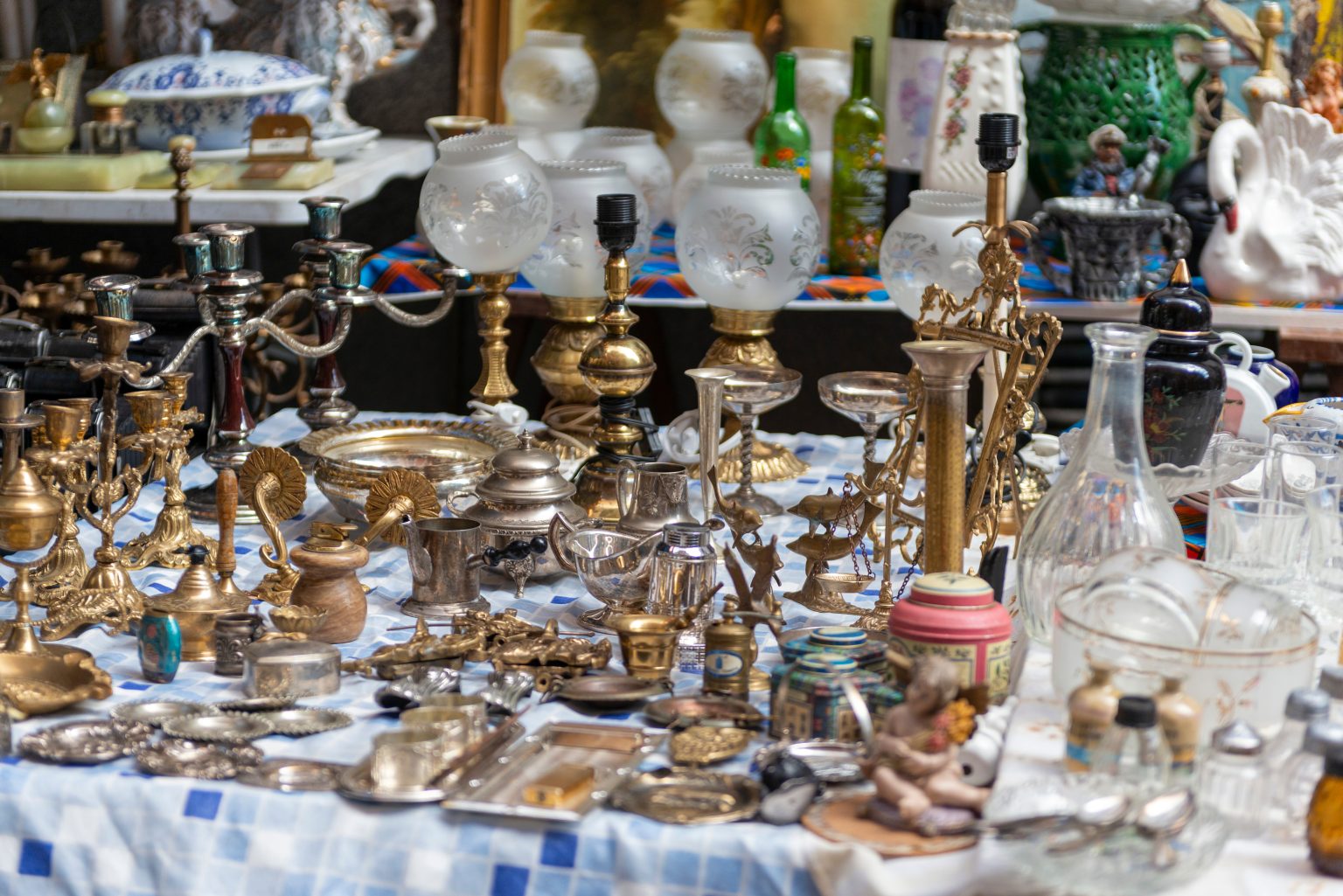
In addition to the hundreds of stalls with second-hand clothes, antiques, vinyls, films and thousands of products of all kinds for sale, the Rastro is famous for the custom of drinking vermouth in the many bars in its surroundings. There are few things more traditional than the Rastro in Madrid.
Frequently asked questions about Madrid
What places should you not miss in Madrid?
The places you shouldn’t miss in Madrid are Parque del Retiro, Royal Palace, Almudena, Puerta del Sol, Plaza Mayor, Gran Vía, Reina Sofía and Museo del Prado.
What to see in the centre of Madrid?
The recommended places to see in the centre of Madrid are Puerta del Sol, Plaza Mayor, Gran Vía, Plaza de Cibeles, Almudena and the Royal Palace.
Where to eat in Madrid?
Considering that we are talking about one of the great culinary temples in the world, it is not easy to choose a specific area where to eat in Madrid. However, if we had to choose one of its districts, we would choose the area of La Latina, not only to eat, but also to enjoy the famous Spanish custom of the aperitif, and the one known as the golden mile of the capital, along Calle Goya, Serrano and the surroundings.
What to do in Madrid in the morning?
If you only have a few hours to visit the capital and you want to know what to do in Madrid in the morning, we recommend that you opt for a walk throughout its central area. You can start at the Templo de Debod and then ascend towards Gran Vía through Plaza de España, turn into Plaza de Callao in the direction of Puerta del Sol, go down to Plaza de Cibeles and return in the direction of the centre, to finish your tour in Madrid’s emblematic Plaza Mayor with a good squid sandwich.
How to get to Madrid?
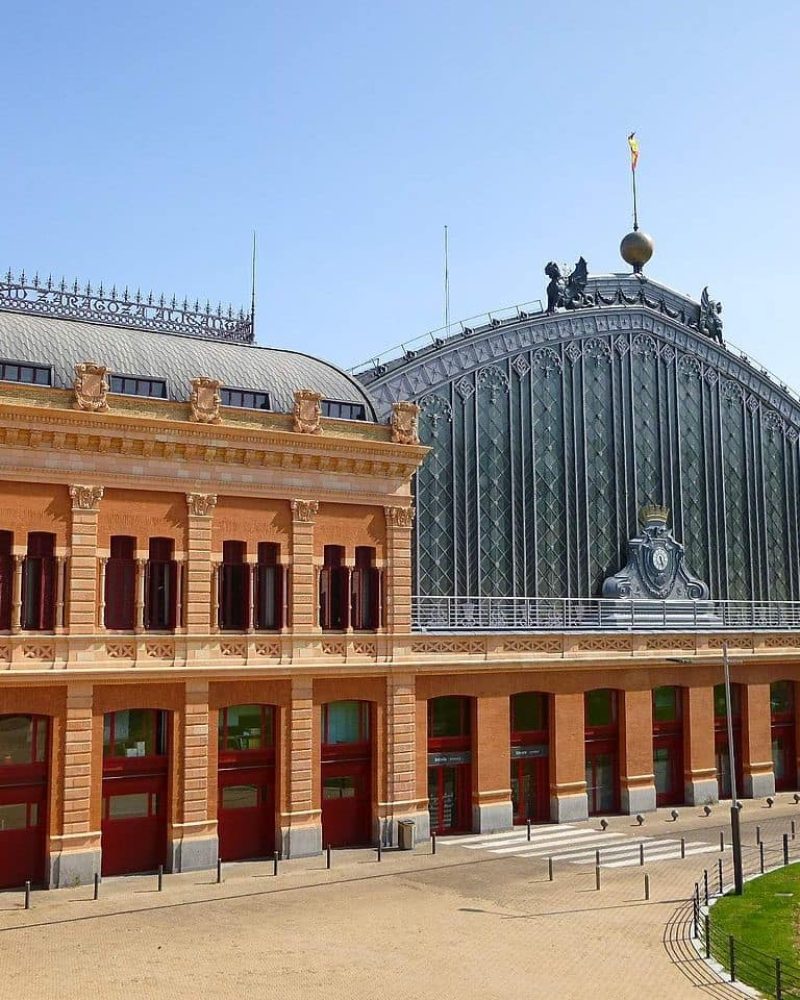
There are different options to get to Madrid, although the most recommended are the following: through the most important airport in Spain, Adolfo Suárez Madrid-Barajas Airport, or through the Madrid-Puerta de Atocha high-speed train station itself.